
Papadopoulou, K.; Ainali, N.M.; Mašek, O.; Bikiaris, D.N. BiocharBiochar is a carbon-rich material created from biomass decomposition in low-oxygen conditions. It has important applications in environmental remediation, soil improvement, agriculture, carbon sequestration, energy storage, and sustainable materials, promoting efficiency and reducing waste in various contexts while addressing climate change challenges. More as a UV Stabilizer: Its Impact on the Photostability of Poly(butylene succinate) Biocomposites. Polymers 2024, 16, 3080. https://doi.org/10.3390/polym16213080
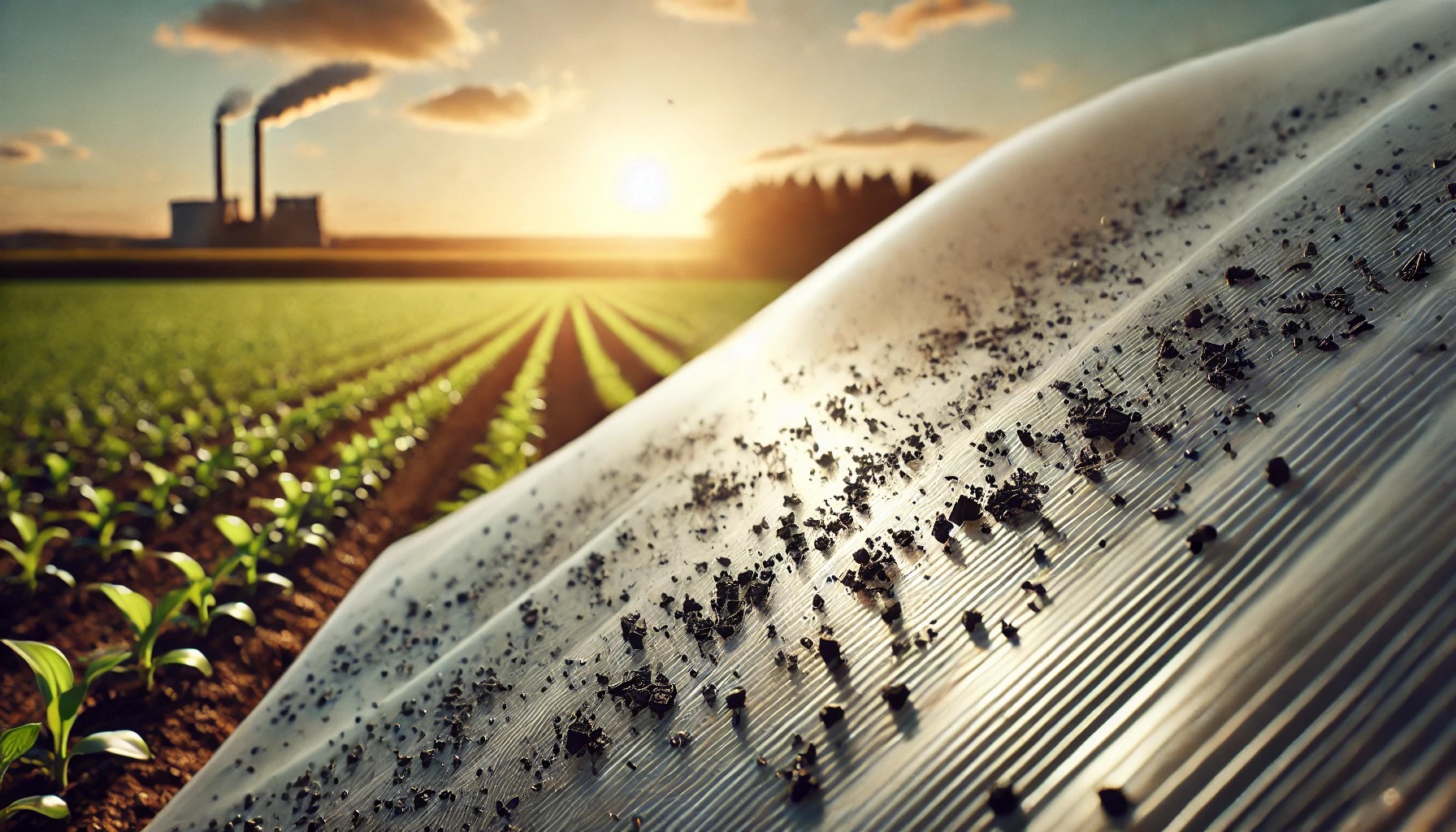
Biochar, a carbon-rich byproduct from biomassBiomass is a complex biological organic or non-organic solid product derived from living or recently living organism and available naturally. Various types of wastes such as animal manure, waste paper, sludge and many industrial wastes are also treated as biomass because like natural biomass these More pyrolysisPyrolysis is a thermochemical process that converts waste biomass into bio-char, bio-oil, and pyro-gas. It offers significant advantages in waste valorization, turning low-value materials into economically valuable resources. Its versatility allows for tailored products based on operational conditions, presenting itself as a cost-effective and efficient More, is proving to be a powerful additive for enhancing the UV stability of biocomposites. A recent study investigated the use of biochar in poly(butylene succinate) (PBSu) biocomposites, focusing on its ability to slow down UV-induced degradation. PBSu, a biodegradable polyester, is gaining popularity in sustainable applications, particularly in agriculture, where prolonged UV exposure can degrade materials, leading to brittleness and fragmentation.
Researchers created PBSu films with varying biochar concentrations (1, 2.5, and 5 wt.%) and exposed them to UV light for up to 21 days. Various testing methods, including Fourier-transform infrared spectroscopy (FTIR), Differential Scanning Calorimetry (DSC), and Scanning Electron Microscopy (SEM), revealed that biochar significantly mitigates the effects of UV exposure. Higher biochar content reduced the rate of molecular weight loss, minimized crack formation, and stabilized the crystalline structure, preserving the mechanical strength of PBSu. This stability stems from biochar’s inherent black color and carbon structure, which absorb UV rays, slowing photo-oxidative degradation.
The study highlights biochar as an eco-friendly UV stabilizer that not only extends the lifespan of PBSu-based materials but also enhances the durability of biocomposites in outdoor applications like mulch films. This advancement supports a sustainable approach to biodegradable polymer design, aligning with circular economy goals while providing a functional alternative to conventional UV stabilizers.



Leave a Reply