
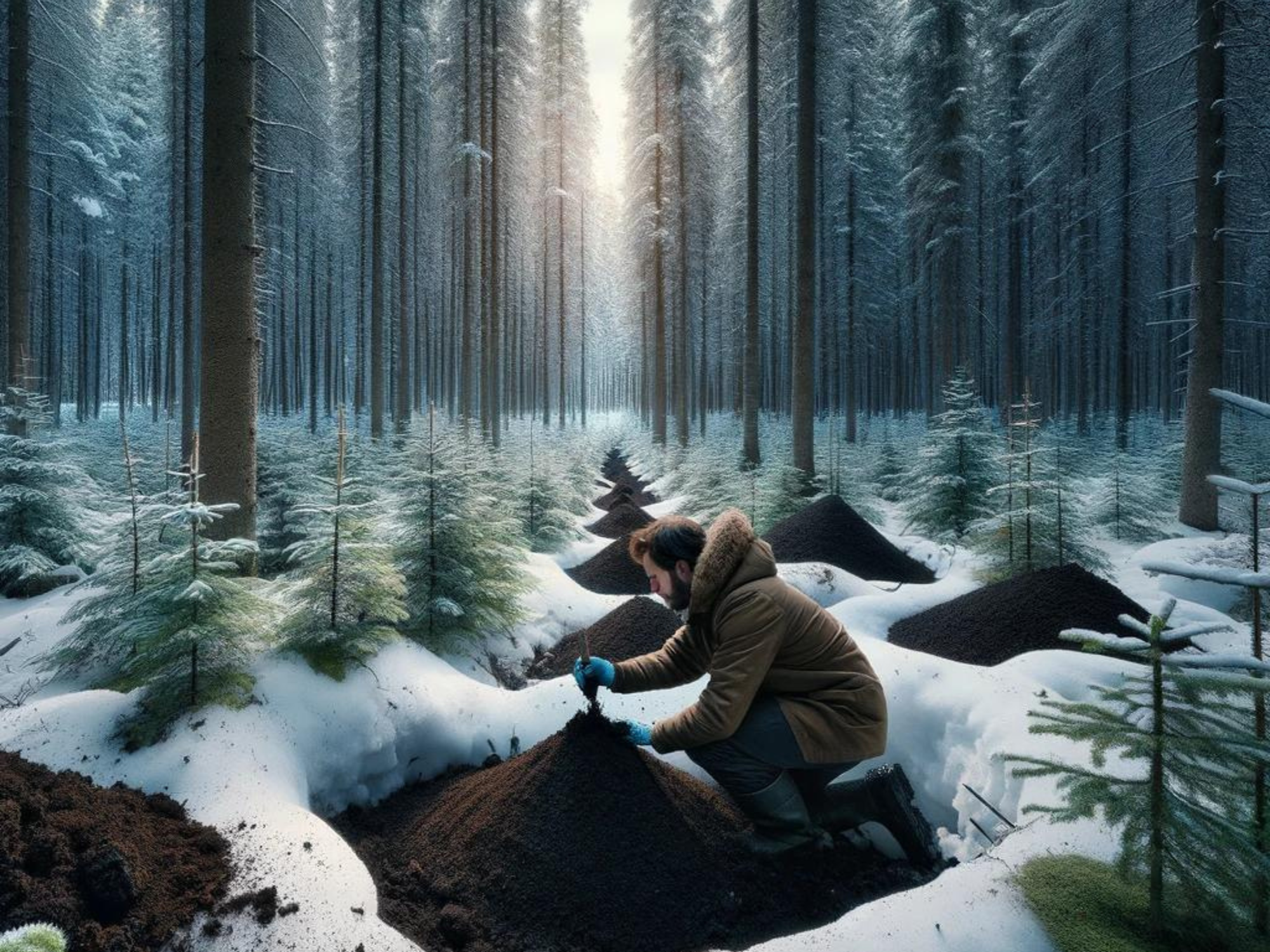
Liao, Pu, et al (2024) Enhancing boreal forest resilience: A four-year impact of biocharBiochar is a carbon-rich material created from biomass decomposition in low-oxygen conditions. It has important applications in environmental remediation, soil improvement, agriculture, carbon sequestration, energy storage, and sustainable materials, promoting efficiency and reducing waste in various contexts while addressing climate change challenges. More on soil quality and fungal communities. Microbiological Research. https://doi.org/10.1016/j.micres.2024.127696
Boreal forests face unique challenges due to nutrient deficiencies and restricted biological activity. This study delves into the role of biochar, a carbon-rich material produced from organic matter through pyrolysisPyrolysis is a thermochemical process that converts waste biomass into bio-char, bio-oil, and pyro-gas. It offers significant advantages in waste valorization, turning low-value materials into economically valuable resources. Its versatility allows for tailored products based on operational conditions, presenting itself as a cost-effective and efficient More, in enhancing the microbial life and overall soil quality of these forests. By investigating biochar produced at 500 °C and 650 °C, and applied in different quantities (0.5 kg·m−2 and 1.0 kg·m−2), the research offers a comprehensive view of its impact over two to four years.
Findings indicate that biochar, particularly when produced at 650 °C and applied at a higher rate of 1.0 kg·m−2, significantly increases the relative abundance of Mortierellomycota and boosts fungal species richness, α-diversity, and evenness. Additionally, biochar produced at 500 °C and applied at 0.5 kg·m−2 is linked to an increase in Phialocephala fortinii, a species positively correlated with the carbon cycling enzyme β-cellobiosidase.
The study highlights the nuanced effects of biochar on soil properties and fungal communities, emphasizing the importance of the biochar’s pyrolysis temperature and application amount. By providing a detailed analysis of the temporal effects post-biochar application, this research contributes valuable insights into the practical application of biochar in boreal forest ecosystems, underscoring its potential to improve soil quality and microbial diversity without resorting to hyperbole.


Leave a Reply