

Gyanwali, et al (2024) Exploring the Benefits of BiocharBiochar is a carbon-rich material created from biomass decomposition in low-oxygen conditions. It has important applications in environmental remediation, soil improvement, agriculture, carbon sequestration, energy storage, and sustainable materials, promoting efficiency and reducing waste in various contexts while addressing climate change challenges. More: A Review of Production Methods, Characteristics, and Applications in Soil Health and Environment. Egyptian Journal of Soil Science. https://doi.org/10.21608/ejss.2024.270380.1725
Biochar, a carbon-rich byproduct obtained from the pyrolysisPyrolysis is a thermochemical process that converts waste biomass into bio-char, bio-oil, and pyro-gas. It offers significant advantages in waste valorization, turning low-value materials into economically valuable resources. Its versatility allows for tailored products based on operational conditions, presenting itself as a cost-effective and efficient More of biomassBiomass is a complex biological organic or non-organic solid product derived from living or recently living organism and available naturally. Various types of wastes such as animal manure, waste paper, sludge and many industrial wastes are also treated as biomass because like natural biomass these More, is gaining traction as a potent solution for soil enhancement and climate change mitigation. This substance is produced through several processes, namely pyrolysis, hydrothermal carbonization, torrefaction, and gasificationGasification is a high-temperature, thermochemical process that converts carbon-based materials into a gaseous fuel called syngas and solid by-products. It takes place in an oxygen-deficient environment at temperatures typically above 750°C. Unlike combustion, which fully burns material to produce heat and carbon dioxide (CO2), gasification More. Each method varies by temperature, feedstockFeedstock refers to the raw organic material used to produce biochar. This can include a wide range of materials, such as wood chips, agricultural residues, and animal manure. More, and environmental conditions, affecting the biochar’s properties and its eventual applications.
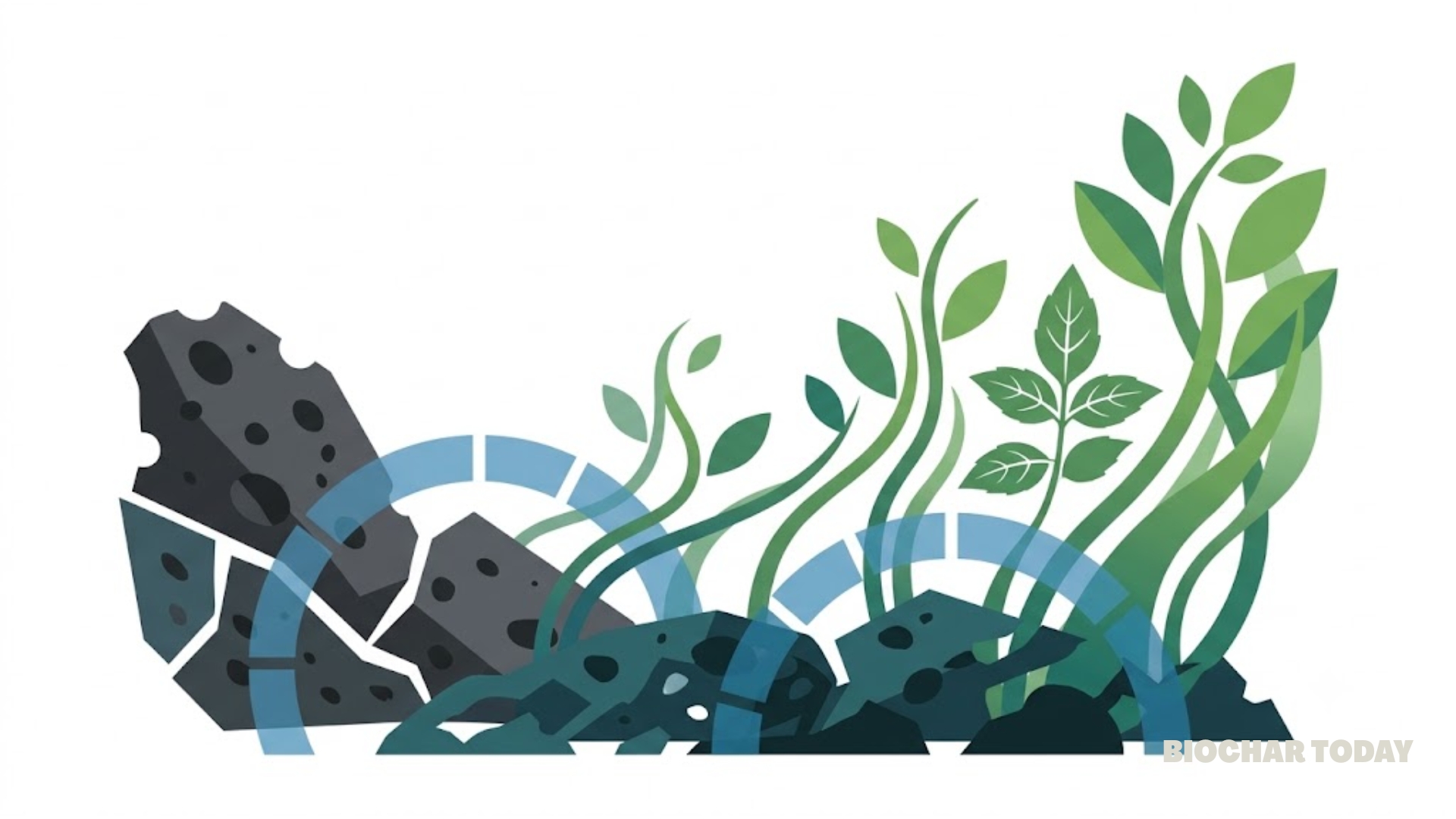
Biochar offers a wide array of uses including improving soil health, water purification, waste management, and even as a potential alternative fuel. Its ability to sequester carbon makes it a valuable asset in combating global warming. Biochar enhances soil fertility by improving water retention and nutrient availability, which can boost agricultural productivity. Moreover, it helps in reducing reliance on chemical fertilizers, mitigating greenhouse gas emissions, and reclaiming degraded lands.
Despite its numerous benefits, the adoption of biochar is hindered by economic and research gaps. The review underscores the need for standardized production techniques and broader application strategies to enhance biochar’s efficiency and minimize potential risks to the environment and human health.
As biochar technology evolves, it is critical to address these challenges through comprehensive research, effective policy-making, and extensive education and outreach efforts. Only by doing so can biochar fulfill its promise as an environmental savior, contributing significantly to sustainable agriculture and global energy needs while protecting the planet.


Leave a Reply