
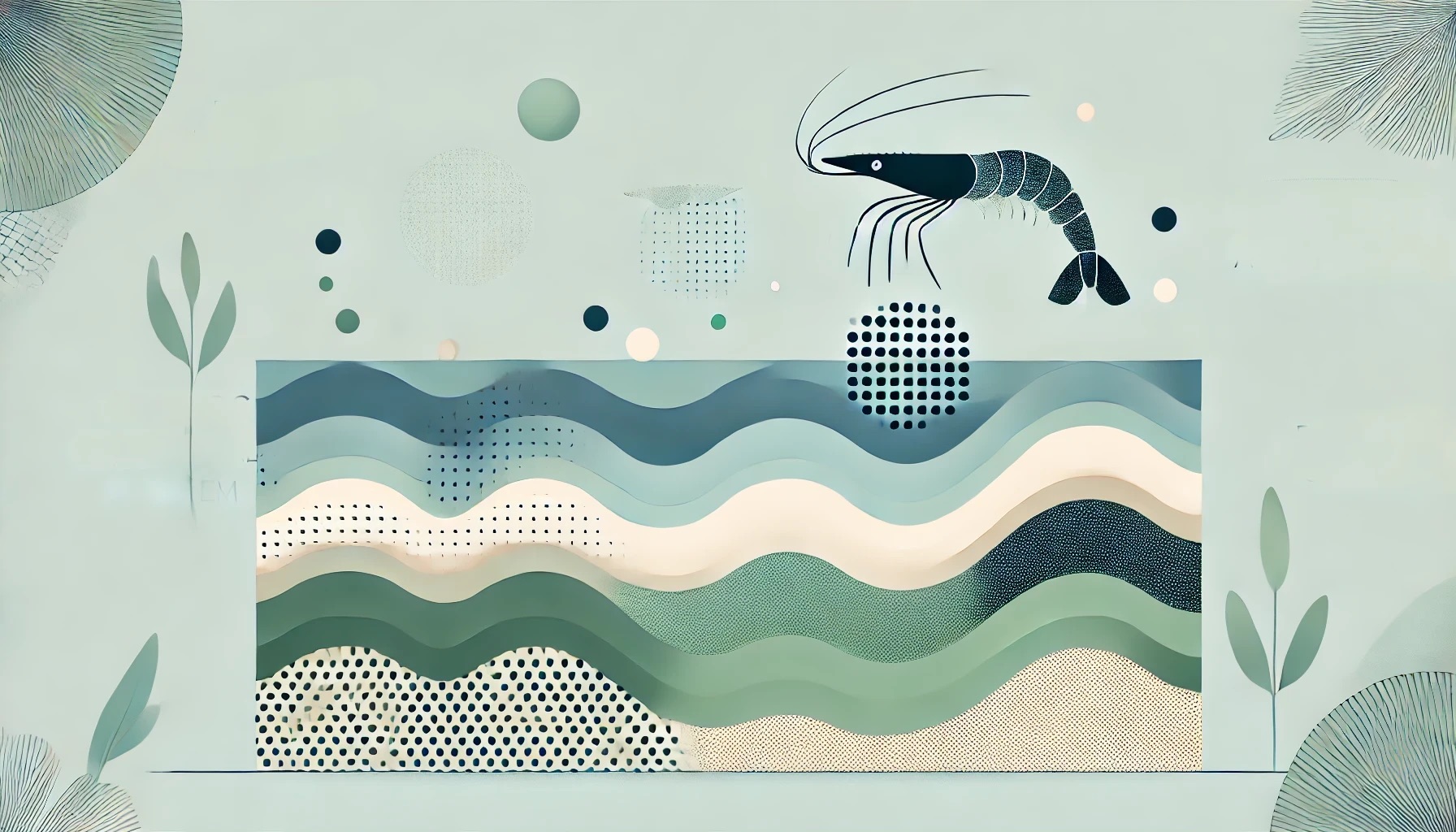
Xu, et al (2024) Impact of BiocharBiochar is a carbon-rich material created from biomass decomposition in low-oxygen conditions. It has important applications in environmental remediation, soil improvement, agriculture, carbon sequestration, energy storage, and sustainable materials, promoting efficiency and reducing waste in various contexts while addressing climate change challenges. More Addition on Biofloc Nitrifying Bacteria and Inorganic Nitrogen Dynamics in an Intensive Aquaculture System of Shrimp. Microorganisms. https://doi.org/10.3390/microorganisms12122581
Shrimp aquaculture, vital for global seafood production, faces challenges in maintaining water quality due to harmful nitrogen compounds like ammonia and nitrite. A recent study investigated how biochar—a carbon-rich material—compared to molasses in improving water quality and microbial balance in shrimp aquaculture systems.
Over eight weeks, shrimp were cultured in biofloc systems using biochar and molasses as carbon sources. Biochar demonstrated significant advantages. It reduced harmful nitrogen compounds more effectively, showing lower peaks for ammonia and nitrite while enhancing nitrate levels. This indicates stronger nitrification, a microbial process that transforms toxic nitrogen into safer forms. The biochar group also supported a more diverse and stable bacterial community, including higher abundances of nitrifying bacteria, essential for nitrogen cycling.
Interestingly, biochar required less input compared to molasses, which translated to lower biofloc concentrations, reduced pathogen levels, and fewer water exchanges. These factors collectively improved system efficiency while ensuring shrimp yield and growth rates remained comparable between groups.
This research highlights biochar’s potential as an eco-friendly alternative in aquaculture. By fostering healthier microbial ecosystems and better nitrogen management, biochar reduces resource usage and environmental impacts. Future studies aim to refine biochar application strategies, advancing sustainable practices in intensive shrimp farming.


Leave a Reply