
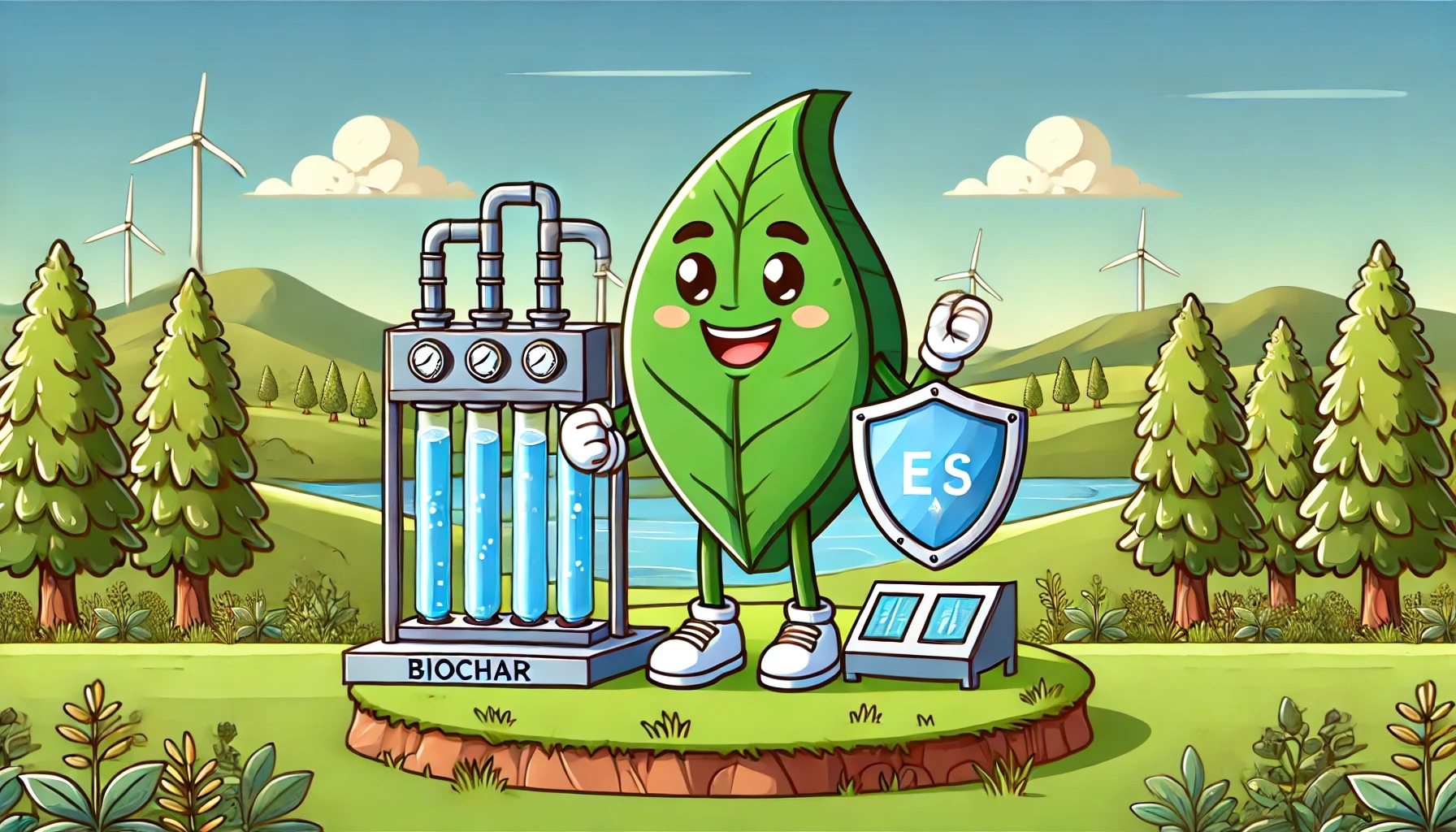

Biochar-assisted water electrolysis (BAWE) presents a promising method for producing clean hydrogen and utilizing biochar. Researchers have developed a process where corn straw-based biochar undergoes electrooxidation on nickel foam, resulting in an energy-efficient hydrogen production and an enhanced capacity to remove hexavalent chromium (Cr(VI)) from water.
In this study, biochar was activated electrochemically, creating a material with increased pore size and enriched with oxygen-containing functional groups like hydroxyl and carboxyl. This activation process requires only 4.16 kWh per cubic meter of hydrogen, significantly less than the 5.07 kWh needed for traditional water electrolysis.
The electrooxidation process not only facilitates hydrogen production but also enhances the biochar’s ability to adsorb and reduce Cr(VI), a toxic heavy metal. The activated biochar achieved a 72.79% removal rate of Cr(VI), compared to just 10.96% for unmodified biochar. This improvement is due to the biochar’s well-developed mesoporous structure and the increased presence of functional groups, which aid in the reduction of Cr(VI) to the less toxic Cr(III).
This dual-function approach demonstrates a novel route for upgrading biochar and producing hydrogen efficiently. The findings highlight the potential for integrating biochar activation with sustainable hydrogen production, offering a pathway to cleaner energy and improved environmental remediation. This research contributes to the development of innovative and eco-friendly technologies that leverage the abundant and renewable resource of biomassBiomass is a complex biological organic or non-organic solid product derived from living or recently living organism and available naturally. Various types of wastes such as animal manure, waste paper, sludge and many industrial wastes are also treated as biomass because like natural biomass these More.



Leave a Reply