
Baronti, et al (2024) Above- and below-ground morpho-physiological traits indicate that biocharBiochar is a carbon-rich material created from biomass decomposition in low-oxygen conditions. It has important applications in environmental remediation, soil improvement, agriculture, carbon sequestration, energy storage, and sustainable materials, promoting efficiency and reducing waste in various contexts while addressing climate change challenges. More is a potential peat substitute for grapevine cuttings nursery production. Scientific Reports. https://doi.org/10.1038/s41598-024-67766-4
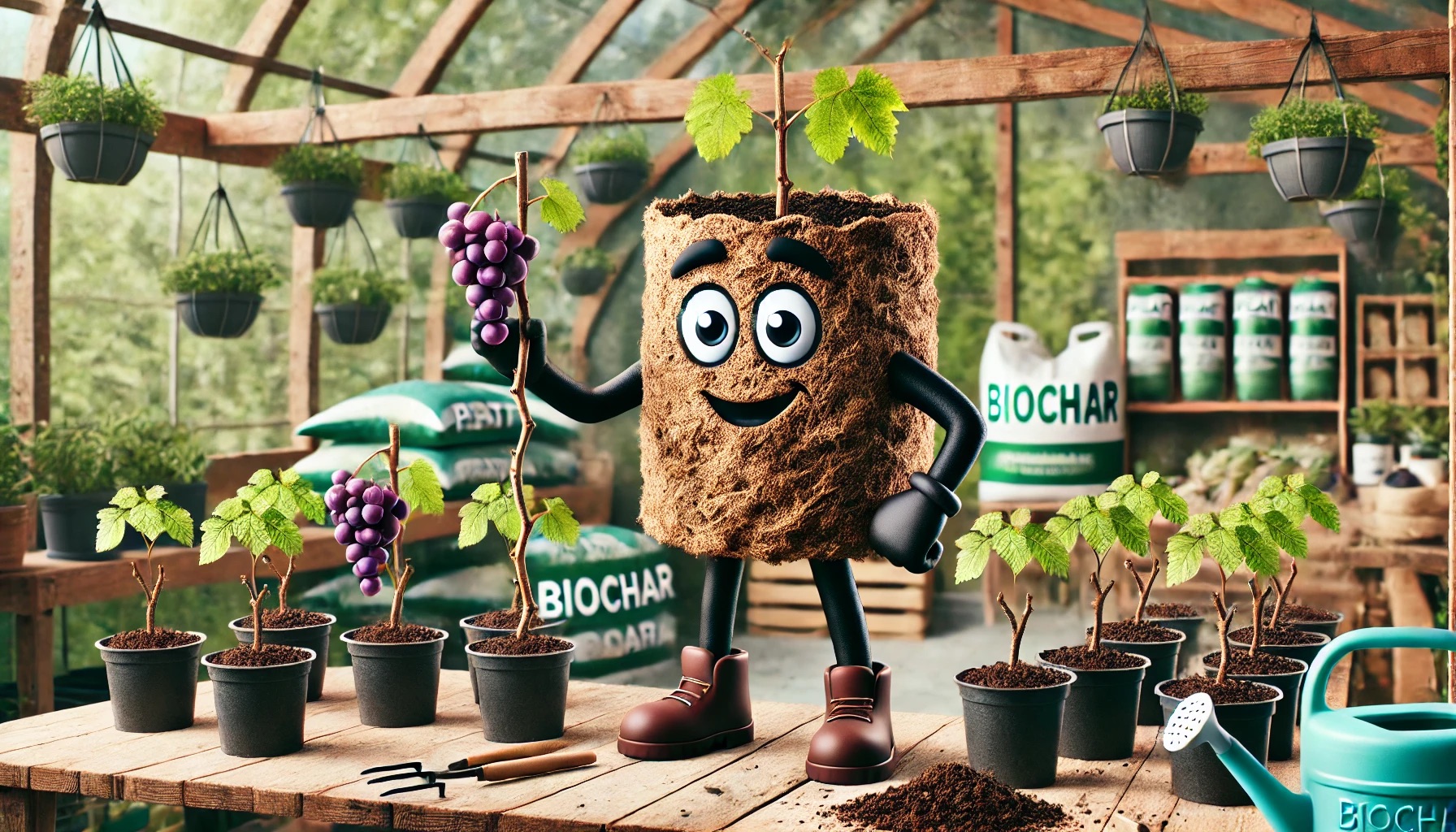
The global expansion of viticulture has driven a demand for sustainable grapevine planting materials. Peat, the traditional growing medium in greenhouse nurseries, is expensive and non-renewable, prompting a search for alternatives. Biochar, a carbon-rich by-product of biomassBiomass is a complex biological organic or non-organic solid product derived from living or recently living organism and available naturally. Various types of wastes such as animal manure, waste paper, sludge and many industrial wastes are also treated as biomass because like natural biomass these More pyrolysisPyrolysis is a thermochemical process that converts waste biomass into bio-char, bio-oil, and pyro-gas. It offers significant advantages in waste valorization, turning low-value materials into economically valuable resources. Its versatility allows for tailored products based on operational conditions, presenting itself as a cost-effective and efficient More or gasificationGasification is a high-temperature, thermochemical process that converts carbon-based materials into a gaseous fuel called syngas and solid by-products. It takes place in an oxygen-deficient environment at temperatures typically above 750°C. Unlike combustion, which fully burns material to produce heat and carbon dioxide (CO2), gasification More, has emerged as a promising substitute. This study explores biochar’s potential as a partial peat replacement in grapevine cuttings nursery production.
Biochar is produced from renewable organic waste materials and can enhance soil properties, increase plant growth, and improve water retention. Despite extensive research on biochar’s benefits in various plants, its impact on grapevine propagation has been less studied. To address this gap, researchers evaluated the growth of one-year-old potted grapevine cuttings in substrates containing 30% biochar mixed with peat.
The study compared four types of biochar—two from pyrolysis and two from gasification—against a peat control. Key parameters assessed included soil and plant traits, such as soil water retention, leaf water potential, microbial biomass, root characteristics, and overall plant growth.
Results indicated that biochar could replace peat without adverse effects on root health and showed potential benefits for soil and plant physiology. Biochar-amended substrates had higher water retention and improved plant water status, reducing irrigation needs. The biochar’s physical properties, particularly those from pyrolysis, contributed to these improvements. Pyrolysis biochar had higher maximum water absorption and lower bulk density compared to gasification biochar, enhancing substrate quality.
Plant height and biomass did not significantly differ between biochar treatments and control, except for the final measurement where some biochar-treated plants outperformed the control. Leaf water potential was consistently better in biochar-treated plants, indicating improved water availability.
The microbial analysis revealed that biochar positively influenced the rhizosphere’s physiological profile, particularly in phenolic compound utilization, which supports plant development. Root growth and biomass were generally similar across treatments, with some biochar treatments promoting better fine root development.
Despite biochar’s benefits, its higher cost compared to peat and other growing media components remains a barrier. However, biochar’s environmental advantages, such as carbon sequestration and reduced greenhouse gas emissions, make it a valuable tool for sustainable agriculture. Integrating biochar could help nurseries reduce their environmental footprint while maintaining high-quality plant production.
The study concluded that biochar is a viable alternative to peat in grapevine nursery production, offering benefits for water management, root development, and microbial activity. Further research is needed to optimize biochar use and understand its interactions with soil and plants. While economic factors currently limit widespread adoption, the environmental benefits position biochar as a key player in sustainable horticulture.



Leave a Reply