
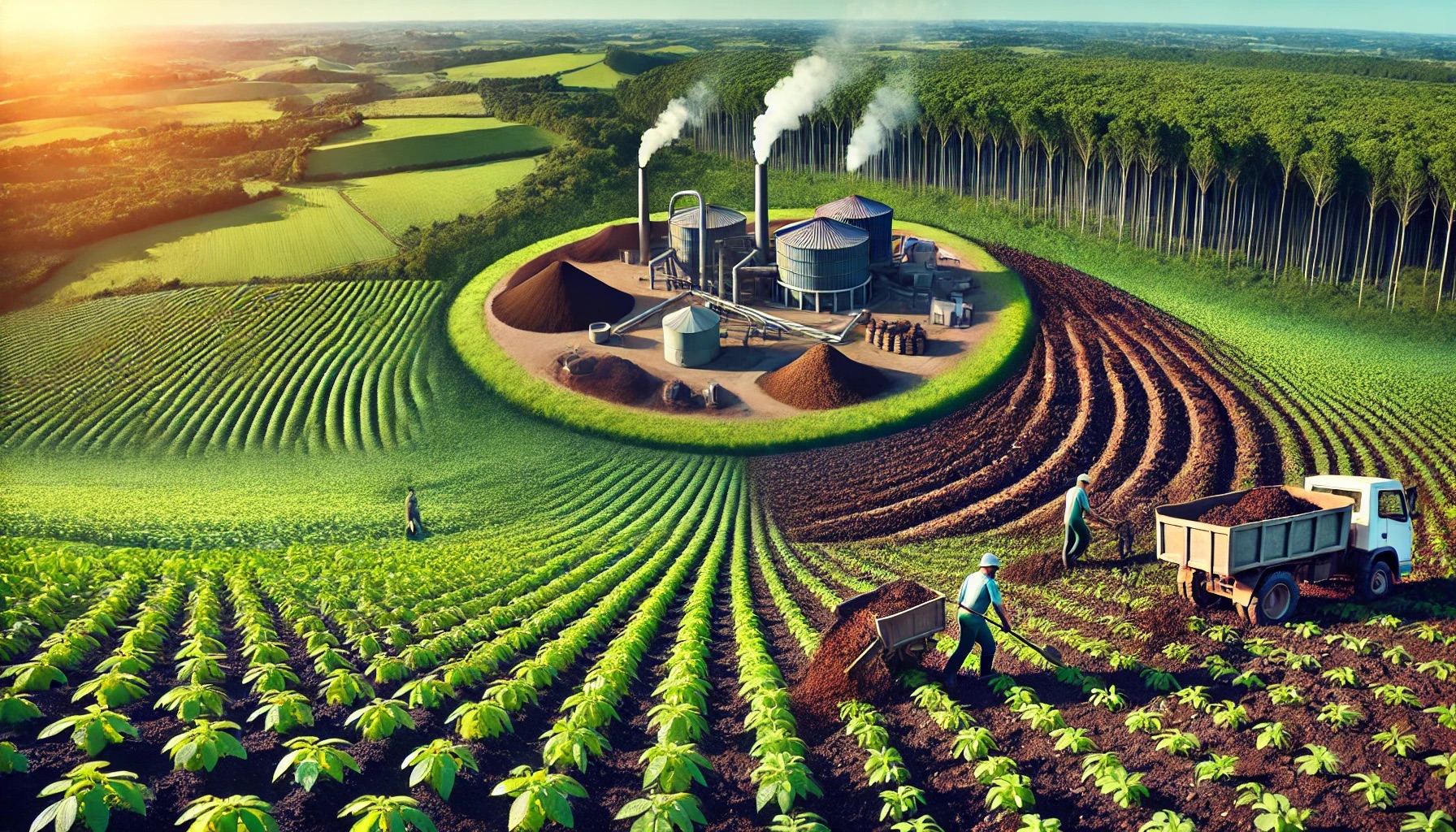
Domenico, et al (2024) New Frontiers for Raw Wooden Residues, BiocharBiochar is a carbon-rich material created from biomass decomposition in low-oxygen conditions. It has important applications in environmental remediation, soil improvement, agriculture, carbon sequestration, energy storage, and sustainable materials, promoting efficiency and reducing waste in various contexts while addressing climate change challenges. More Production as a Resource for Environmental Challenges. Journal of Carbon Research. https://doi.org/10.3390/c10020054
Biochar, a carbon-rich material produced by the pyrolysisPyrolysis is a thermochemical process that converts waste biomass into bio-char, bio-oil, and pyro-gas. It offers significant advantages in waste valorization, turning low-value materials into economically valuable resources. Its versatility allows for tailored products based on operational conditions, presenting itself as a cost-effective and efficient More of organic matter such as forestry waste, offers promising solutions to several environmental and agricultural challenges. The production of biochar involves heating biomassBiomass is a complex biological organic or non-organic solid product derived from living or recently living organism and available naturally. Various types of wastes such as animal manure, waste paper, sludge and many industrial wastes are also treated as biomass because like natural biomass these More in the absence of oxygen, which results in the formation of a highly porous material capable of improving soil quality and sequestering carbon.
This versatile material can be produced from a variety of forest wastes, including wood chips, bark, sawdust, and other residues. The specific properties of biochar, such as surface area, carbon content, and cation exchange capacity, depend significantly on the type of feedstockFeedstock refers to the raw organic material used to produce biochar. This can include a wide range of materials, such as wood chips, agricultural residues, and animal manure. More used and the pyrolysis conditionsThe conditions under which pyrolysis takes place, such as temperature, heating rate, and residence time, can significantly affect the properties of the biochar produced. More, including temperature and residence timeResidence time refers to the duration that the biomass is heated during the pyrolysis process. The residence time can influence the properties of the biochar produced. More.
Biochar enhances soil fertility by improving its structure, increasing water retention, and enhancing nutrient availability. These benefits lead to better crop yields and reduced need for chemical fertilizers, thus promoting sustainable agricultural practices. For example, biochar made from eucalyptus sawdust at 450°C has been shown to significantly increase soil organic carbon and nutrient retention.
Moreover, biochar production from forestry residues can play a crucial role in mitigating climate change. By converting biomass into a stable form of carbon, biochar sequesters carbon that would otherwise be released as CO2 during decomposition or burning. This process not only reduces greenhouse gas emissions but also provides a use for forestry residues that might otherwise contribute to forest fire risks.
Despite its potential, the scale of biochar production and use remains limited. Increasing its adoption requires more research into optimizing production processes and understanding long-term impacts on soil health and carbon sequestration. Additionally, life-cycle assessments are necessary to evaluate the environmental footprint of biochar production comprehensively.
In conclusion, biochar represents a promising tool for improving soil health, increasing agricultural productivity, and mitigating climate change. Its production from forestry waste not only provides environmental benefits but also enhances forest management practices by reducing fire risks and utilizing biomass more sustainably. Further research and development are essential to fully realize the potential of biochar in addressing global environmental challenges.


Leave a Reply