
Mahmoodi, et al (2024) Apple Tree Root-Derived BiocharBiochar is a carbon-rich material created from biomass decomposition in low-oxygen conditions. It has important applications in environmental remediation, soil improvement, agriculture, carbon sequestration, energy storage, and sustainable materials, promoting efficiency and reducing waste in various contexts while addressing climate change challenges. More/Iron Oxide Triphasic Nanocomposite for Wastewater Treatment and Microwave Absorption. Advanced Sustainable Systems. https://doi.org/10.1002/adsu.202400549
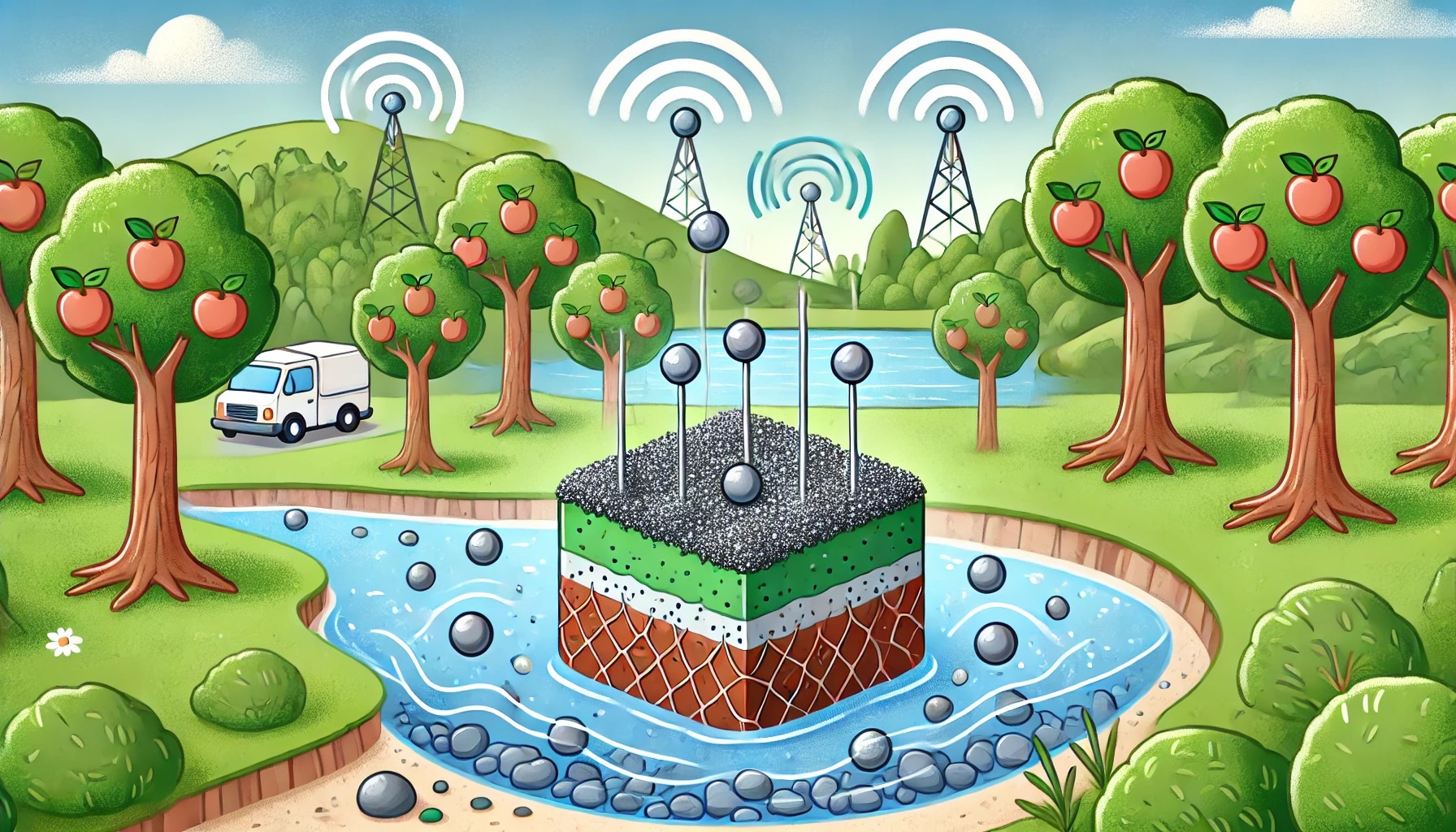
Researchers have developed a triphasic nanocomposite derived from apple tree root biochar combined with iron oxides (Fe3O4/𝛼-Fe2O3/carbon) to address two critical environmental issues: water pollution from heavy metals and electromagnetic wave (EMW) pollution. The study highlights its dual functionality in removing lead (Pb(II)) from water and absorbing EM waves, making it a sustainable solution for both clean water and pollution mitigation.
In wastewater treatment, the biochar-iron oxide composite achieved near 100% efficiency in adsorbing lead ions from water, with an adsorption capacity of up to 731 mg/g. The porous structure of biochar, combined with the magnetic properties of iron oxides, enabled easy separation of pollutants using magnetic fields. This reduces the operational costs typically associated with traditional filtration methods.
Additionally, the composite demonstrated exceptional microwave absorption with an effective bandwidth of 7.8 GHz and a maximum reflection loss of -61.7 dB. Its lightweight, porous structure contributes to high dielectric and magnetic losses, making it a strong candidate for addressing EM pollution caused by wireless communications and electronic devices.
This innovative material directly supports the United Nations Sustainable Development Goals 6 (clean water) and 13 (climate action). Its synthesis from renewable biomassBiomass is a complex biological organic or non-organic solid product derived from living or recently living organism and available naturally. Various types of wastes such as animal manure, waste paper, sludge and many industrial wastes are also treated as biomass because like natural biomass these More like apple tree roots further reinforces its potential as a sustainable, low-cost solution for tackling pollution challenges.


Leave a Reply