
Priyadarshini, et al (2024) Anodic degradation of salicylic acid and simultaneous bio-electricity recovery in microbial fuel cell using waste-banana-peels derived biochar-supported MIL-53(Fe)-metal-organic framework as cathode catalyst. Journal of Electroanalytical Chemistry. https://doi.org/10.1016/j.jelechem.2024.118451
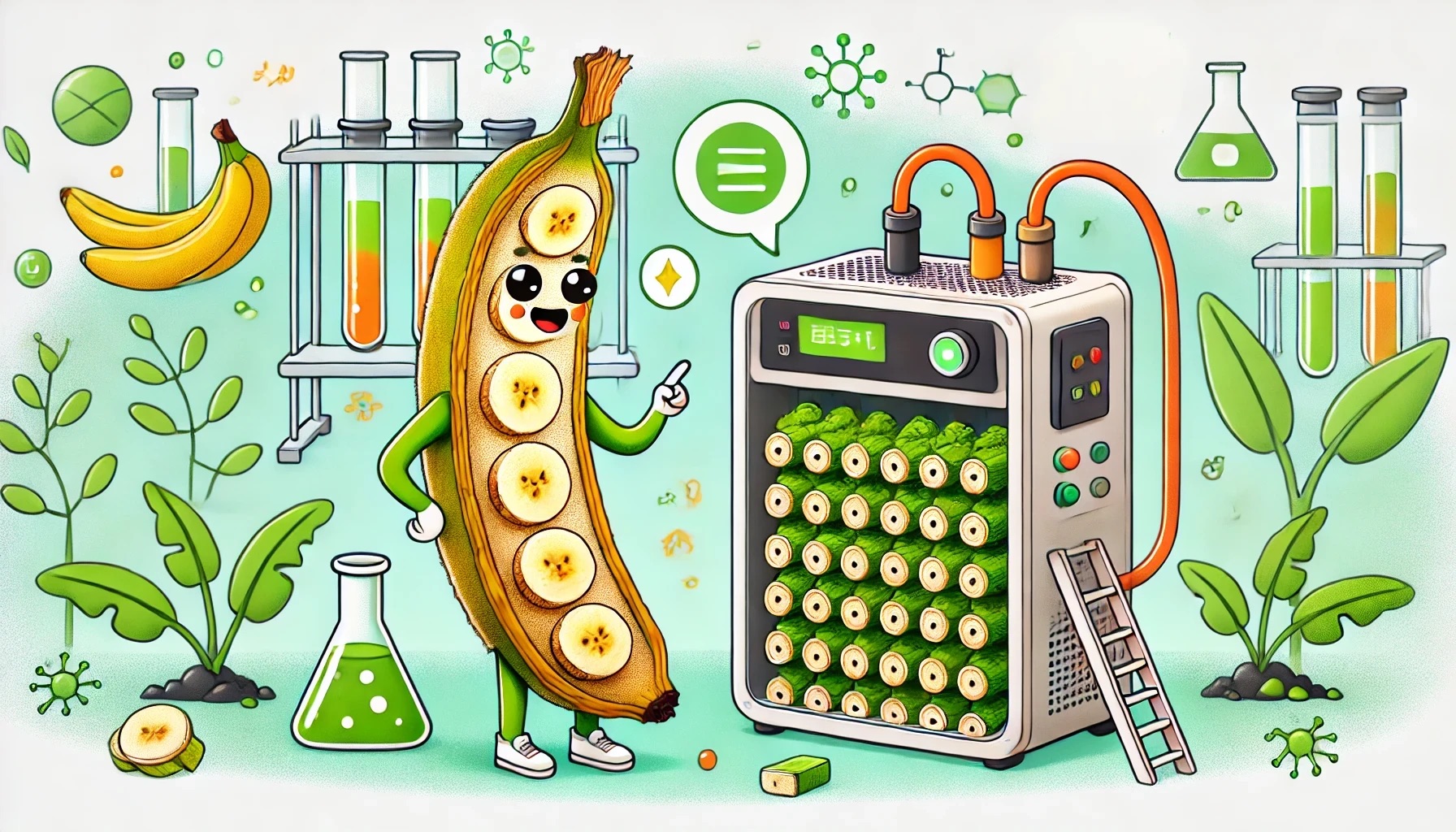
A recent study published in the Journal of Electroanalytical Chemistry explores an innovative approach to treating salicylic acid (SA)-contaminated wastewater while simultaneously generating bio-electricity. The research utilizes waste banana peel biocharBiochar is a carbon-rich material created from biomass decomposition in low-oxygen conditions. It has important applications in environmental remediation, soil improvement, agriculture, carbon sequestration, energy storage, and sustainable materials, promoting efficiency and reducing waste in various contexts while addressing climate change challenges. More (BC) supported by a MIL-53(Fe) metal-organic framework (MOF) as a cathode catalyst in a microbial fuel cell (MFC).
The study demonstrates the efficacy of this novel catalyst in improving the performance of MFCs. The MFC-MIL-53(Fe)/BC system achieved a significant power density of 142.2 ± 1.5 mW/m², a notable improvement compared to the MFC using only MIL-53(Fe), which produced 60.6 ± 1.8 mW/m². Additionally, the chemical oxygen demand removal was found to be 93.8 ± 2.2%, nearly matching the performance of the conventional platinum-based catalyst (Pt/C), which recorded 94.6 ± 1.5%.
The BC-supported MIL-53(Fe) catalyst also demonstrated impressive biodegradation capabilities, achieving 91.5 ± 2.0% degradation of SA. Moreover, the power recovery per unit cost was significantly higher for the MIL-53(Fe)/BC system at 380.21 mW/US$, compared to 6.08 mW/US$ for the Pt/C system, highlighting its potential as a cost-effective alternative.
This research highlights the dual benefits of using waste-derived materials in environmental applications, providing a sustainable solution for wastewater treatment and green energy generation. The findings suggest that MIL-53(Fe)/BC could serve as an affordable and efficient catalyst for future large-scale MFC applications, offering a promising avenue for addressing water and energy challenges simultaneously.





Leave a Reply