
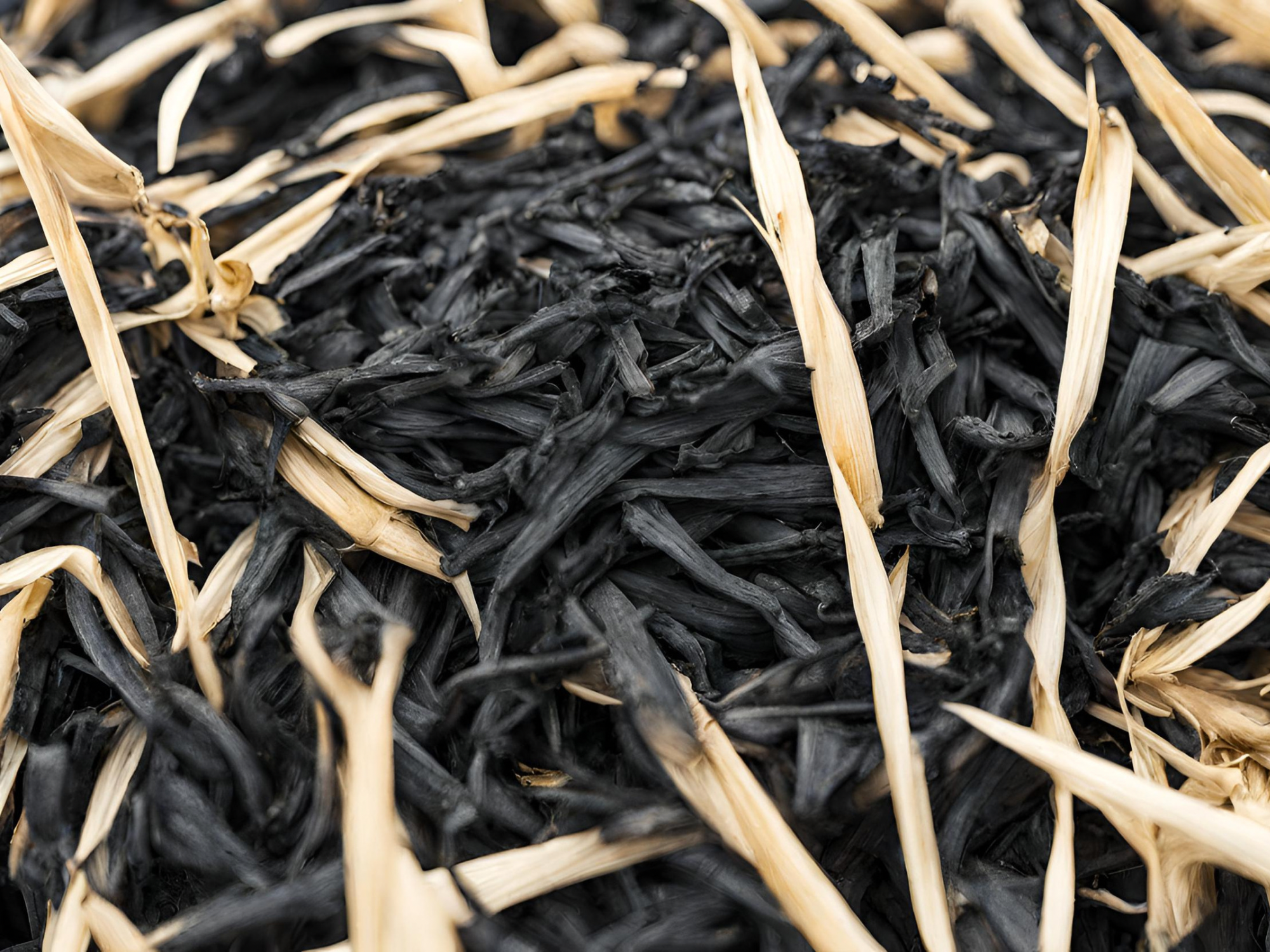
Zou, Debiagi, et al (2024) Impact of high-temperature biomassBiomass is a complex biological organic or non-organic solid product derived from living or recently living organism and available naturally. Various types of wastes such as animal manure, waste paper, sludge and many industrial wastes are also treated as biomass because like natural biomass these More pyrolysisPyrolysis is a thermochemical process that converts waste biomass into bio-char, bio-oil, and pyro-gas. It offers significant advantages in waste valorization, turning low-value materials into economically valuable resources. Its versatility allows for tailored products based on operational conditions, presenting itself as a cost-effective and efficient More on biocharBiochar is a carbon-rich material created from biomass decomposition in low-oxygen conditions. It has important applications in environmental remediation, soil improvement, agriculture, carbon sequestration, energy storage, and sustainable materials, promoting efficiency and reducing waste in various contexts while addressing climate change challenges. More formation and composition. Journal of Analytic and Applied Pyrolysis. https://doi.org/10.1016/j.jaap.2024.106463
In the pursuit of sustainable energy alternatives, biomass emerges as a promising candidate, offering a net-zero emissions process and abundant reserves. Among its utilization pathways, high-temperature pyrolysis stands out for its potential to produce valuable products without tar formation. Understanding the kinetic mechanisms underlying biomass pyrolysis is crucial for optimizing reactor design and enhancing product yields.
This study delves into the pyrolysis behavior of rice husk (RH) and corn straw (CS) through experimental analysis using a thermogravimetric analyzer coupled with mass spectrometry (TGA-MS). The results reveal distinct thermal behaviors at high temperatures, shedding light on the transformation mechanism of oxygen-containing solids. Fourier transform infrared spectroscopy (FTIR) analysis elucidates the chemical composition of the solid residue, indicating the presence of carbonyl and carboxyl groups.
Building upon these experimental findings, the CRECK-S-B biomass pyrolysis kinetic model is updated to better predict biochar yield and elemental composition, particularly at elevated temperatures. The enhanced model demonstrates remarkable accuracy, validated against experimental data and a comprehensive literature database.
This research not only expands our understanding of biomass thermochemical conversion but also contributes to the sustainable development of biomass energy. By offering novel insights into high-temperature pyrolysis processes and refining kinetic models, this work paves the way for more efficient biomass utilization strategies.
Sectioned into materials and experimental methods, experimental findings, modeling activity, and conclusions, this comprehensive study underscores the significance of advancing biomass pyrolysis kinetics for a greener energy future.





Leave a Reply