
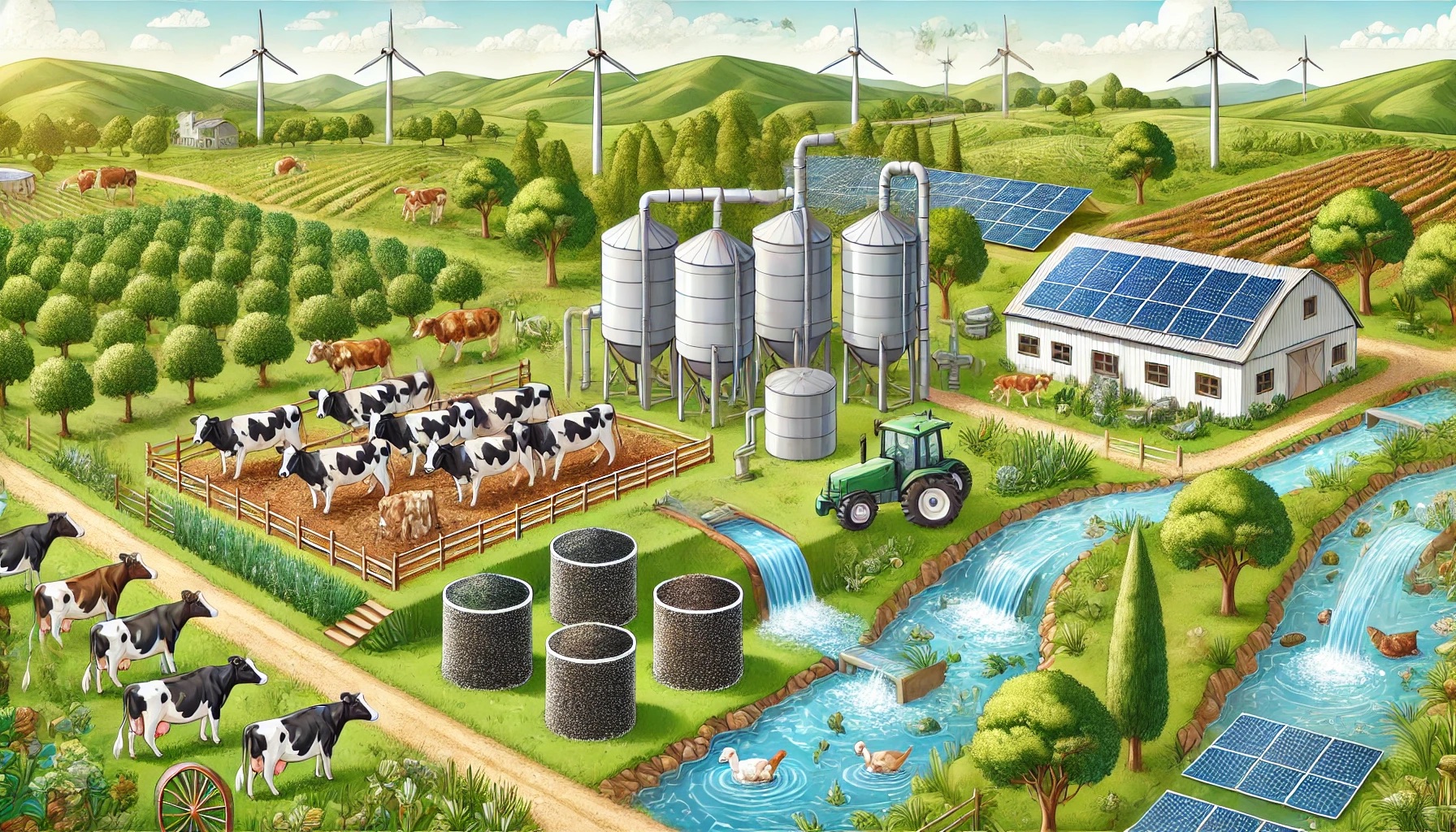
Gao, et al (2024) Recent advances and perspectives of biocharBiochar is a carbon-rich material created from biomass decomposition in low-oxygen conditions. It has important applications in environmental remediation, soil improvement, agriculture, carbon sequestration, energy storage, and sustainable materials, promoting efficiency and reducing waste in various contexts while addressing climate change challenges. More for livestock wastewater: Modification methods, applications, and resource recovery. Journal of Environmental Chemical Engineering. https://doi.org/10.1016/j.jece.2024.113678
Recent research in the Journal of Environmental Chemical Engineering explores the innovative use of biochar for treating livestock wastewater. Livestock farming, essential for global food security, significantly impacts water resources, with wastewater posing severe environmental risks. Biochar, derived from biomassBiomass is a complex biological organic or non-organic solid product derived from living or recently living organism and available naturally. Various types of wastes such as animal manure, waste paper, sludge and many industrial wastes are also treated as biomass because like natural biomass these More pyrolysisPyrolysis is a thermochemical process that converts waste biomass into bio-char, bio-oil, and pyro-gas. It offers significant advantages in waste valorization, turning low-value materials into economically valuable resources. Its versatility allows for tailored products based on operational conditions, presenting itself as a cost-effective and efficient More, is noted for its high adsorption capacity, making it suitable for wastewater treatment and resource recovery.
The review highlights the need to modify biochar to enhance its adsorption properties, enabling it to transform wastewater contaminants into valuable resources. This modification can involve treating biochar with metal salts to improve its efficiency. Current practices in using biochar focus on its capacity to sequester carbon and its potential to recycle nutrients, such as phosphorus and ammonium nitrogen, from wastewater. This not only mitigates pollution but also supports sustainable agricultural practices.
Despite its promise, the literature lacks detailed insights into the specific reuse forms of substances recovered by biochar from livestock wastewater. The study emphasizes the importance of advancing research to better understand these processes and optimize biochar applications. By improving biochar technology, we can enhance wastewater treatment methods, reduce environmental impacts, and promote a circular economy in agriculture.
This review serves as a call to action for continued research and development in biochar applications, aiming to address the dual challenges of efficient waste management and resource recovery in the livestock industry.




Leave a Reply