
Zhou, et al (2024) Progress of metal-loaded biochar-activated persulfate for degradation of emerging organic contaminants. Water Science & Technology. http://iwaponline.com/wst/article-pdf/doi/10.2166/wst.2024.256/1453682/wst2024256.pdf
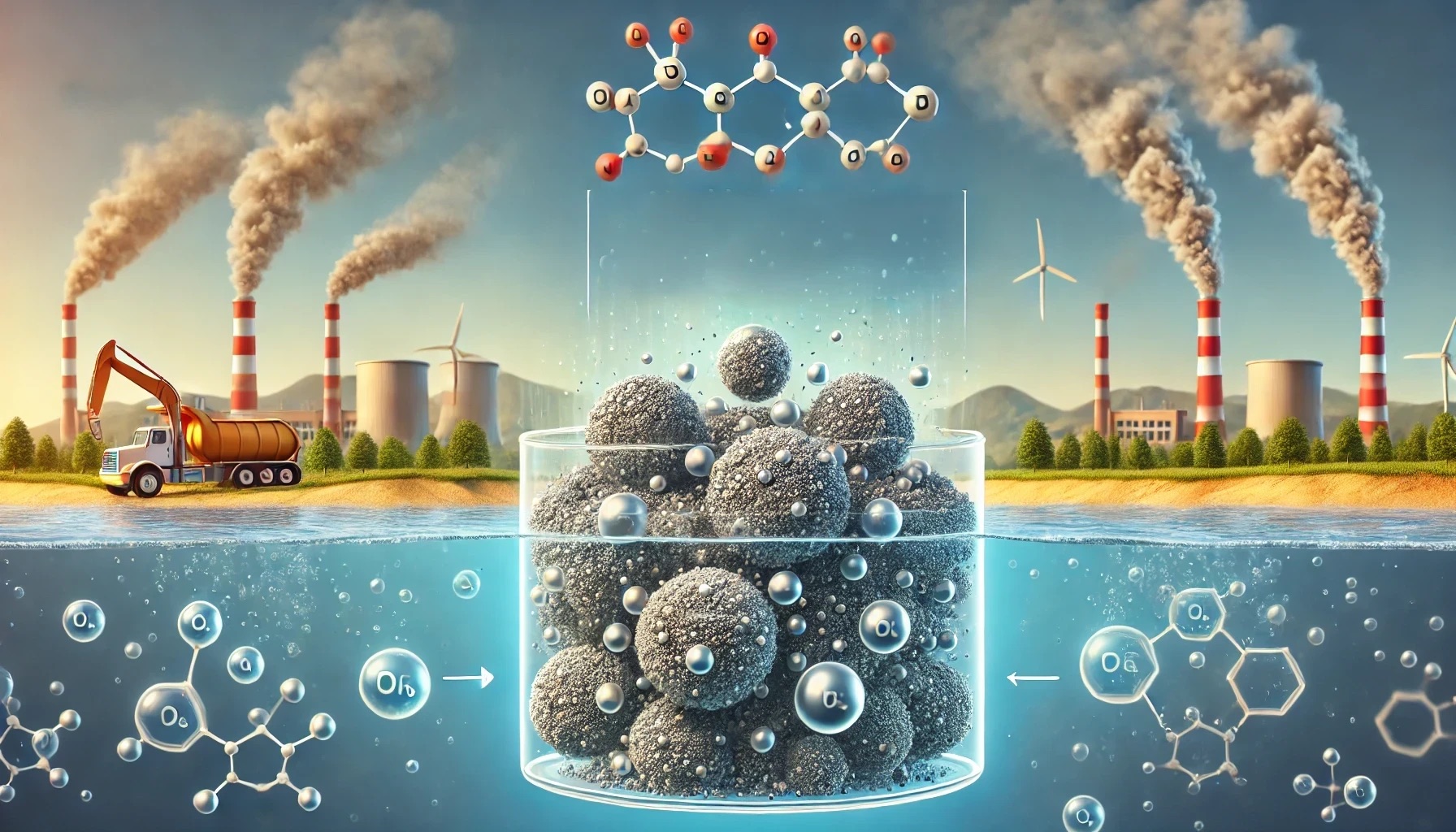
Emerging organic contaminants (EOCs) such as persistent organic pollutants, endocrine disruptors, antibiotics, and microplastics pose significant threats to the environment and human health. These pollutants are difficult to degrade due to their high toxicity, persistence, and bioaccumulation potential. Advanced oxidation processes (AOPs) based on sulfate radicals (SO4•−) have emerged as an efficient solution for degrading these contaminants. Metal-loaded biocharBiochar is a carbon-rich material created from biomass decomposition in low-oxygen conditions. It has important applications in environmental remediation, soil improvement, agriculture, carbon sequestration, energy storage, and sustainable materials, promoting efficiency and reducing waste in various contexts while addressing climate change challenges. More (Me-BC) has shown great promise in activating persulfate (PS) for pollutant degradation, offering a sustainable and effective approach for environmental remediation.
The preparation of Me-BC involves incorporating metals into biochar, which enhances its physicochemical properties and stability. The addition of metals increases the specific surface area and improves the pore structure of biochar. It also induces the formation of metal-containing functional groups and promotes the conversion of heteroatoms, further enhancing the number of active sites on the biochar. These active sites are crucial for the effective activation of PS, which leads to the generation of reactive species capable of degrading pollutants.
The degradation pathways of pollutants by Me-BC-activated PS can be categorized into free radical and non-radical pathways. The free radical pathways involve the generation of sulfate radicals (SO4•−), hydroxyl radicals (•OH), and superoxide radicals (O2•−). These radicals are highly reactive and can efficiently break down complex organic contaminants into smaller, less toxic molecules. The non-radical pathways involve the production of singlet oxygen (1O2) and direct electron transfer processes. These pathways are activated by different active sites on the Me-BC, such as metal ions, persistent free radicals (PFRs), oxygen-containing functional groups (OFGs), and structural defects.
The dual activation effect of biochar and transition metals on PS significantly enhances the stability and activation efficiency of the catalyst. This results in improved degradation of emerging pollutants, making Me-BC a promising material for environmental applications. The use of biochar as a carrier for transition metals also helps prevent the leachingLeaching is the process where nutrients are dissolved and carried away from the soil by water. This can lead to nutrient depletion and environmental pollution. Biochar can help reduce leaching by improving nutrient retention in the soil. More and agglomeration of nanometal particles, further improving the sustainability and effectiveness of the process.
Despite the promising potential of Me-BC in AOPs, there are still challenges that need to be addressed. These include the practical application of the technology, the depth of research on the activation mechanisms, and the recovery and reuse of the catalysts. Further research is needed to optimize the preparation methods and improve the understanding of the interaction between metals and biochar. This will help enhance the efficiency of pollutant degradation and ensure the sustainability of the process.
In conclusion, metal-loaded biochar represents a significant advancement in the field of environmental remediation. Its ability to activate persulfate and degrade emerging organic contaminants offers a sustainable and effective solution for addressing pollution. Continued research and development in this area will help overcome the existing challenges and pave the way for the widespread application of Me-BC in environmental cleanup efforts.


Leave a Reply