
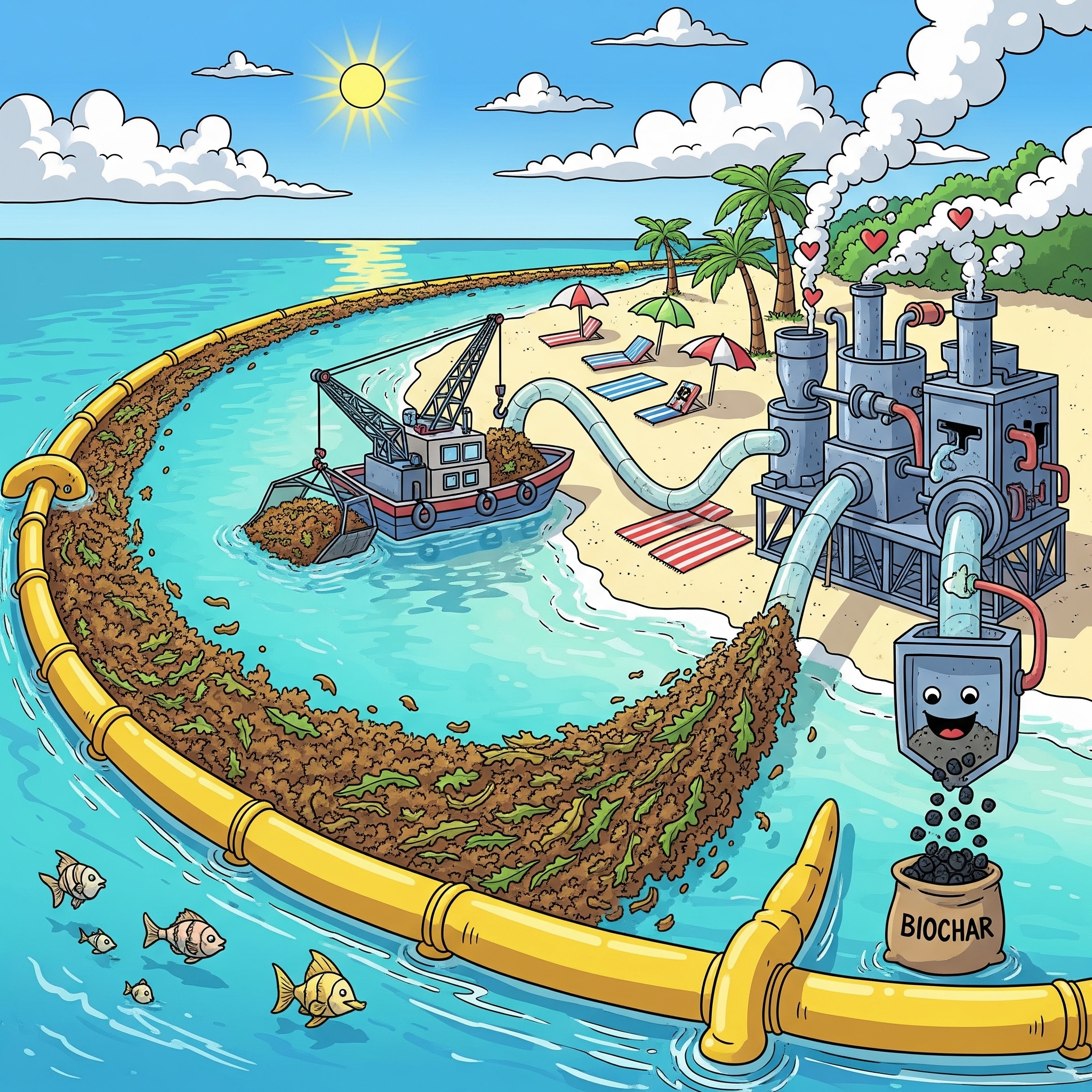
In a significant move for environmental and economic sustainability in the Caribbean, Seafields is rolling out a unique solution to the region’s massive Sargassum seaweed problem. Every year, millions of tonnes of the seaweed overwhelm coastlines, harming ecosystems, disrupting tourism, and affecting fishing industries. Seafields’ innovative approach not only tackles this ecological crisis but also establishes a new, sustainable supply chain for bio-based industries.
The company’s core technology, the SeaClear platform, utilizes uniquely developed barriers and paddocks to intercept Sargassum before it can reach the shore. Once contained, the seaweed is stored in proprietary Algaeponix paddocks. This system provides a consistent, year-round supply of Sargassum, mitigating the supply chain risks that have historically hindered the development of Sargassum-derived products. By addressing the seaweed at sea, Seafields preserves the integrity of coastal ecosystems and allows for the creation of valuable bio-feedstocks.
These feedstocks are crucial for the production of various bio-based products, including biostimulants for agriculture. Seafields is already in the process of securing its first offtake agreements for these products and has formed partnerships worth over $2 million. The company’s business model involves a combination of operating its own farms and licensing its technology, with plans to establish over 100 farms across the Caribbean. This network of farms is projected to provide a permanent solution to the Sargassum issue in the central Atlantic, while also generating permanent carbon removal credits.
The company’s ambition extends beyond regional environmental cleanup. The article notes that Seafields’ model, at full deployment, could remove up to 42 gigatonnes of CO₂ from the atmosphere, a claim that underscores its potential to contribute on a global scale to carbon sequestration. A pilot project is currently underway in St. Vincent, supported by the Organisation of Eastern Caribbean States and the World Bank, demonstrating the collaboration between private enterprise and regional development initiatives to bring this large-scale solution to fruition. The project showcases how a pressing ecological problem can be transformed into a scalable, sustainable business opportunity with significant climate benefits.
The company’s ambition extends beyond regional environmental cleanup. The article notes that Seafields’ model, at full deployment, could remove up to 42 gigatonnes of CO₂ from the atmosphere, a claim that underscores its potential to contribute on a global scale to carbon sequestration. A pilot project is currently underway in St. Vincent, supported by the Organisation of Eastern Caribbean States and the World Bank, demonstrating the collaboration between private enterprise and regional development initiatives to bring this large-scale solution to fruition. The project showcases how a pressing ecological problem can be transformed into a scalable, sustainable business opportunity with significant climate benefits.
SOURCE: How Seafields is planning to save Caribbean coasts


![Eucalyptus Wood Waste-Derived Biochar Achieves a Ninety-Eight Percent Removal Efficiency for Benzo[ghi]perylene in Vehicle-Wash Wastewater](https://biochartoday.com/wp-content/uploads/2026/10/SCIENCE-BLOGS-2026-2026-10-19T160523.703.jpg)

Leave a Reply