
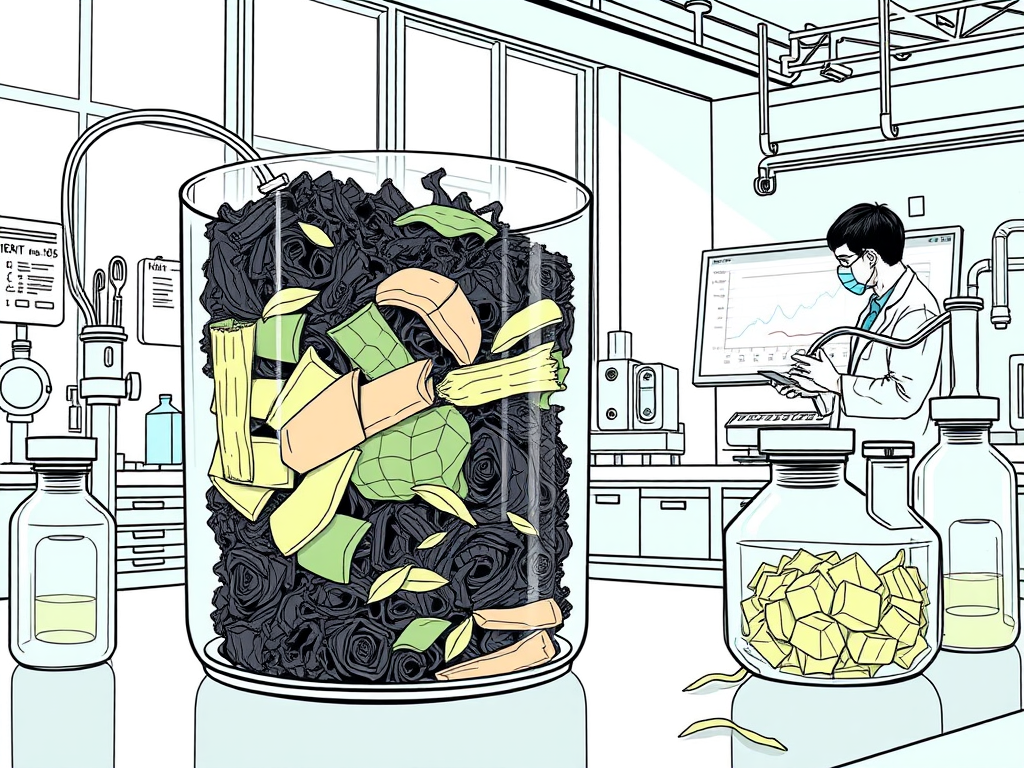
A study published in the International Journal of Integrated Engineering by Khadijah Muhammad et al., explored the use of rubber sludge-derived biocharBiochar is a carbon-rich material created from biomass decomposition in low-oxygen conditions. It has important applications in environmental remediation, soil improvement, agriculture, carbon sequestration, energy storage, and sustainable materials, promoting efficiency and reducing waste in various contexts while addressing climate change challenges. More to enhance anaerobic digestion of food waste (ADFW). The research found that biochar addition can improve biogas production, with optimal results achieved at a pHpH is a measure of how acidic or alkaline a substance is. A pH of 7 is neutral, while lower pH values indicate acidity and higher values indicate alkalinity. Biochars are normally alkaline and can influence soil pH, often increasing it, which can be beneficial More of 6 and a biochar dosage of 15 g/L of food waste over 35 days.
Food waste is a significant global issue, especially in urbanized areas. Anaerobic digestion (AD) is a sustainable and cost-effective method to address this. However, AD processes can suffer from problems like over-acidification, low methane yield, and instability. This study investigated whether rubber sludge-derived biochar could help.
The biochar was produced by heating rubber sludge to 500°C. The researchers then tested different pH levels (4-8) and biochar dosages (5-25 g/L) in the ADFW process over a period of 7 to 35 days.
The results indicated that the highest biogas yields were observed when the AD process was maintained at a pH of 6, with a biochar dosage of 15 grams of biochar per liter of food waste, and after a digestion period of 35 days. This research suggests that incorporating rubber sludge-derived biochar can enhance the anaerobic digestion of food waste. Optimizing conditions like pH and biochar dosage is crucial for maximizing biogas production.
The findings contribute to the development of more efficient and stable AD processes, which can play a role in sustainable waste management and renewable energy production.
Source: Muhammad, K., Azmi, A. N., & Yahya, N. Y. (2025). Anaerobic Digestion of Food Waste Enhanced by Rubber Sludge Biochar. International Journal of Integrated Engineering, 17(1), 260-268.



Leave a Reply