
Key Takeaways
- Researchers have turned rice husk waste into a powerful magnetic filter that cleans highly toxic industrial pollution from water.
- This new material can trap over 207 milligrams of poisonous hexavalent chromium in every single gram of the filter used.
- Beyond just trapping the poison, the filter chemically transforms the most dangerous form of chromium into a much safer version.
- Testing on real industrial wastewater proved the filter is highly effective and can be reused multiple times to save costs.
- This discovery helps the environment twice by recycling agricultural waste and providing a cheap way to protect our drinking water.
The global crisis of water quality has reached a critical point in the 21st century, with industrial heavy metals like hexavalent chromium posing a severe threat to both human health and aquatic ecosystems. In the study published in Nano Trends, authors Anu Kumari, Rishi Mittal, and their research team addressed this challenge by engineering a novel solution from common agricultural waste. Hexavalent chromium is a known group-1 carcinogen and is roughly 100 times more poisonous than its trivalent counterpart. While industries such as electroplating and leather tanning contribute significantly to chromium levels in freshwater, the high cost of conventional cleanup methods often limits their widespread use. This research introduces a sustainable nanocomposite that utilizes rice husks to create a high-performance material capable of sequestering these dangerous toxins with remarkable efficiency.
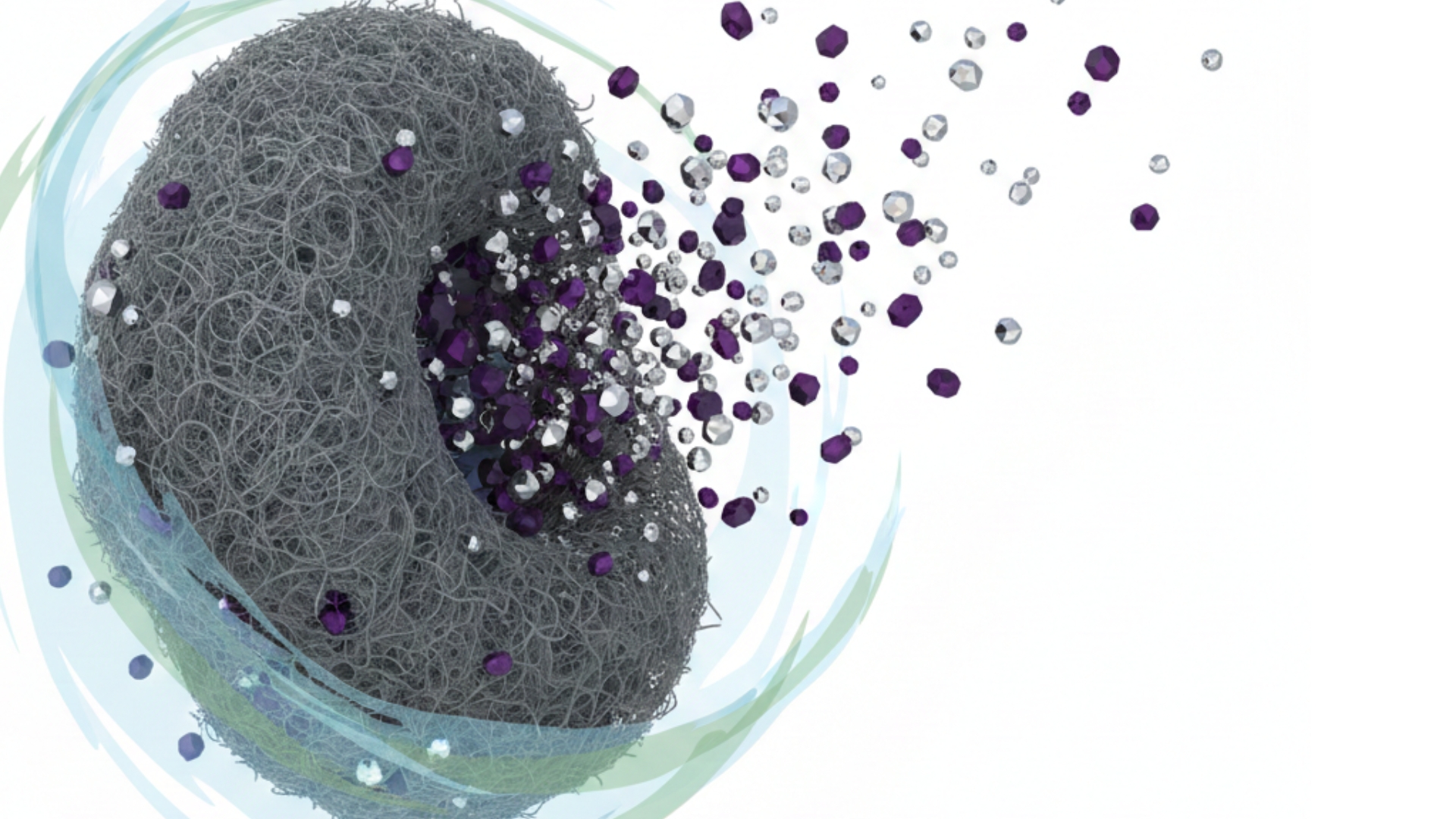
The researchers synthesized a mesoporous nanocomposite by impregnating rice husk biocharBiochar is a carbon-rich material created from biomass decomposition in low-oxygen conditions. It has important applications in environmental remediation, soil improvement, agriculture, carbon sequestration, energy storage, and sustainable materials, promoting efficiency and reducing waste in various contexts while addressing climate change challenges. More with zinc oxide nanoparticles. This engineering process created a material with a high surface area of 105.74 square meters per gram, providing a vast network of active sites to capture chromium ions. The quantitative results of the batch adsorption experiments revealed that the material reached an exceptional adsorption capacity of 207.03 milligrams per gram. Under optimized conditions, including a contact time of only 90 minutes and a slightly acidic pHpH is a measure of how acidic or alkaline a substance is. A pH of 7 is neutral, while lower pH values indicate acidity and higher values indicate alkalinity. Biochars are normally alkaline and can influence soil pH, often increasing it, which can be beneficial More, the filter achieved a removal efficiency of over 92 percent. This performance significantly outperforms many other modified adsorbents reported in recent literature, demonstrating the power of combining nanotechnology with recycled agricultural byproducts.
One of the most impressive findings of the study is the multi-stage mechanism by which the filter operates. Advanced chemical analysis showed that the nanocomposite does not just hold the chromium on its surface; it actively reduces the highly toxic hexavalent chromium into a much less harmful trivalent state. Approximately 70 to 75 percent of the chromium captured by the material was converted into this safer form. This chemical reduction is driven by the abundant functional groups on the biochar surface and the presence of zinc oxide, which facilitate a series of interactions including electrostatic attraction and hydrogen bonding. This dual action of capturing and detoxifying the pollutant makes the material a superior choice for environmental remediation.
The practical application of this technology was further validated through tests on real effluent collected from an electroplating industry in India. The nanocomposites successfully removed 87.47 percent of the chromium from the actual industrial waste, while also improving other water quality markers like chemical oxygen demand and total dissolved solids. Furthermore, the researchers conducted a detailed cost-benefit analysis at the lab scale, which confirmed that this agro-waste-based filter is more economical than traditional synthetic alternatives. While the material’s efficiency naturally declines over repeated uses due to pore blockage, it still maintained significant performance over five successive cycles.
This breakthrough aligns with several United Nations Sustainable Development Goals, specifically targeting clean water, industry innovation, and responsible production. By converting rice husks—an often-discarded residue—into a high-value technological tool, the study provides a roadmap for a circular economy approach to pollution control. The ability of the material to be regenerated using simple chemical washes further enhances its viability for large-scale industrial applications. As we look toward a future with stricter water quality standards, these sustainable nanocomposites offer a promising and affordable strategy for protecting the world’s most vital resource.
Source: Kumari, A., Mittal, R., Yadav, M., Khatri, A., & Bhateria, R. (2026). Valorization of agriculture residues into novel mesoporous surface engineered (ZnO@RHBC) nanocomposites for sustainable sequestration of hexavalent chromium from electroplating industrial wastewater. Nano Trends, 100181.


Leave a Reply