
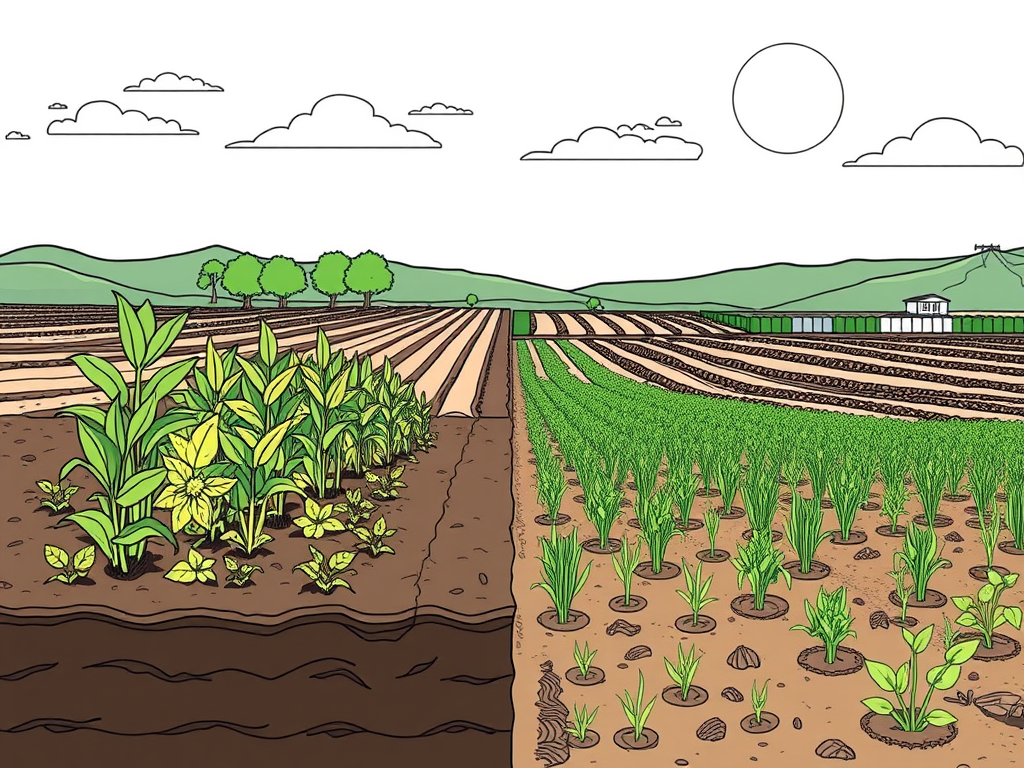
BiocharBiochar is a carbon-rich material created from biomass decomposition in low-oxygen conditions. It has important applications in environmental remediation, soil improvement, agriculture, carbon sequestration, energy storage, and sustainable materials, promoting efficiency and reducing waste in various contexts while addressing climate change challenges. More has gained widespread recognition as a sustainable solution to improve soil fertility and boost crop production. However, a recent opinion piece published in Pedosphere by V. Chaplot, P. Baveye, R. Guénon, E. Le Guyader, B. Minasny, and A.K. Srivastava critically re-examines the scientific evidence supporting these claims, suggesting that the underlying data for biochar’s agricultural benefits may be far more limited and less conclusive than generally perceived.
The authors highlight a significant disparity between the vast number of publications on “biochar and agriculture” and the actual experimental data on crop yield and biomassBiomass is a complex biological organic or non-organic solid product derived from living or recently living organism and available naturally. Various types of wastes such as animal manure, waste paper, sludge and many industrial wastes are also treated as biomass because like natural biomass these More production. Out of over 12,000 publications reviewed in meta-studies, only 109 (a mere 0.9%) were identified as Institute for Scientific Information (ISI) papers that provided direct experimental data on these impacts. This immediately raises questions about the robustness of the foundation upon which many claims are built.
A critical shortcoming identified in the analysis is the lack of proper controls in existing studies. None (0%) of the 109 reviewed studies compared biochar treatments to controls where the same amounts of easily accessible nutrients found in biochar were added to the soil. This omission makes it challenging to ascertain whether observed yield increases are genuinely due to biochar’s unique properties or simply the additional nutrient input it provides. Similarly, only a tiny fraction (0.9%) of studies evaluated the potential toxicity of biochar , and only 5.5% considered its effects over at least two cropping cycles after a single application. These are significant oversights, as long-term impacts and potential adverse effects are crucial for sustainable agricultural practices.
The impact of these experimental shortcomings becomes even clearer when examining the reported yield gains. While the mean biomass or grain yield gain across all available experiments (including non-agricultural soils) was initially reported at 16.1% (median at 7.1%) , this figure drastically decreased when only agricultural soils (n=65) were considered. For agricultural soils, the mean gain plummeted to -0.64% (median at 5.2%). This suggests that the generalized positive effects often cited may not translate effectively to actual agricultural settings, leading to the conclusion that “the biochar effects on biomass and food production were negligible for agricultural soils”.
The authors draw parallels to other agricultural practices, like conservation tillage and cover crops, where initial enthusiasm and broad claims of carbon sequestration were later moderated by more rigorous re-analyses of the literature. Just as with biochar, these practices suffered from similar methodological issues, such as insufficient sampling depth, inadequate controls, or focusing on carbon content instead of stocks. This highlights a broader issue in agricultural research where initial promising findings can lead to overestimations due to less rigorous experimental designs.
To move forward, the opinion piece strongly advocates for improved research trials. Future studies need to implement proper controls, including treatments with equivalent nutrient additions and pHpH is a measure of how acidic or alkaline a substance is. A pH of 7 is neutral, while lower pH values indicate acidity and higher values indicate alkalinity. Biochars are normally alkaline and can influence soil pH, often increasing it, which can be beneficial More adjustments to differentiate biochar-specific effects. Furthermore, long-term monitoring over several growing seasons is essential to understand the lasting impacts on soil functioning and agricultural product quality. The potential presence of toxins like polycyclic aromatic hydrocarbons (PAHs) in some biochars and their impact on soil pollution and crop productivity also warrants further investigation.
In essence, while biochar holds promise for carbon sequestration due to its stable nature , the current body of evidence does not robustly support its widespread application as a guaranteed method for enhancing agricultural production. The authors call for a paradigm shift in research methodology, urging the scientific community to conduct more rigorous field trials with appropriate controls and long-term observations to provide a clearer and more confident understanding of biochar’s true impacts on agricultural soils.
Source: Chaplot, V., Baveye, P., Guénon, R., Le Guyader, E., Minasny, B., & Srivastava, A. K. (2025). Biochars improve agricultural production: The evidence base is limited. Pedosphere, 35(1), 295–298.




Leave a Reply