
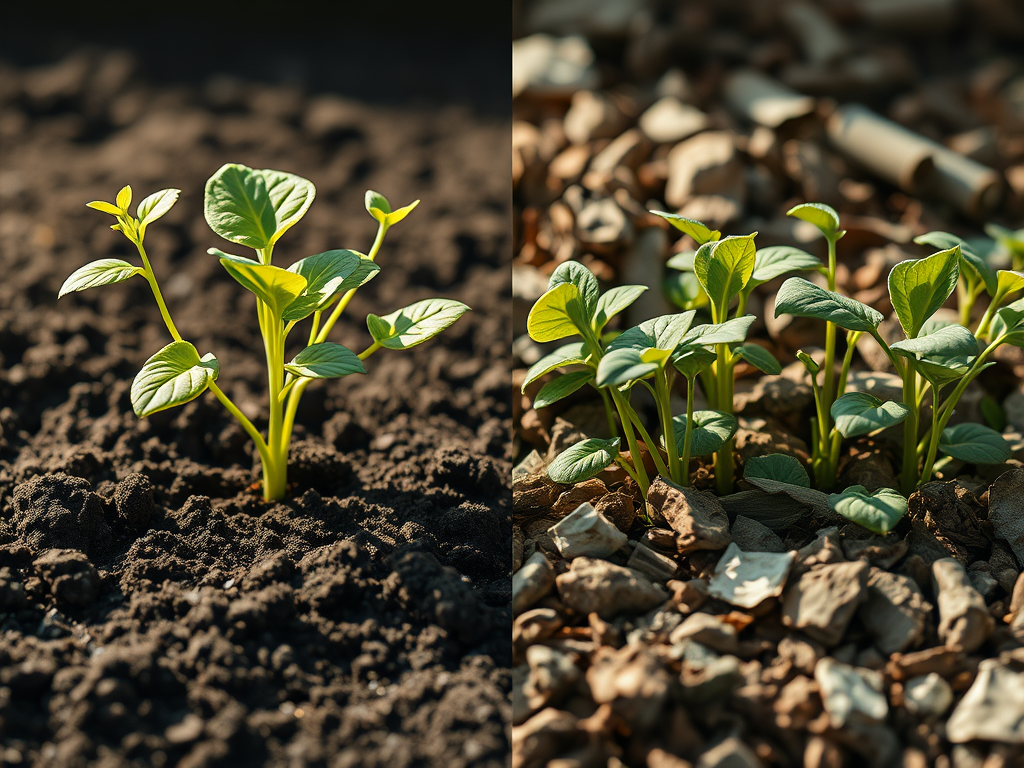
A recent study reveals that biocharBiochar is a carbon-rich material created from biomass decomposition in low-oxygen conditions. It has important applications in environmental remediation, soil improvement, agriculture, carbon sequestration, energy storage, and sustainable materials, promoting efficiency and reducing waste in various contexts while addressing climate change challenges. More, a material widely used to enhance soil, was ineffective in improving the ability of construction and demolition waste (CDW) and completely decomposed granite (CDG) to support plant life. Researchers Trishia Liezl Dela Cruz, Yuchen Wang, and Charles Wang Wai Ng from the Hong Kong University of Science and Technology published their findings in E3S Web of Conferences. The study investigated the use of peanut shell biochar, produced at 500∘C, as an amendment to improve the properties of CDW and CDG for geo-environmental applications. Their results showed that while CDW is a promising alternative for geotechnical applications, its high alkalinity and poor water retention are significant barriers to its use as a planting medium. This research highlights the need for a more nuanced approach to soil amendments, suggesting that biochar may not be a one-size-fits-all solution for all soil types.
The study compared the effects of adding biochar at 5% and 10% (by mass) to recycled concrete aggregates (RCA), a type of CDW, and CDG. The RCA and CDG without any amendments served as the control groups. The researchers analyzed the materials’ pHpH is a measure of how acidic or alkaline a substance is. A pH of 7 is neutral, while lower pH values indicate acidity and higher values indicate alkalinity. Biochars are normally alkaline and can influence soil pH, often increasing it, which can be beneficial More, electrical conductivity (EC), and organic matter (OM) content before and after a 21-day plant growth experiment using Pak Choi.
The findings on plant growth were conclusive: biochar-amended substrates performed poorly compared to the un-amended controls. The control samples of RCA and CDG showed the highest leaf area and root length, indicating they were more favorable for plant growth. In stark contrast, plants grown in RCA with biochar amendments had reduced leaf area and root length. In some cases, no germination occurred at all. The researchers also noted that the 10% biochar-amended CDG (CP10) showed no root propagation, suggesting that this high dosage inhibited or severely restricted root development.
The poor plant performance was attributed to several factors, particularly the increase in electrical conductivity (EC) caused by the biochar amendment. While biochar contains hydroxyl and carboxyl groups that can enhance water retention and improve soil properties , the peanut shell biochar significantly increased the EC of the substrate. This elevated salinity likely caused osmotic stress and ion toxicity, which inhibited seed germination and early root growth. Additionally, the biochar’s high pH may have worsened the alkalinity of the RCA, further limiting nutrient availability for the plants.
Despite the negative impact on plant growth, the study did show some beneficial changes in material properties. The addition of biochar slightly reduced the pH of the RCA. It also significantly increased the organic matter content, with a 10% biochar amendment (RP10) leading to a 121% increase after harvest. Higher organic matter is typically beneficial for soil fertility, as it improves nutrient retention and water-holding capacity. However, in this case, the negative effects of high EC and pH outweighed the benefits of increased organic matter, leading to the overall failure of the biochar-amended substrates to support healthy plant growth.
The study concludes that while biochar holds promise for enhancing water retention and carbon sequestration, it must be carefully optimized for specific applications and soil types. The findings underscore the need for further research into alternative amendments, different biochar dosages, and pre-treatment methods to improve the suitability of construction waste for sustainable vegetation-based applications.
SOURCE: Dela Cruz, T. L., Wang, Y., & Ng, C. W. W. (2025). Effects of Biochar on Vegetation and Material Fertility of Construction Waste and Completely Decomposed Granite. E3S Web of Conferences, 642, 06008.


Leave a Reply