
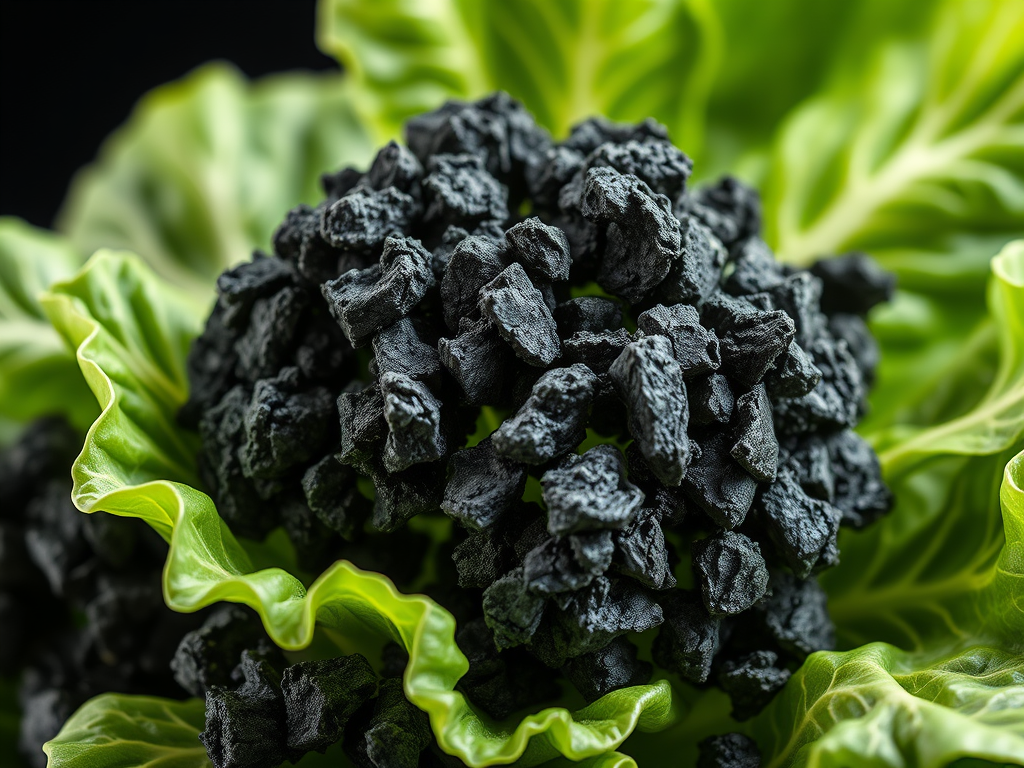
The challenge of safely managing biomassBiomass is a complex biological organic or non-organic solid product derived from living or recently living organism and available naturally. Various types of wastes such as animal manure, waste paper, sludge and many industrial wastes are also treated as biomass because like natural biomass these More contaminated with heavy metals, particularly the highly toxic hexavalent chromium (Cr(VI)), is a pressing environmental concern. Lettuce, often used in soil remediation for cadmium, can accumulate significant amounts of Cr(VI), posing a risk through the food chain. A recent study published in ACS Omega by Qiong Wang and Hugang Li presents a promising solution: stabilizing Cr(VI) during the carbothermal reactions of lettuce pyrolysisPyrolysis is a thermochemical process that converts waste biomass into bio-char, bio-oil, and pyro-gas. It offers significant advantages in waste valorization, turning low-value materials into economically valuable resources. Its versatility allows for tailored products based on operational conditions, presenting itself as a cost-effective and efficient More using an affordable and readily available additive, calcium oxide (CaO).
The researchers investigated the impact of both pyrolysis temperature and CaO dosage on the stabilization of Cr(VI) in lettuce-derived biocharBiochar is a carbon-rich material created from biomass decomposition in low-oxygen conditions. It has important applications in environmental remediation, soil improvement, agriculture, carbon sequestration, energy storage, and sustainable materials, promoting efficiency and reducing waste in various contexts while addressing climate change challenges. More. Their findings reveal a significant reduction in the Cr(VI) content, demonstrating the effectiveness of their approach. Specifically, the ratio of Cr(VI) to total chromium in biochar produced at 800°C dramatically decreased by 93.6% compared to biochar obtained at 400°C. This substantial reduction is attributed to the immobilization effects achieved during the pyrolysis process. Statistical analysis further reinforced these findings, showing a strong negative correlation between Cr(VI) levels and both increased CaO dosage (R2=−0.81, p≤0.01) and higher pyrolysis temperatures (R2=−0.86, p≤0.01). This means that as more CaO is added and as the temperature increases, less toxic Cr(VI) remains in the biochar.
The study delved into the mechanisms behind this successful stabilization. They found that during pyrolysis with CaO, Cr(VI) was reduced to less harmful forms, specifically Cr(V) and Cr(III). Using advanced analytical techniques like X-ray diffraction (XRD) and scanning electron microscopy-energy dispersive spectroscopy (SEM-EDS), the team identified that the Cr(V) compounds formed were primarily Ca5(CrO4)3OH and Ca5(CrO4)3Cl. This transformation is crucial because Cr(III) is an essential micronutrient with low toxicity and mobility, in stark contrast to the highly toxic and mobile Cr(VI). The presence of chlorine, abundant in raw lettuce (8.03% ), played a role in forming these specific Cr(V) compounds, effectively inhibiting the oxidation of Cr(III) back to Cr(VI).
Beyond the direct chemical transformations, the biochar’s own properties contributed to the immobilization process. The study observed a significant increase in the intensity of aromatic ring and heteroaromatic compounds on the biochar surface when the CaO dosage exceeded 10%. These redox-active functional groups act as electron donors, further facilitating the reduction of Cr(VI). The formation of a porous, mesoporous structure on the biochar surface due to the catalytic effect of metal oxides also enhanced physical adsorption, allowing the biochar to effectively trap the chromium species. The researchers concluded that a higher CaO dosage and pyrolysis temperature not only promote Cr(VI) removal but also contribute to the formation of abundant phenolic -OH groups and aromatic functional groups that serve as electron donors for Cr(VI) reduction through various mechanisms, including physical and chemical adsorption. This comprehensive understanding of the stabilization mechanism provides a new and effective strategy for managing chromium-contaminated biomass, turning a hazardous waste into a potentially beneficial soil amendmentA soil amendment is any material added to the soil to enhance its physical or chemical properties, improving its suitability for plant growth. Biochar is considered a soil amendment as it can improve soil structure, water retention, nutrient availability, and microbial activity. More.
Source: Wang, Q., & Li, H. (2025). Stabilization Mechanism of Highly Toxic Hexavalent Chromium during Carbothermal Reactions in Lettuce. ACS Omega.

![Eucalyptus Wood Waste-Derived Biochar Achieves a Ninety-Eight Percent Removal Efficiency for Benzo[ghi]perylene in Vehicle-Wash Wastewater](https://biochartoday.com/wp-content/uploads/2026/10/SCIENCE-BLOGS-2026-2026-10-19T160523.703.jpg)

Leave a Reply