
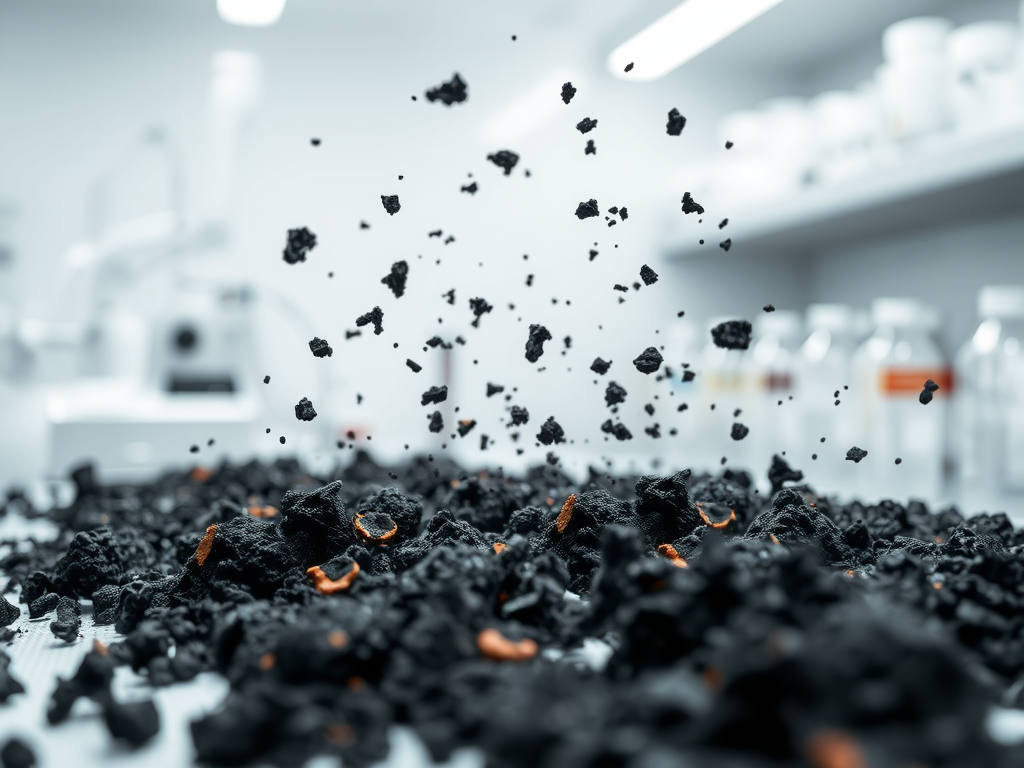
Manure-derived biocharBiochar is a carbon-rich material created from biomass decomposition in low-oxygen conditions. It has important applications in environmental remediation, soil improvement, agriculture, carbon sequestration, energy storage, and sustainable materials, promoting efficiency and reducing waste in various contexts while addressing climate change challenges. More is a popular choice for soil remediation due to its ability to stabilize heavy metals. However, a recent study published in Biochar by Xingdong Wang, Guidan Zhu, Yuanrong Yi, Jin Zhou, and Victor Wei-Chung Chang, challenges the long-held assumption that higher pyrolysisPyrolysis is a thermochemical process that converts waste biomass into bio-char, bio-oil, and pyro-gas. It offers significant advantages in waste valorization, turning low-value materials into economically valuable resources. Its versatility allows for tailored products based on operational conditions, presenting itself as a cost-effective and efficient More temperatures consistently lead to better long-term heavy metal retention. Their research reveals that freeze-thaw (FT) aging cycles can significantly undermine the stability of endogenous heavy metals in chicken manure (CM)-derived biochars, particularly those produced at higher temperatures.
The study investigated CM-derived biochars produced at three different pyrolysis temperatures: 350∘C, 550∘C, and 750∘C. These biochars were subjected to accelerated FT aging to simulate environmental conditions and assess changes in their structural integrity and heavy metal speciation.
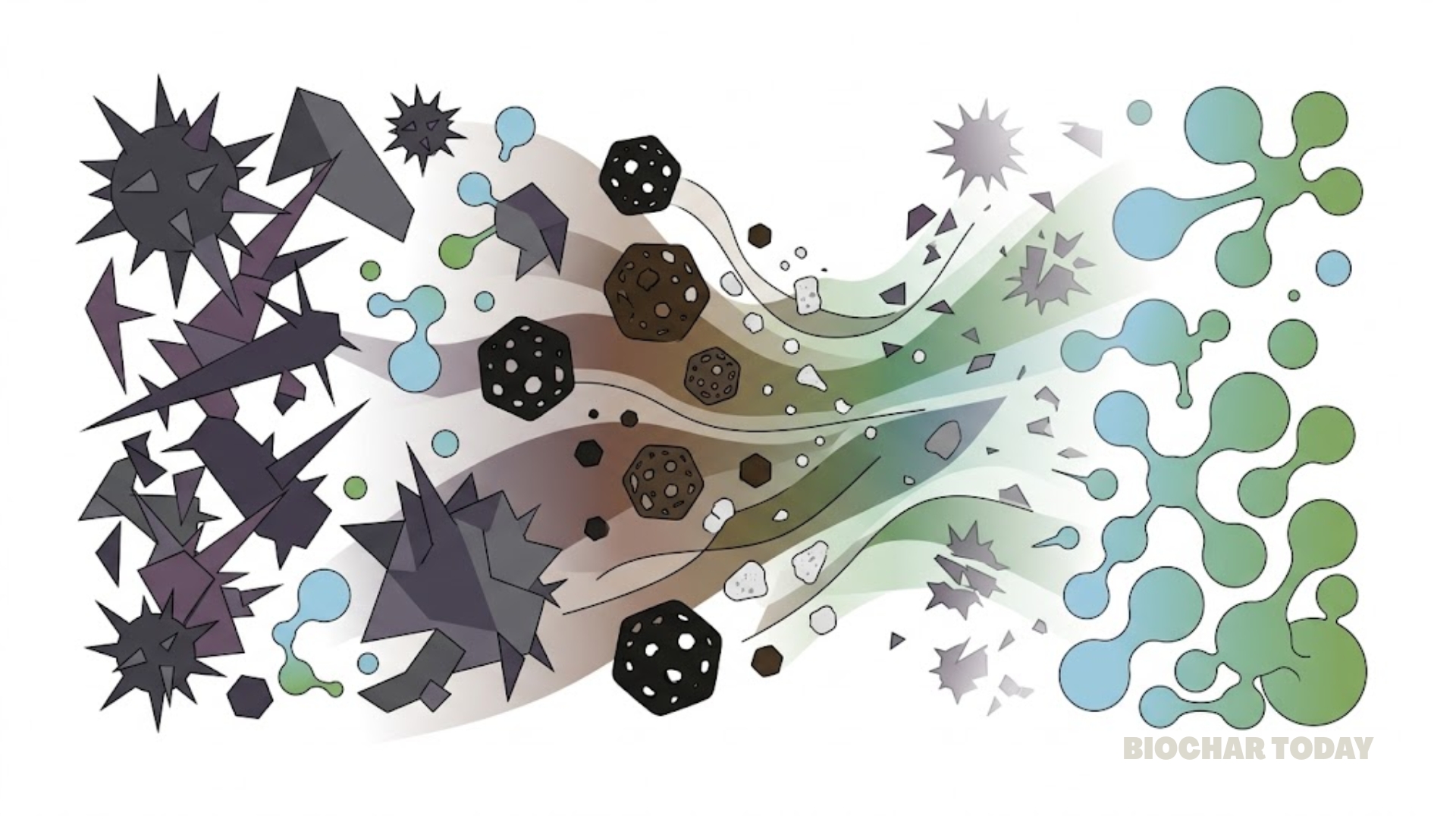
A key finding was that FT cycles caused significant physical fragmentation in porous biochar. This fragmentation led to a reduction in pHpH is a measure of how acidic or alkaline a substance is. A pH of 7 is neutral, while lower pH values indicate acidity and higher values indicate alkalinity. Biochars are normally alkaline and can influence soil pH, often increasing it, which can be beneficial More and graphitization, while increasing the total specific surface area (SSA) and oxygen-containing functional groups. Biochars produced at higher pyrolysis temperatures, specifically the 750∘C biochar (CMB-750), showed a greater susceptibility to this structural breakdown during FT aging. This, in turn, resulted in increased leachability and phyto-availability of heavy metals.
Chemical speciation analysis provided critical insights into these changes. For biochar produced at 750∘C (CMB-750), FT aging (resulting in ACMB-750) caused a pronounced transformation of heavy metals into less stable forms. The acid-soluble (F1) fractions of several heavy metals in aged biochar (ACMB-750) significantly increased: Zinc (Zn) increased to 34.97%, Copper (Cu) to 18.06%, Nickel (Ni) to 18.34%, Chromium (Cr) to 13.16%, Lead (Pb) to 31.23%, and Cadmium (Cd) to 6.31%.
These increases indicate a higher risk of these metals leachingLeaching is the process where nutrients are dissolved and carried away from the soil by water. This can lead to nutrient depletion and environmental pollution. Biochar can help reduce leaching by improving nutrient retention in the soil. More into the environment or being absorbed by plants, contradicting the general assumption that higher pyrolysis temperatures always enhance heavy metal retention. The study also found that the TCLP-leachability (a measure of toxicity and bioavailability) of Zn, Ni, Cr, Pb, and Cd in ACMB-750 was 4.67, 6.59, 5.44, 24.71, and 7.19 times higher, respectively, than in the pristine CMB-750. A dramatic increase in Cu leachability was also observed, rising from 0.00% in CMB-750 to 17.93% in ACMB-750.
The researchers attribute these changes to several factors. Repeated freezing and thawing cycles cause water within the biochar pores to expand and contract, leading to micro-cracks and fragmentation, especially in the more porous, high-temperature biochars. This increases the surface area and pore volume, making metals more accessible for leaching. Additionally, FT cycles promote surface oxidation, generating oxygen-containing functional groups that lower the pH and accelerate mineral dissolution, further increasing metal mobility.
These findings have critical implications for the safe and sustainable agricultural use of manure-derived biochar. They emphasize the need to consider the entire biochar lifecycle, from its production (fabrication) and soil application (remediation) to its long-term interactions with environmental factors like freeze-thaw cycles (aging). Future research should focus on developing surface modifications for biochar to enhance its resistance to environmental aging and incorporating compounds that actively reduce metal solubility, thereby improving long-term agricultural safety.
Source: Wang, X., Zhu, G., Yi, Y., Zhou, J., & Chang, V. W.-C. (2025). Reassessing the role of pyrolysis temperature: freeze-thaw aging challenges heavy metals stability in biochar. Biochar, 7(86).



Leave a Reply