
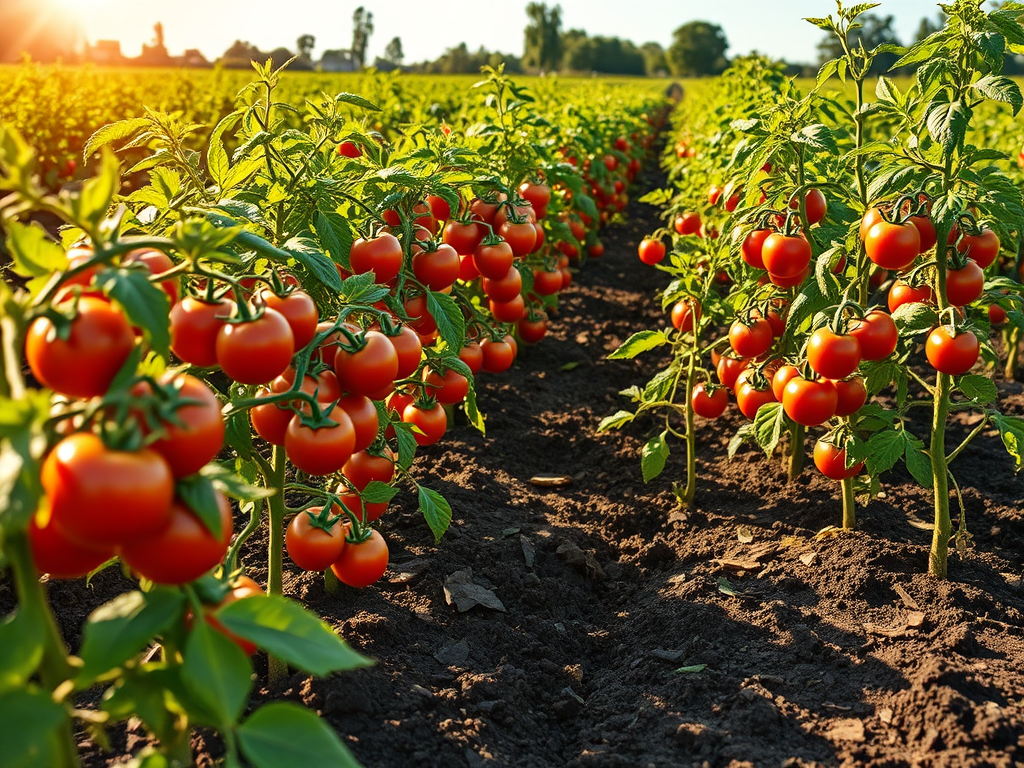
Tomato production is a vital part of southern Georgia’s agricultural economy, but it faces significant challenges from low-fertility soils and a heavy dependence on chemical inputs. Farmers in the region often contend with sandy soils that have low organic carbon content and poor water retention, which leads to a reliance on fertilizers and pesticides that can pose environmental risks and strain profitability. A recent study published in HortTechnology by Emilio Suarez, Juan C. Diaz-Perez, Nirmala Acharya, Kate Cassity-Duffey, Henry Y. Sintim, and Theodore McAvoy, investigates a promising solution: integrating biocharBiochar is a carbon-rich material created from biomass decomposition in low-oxygen conditions. It has important applications in environmental remediation, soil improvement, agriculture, carbon sequestration, energy storage, and sustainable materials, promoting efficiency and reducing waste in various contexts while addressing climate change challenges. More with different fertilizer sources to enhance soil health, improve crop resilience, and increase profitability. This two-year study demonstrates how a combination of organic fertilizer and high-rate biochar can offer a sustainable and economically viable alternative for tomato growers.
The research compared two fertilizer sources—conventional (granular and liquid) and poultry litter—across five different biochar application rates (0, 5, 10, 15, and 20 tons/acre). The results showed that fertilizer source had a dominant influence on plant growth. Tomato plants treated with poultry litter, which is rich in essential nutrients like nitrogen, phosphorus, and potassium, were consistently more robust. These plants were 32% taller and had stem diameters 27% larger than those treated with conventional fertilizer. Furthermore, plant mortality rates were 63% higher in plots receiving conventional fertilizer compared to those with organic treatments. These findings indicate that poultry litter provides a more supportive environment for sustained plant growth and survival.
The study also found a clear impact on yield and fruit quality. The use of poultry litter significantly boosted tomato yields, resulting in a total marketable yield that was 39% higher than with conventional fertilizer treatments. Specifically, organic fertilizer treatments increased medium fruit yields by 35%, large fruit yields by 64%, and extralarge fruit yields by 31%. In contrast, biochar application rates did not have a significant effect on overall plant growth or yield. However, biochar did play a valuable role in improving fruit quality. The study found that higher biochar application rates of 15-20 tons/acre reduced a specific fruit deformity known as zippering by up to 47%.
The economic analysis, which used a cumulative benefit-cost ratio (BCR) over the two growing seasons, revealed the most compelling results. The study established that a BCR greater than 1 indicated sustained profitability. All treatments using conventional fertilizers resulted in BCRs below 1, meaning the income did not fully offset the costs. The highest BCR for a conventional treatment was only 0.75, at the highest biochar application rate of 20 tons per acre. In stark contrast, all treatments combining biochar with organic fertilizer were profitable. The highest profitability was a cumulative BCR of 2.08, achieved when poultry litter was combined with biochar at 20 tons/acre. Even at lower rates, organic treatments remained profitable, with BCRs of 1.97 at 15 tons/acre, 1.78 at 10 tons/acre, and 1.37 at 5 tons/acre.
These findings highlight that biochar’s economic viability is highly dependent on the fertilizer source and application rate. While biochar may not have directly increased yield in the short term, its role in improving fruit quality, combined with the superior performance of poultry litter, translated into a significant economic advantage. This research provides a clear, actionable strategy for growers in southern Georgia: integrating locally sourced poultry litter with high rates of biochar can not only enhance soil health and improve crop resilience but also substantially increase profitability, supporting a more sustainable and economically sound farming model.
SOURCE: Suarez, E., Diaz-Perez, J. C., Acharya, N., Cassity-Duffey, K., Sintim, H. Y., & McAvoy, T. (2025). Biochar Rate and Fertilizer Source Influence Tomato Growth, Mortality, Yield, and Profitability. HortTechnology, 35(4), 574-583.




Leave a Reply