

BiocharBiochar is a carbon-rich material created from biomass decomposition in low-oxygen conditions. It has important applications in environmental remediation, soil improvement, agriculture, carbon sequestration, energy storage, and sustainable materials, promoting efficiency and reducing waste in various contexts while addressing climate change challenges. More is garnering significant attention for its potential to address environmental challenges. In a comprehensive review published in the journal Biochar, authors Junqi Zhao, Yunqiu Jiang, Xinyu Chen, Chongqing Wang, and Hongyan Nan explore how “element-doped” biochar is transforming its applications in environment and energy. By strategically incorporating elements like nitrogen, sulfur, and phosphorus, scientists are unlocking new levels of performance for this versatile material. This review highlights the critical importance of a “preparation-structure-performance-application” framework to optimize doping strategies and element selection for targeted uses.
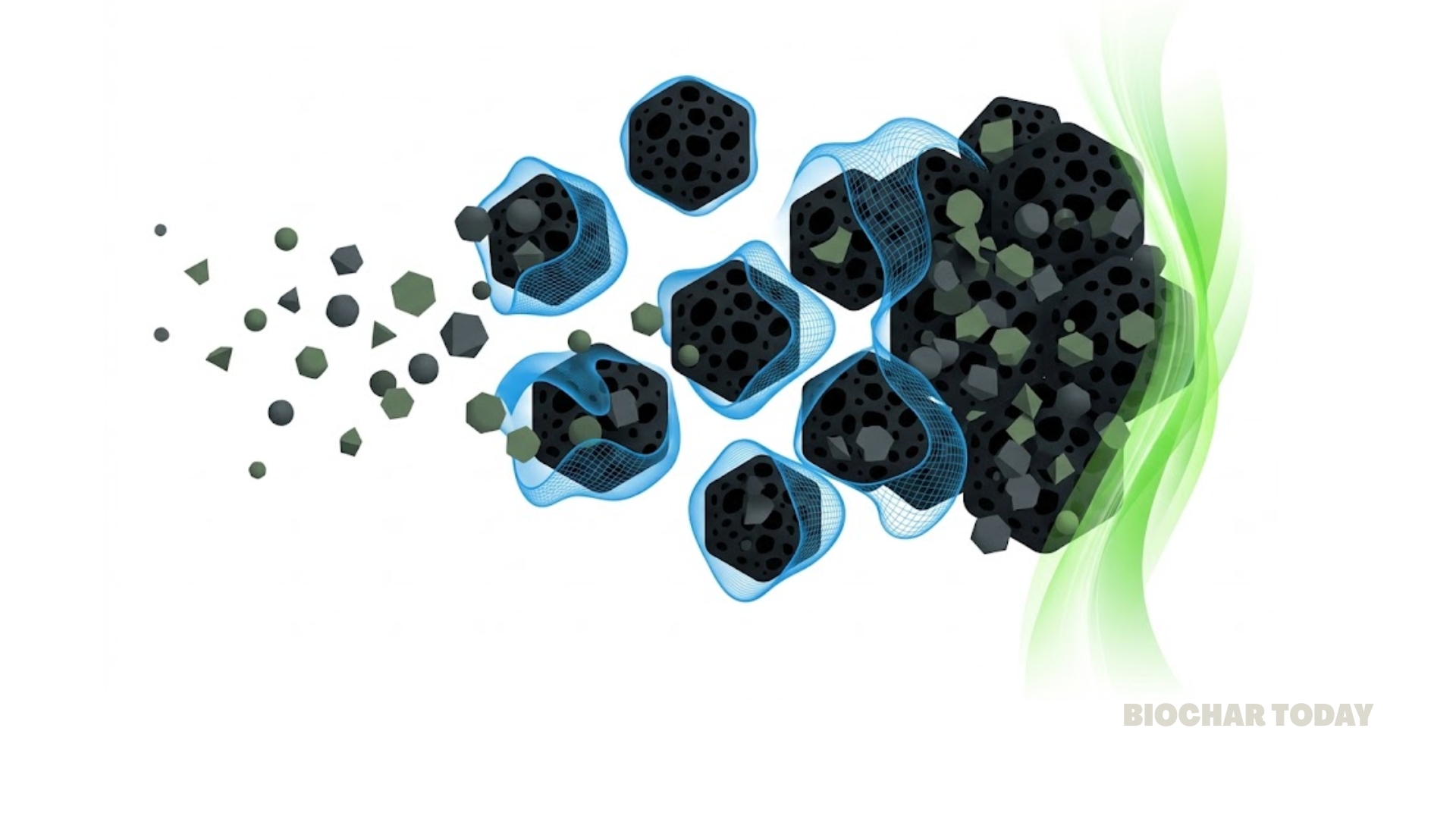
Element doping fundamentally alters biochar’s physical and chemical properties. For example, the incorporation of elements can significantly improve its adsorption capacity, catalytic efficiency, and electrochemical performance. The study categorizes doping methods into two main approaches: in-situ (or self-doping) and exogenous doping. In-situ doping involves using biowaste that naturally contains the desired element, such as nitrogen in algae or animal dung, for a simple and cost-effective process. However, this method offers poor control over the final elemental composition, making reproducibility challenging. Conversely, exogenous doping, which introduces external dopants, provides better control and allows for more precise quantification of the dopant levels.
The choice of doping element has a profound impact on the biochar’s final functionality. Nitrogen doping, for instance, enhances biochar’s pore structure, catalytic activity, and electrical conductivity, making it an excellent catalyst carrier. Similarly, oxygen doping introduces redox-active functional groups that promote the generation of free radicals for oxidation reactions. Sulfur doping, despite having a similar electronegativity to carbon, creates voids within the carbon structure due to its larger atomic size, which increases porosityPorosity of biochar is a key factor in its effectiveness as a soil amendment and its ability to retain water and nutrients. Biochar’s porosity is influenced by feedstock type and pyrolysis temperature, and it plays a crucial role in microbial activity and overall soil health. Biochar More and specific surface area. This structural change can greatly improve a biochar’s ability to adsorb pollutants, as demonstrated by one study that achieved a maximum tetracycline adsorption capacity of 505.68 mg/g using S-doped corn stalk biochar.
Among the various dopants, phosphorus has shown some of the most dramatic results. The review highlights that P-doped biochar, with its larger atomic size and electron-donating capability, can cause local structural deformations that create additional active sites. These defects optimize the electronic structure and surface charge, making the material highly effective for adsorption. The review cites a study in which P-doped biochar exhibited an adsorption capacity over 400 times higher than untreated biochar for elemental mercury removal from simulated flue gas. This remarkable finding positions P-doped biochar as a promising, and potentially superior, alternative to commercial activated carbonActivated carbon is a form of carbon that has been processed to create a vast network of tiny pores, increasing its surface area significantly. This extensive surface area makes activated carbon exceptionally effective at trapping and holding impurities, like a molecular sponge. It is commonly More. The use of low-grade phosphate rock as a P source for doping also supports sustainable phosphorus cycling.
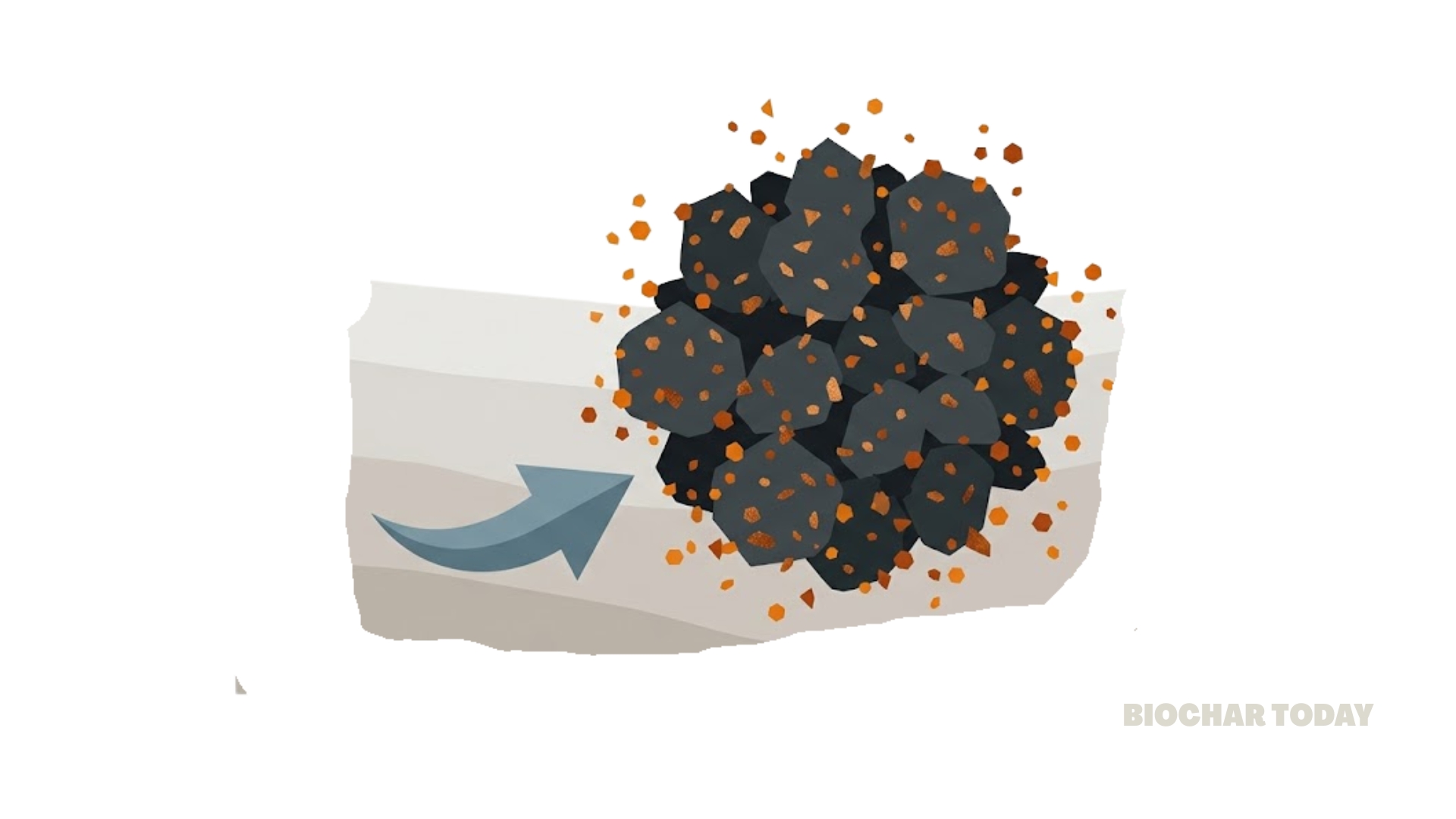
In addition to non-metals, metal doping also has a significant impact on biochar properties. The review explains that metal elements promote electron transfer rates and form highly active substances on the surface. For example, iron-doped biochar shows excellent Fenton-like catalytic degradation performance across a wide pHpH is a measure of how acidic or alkaline a substance is. A pH of 7 is neutral, while lower pH values indicate acidity and higher values indicate alkalinity. Biochars are normally alkaline and can influence soil pH, often increasing it, which can be beneficial More range, thanks to the well-dispersed Fe species on its surface. The inclusion of metals can also improve biochar stability by creating physical barriers on the surface that protect it from oxidation. This wide range of applications and significant performance enhancements demonstrate the transformative potential of element-doped biochar in tackling pressing environmental and energy issues. As research continues to grow, so does the promise of these tailored materials to propel sustainable solutions forward.
SOURCE: Zhao, J., Jiang, Y., Chen, X., Wang, C., & Nan, H. (2025). Unlocking the potential of element-doped biochar: from tailored synthesis to multifunctional applications in environment and energy. Biochar, 7(77).


Leave a Reply