
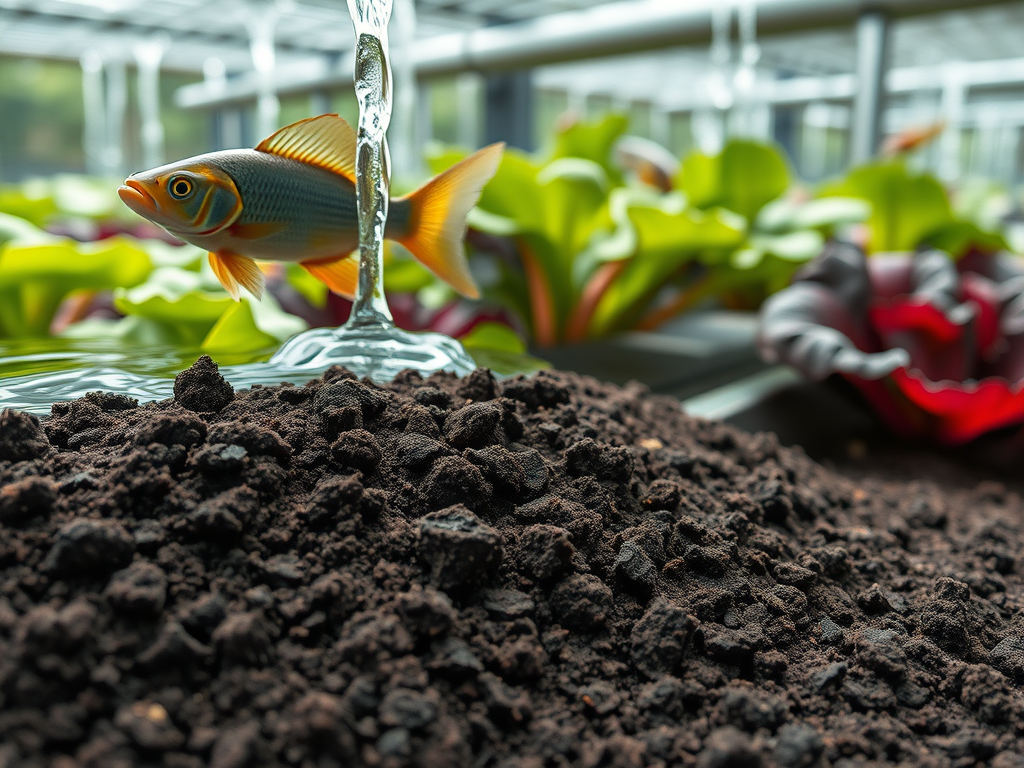
Mopoung and Pantho, in a study published in Carbon Resources Conversion, investigated a novel method for creating activated biocharBiochar is a carbon-rich material created from biomass decomposition in low-oxygen conditions. It has important applications in environmental remediation, soil improvement, agriculture, carbon sequestration, energy storage, and sustainable materials, promoting efficiency and reducing waste in various contexts while addressing climate change challenges. More from papyrus culm (the stem of the papyrus plant). They then tested the effectiveness of this biochar as a filter for water treatment in aquaponics systems.
The researchers found that the activated biochar had a high degree of disorder in its graphitic structure, as well as various oxygenated functional groups and oxide compounds. These properties, along with a high specific surface area and micropore volume, make the biochar an excellent material for adsorption. When used as a filter in an aquaponics system, the biochar effectively reduced levels of ammonia, nitrite, nitrate, phosphate, and turbidity in the water. It also increased dissolved oxygen content and maintained a stable pHpH is a measure of how acidic or alkaline a substance is. A pH of 7 is neutral, while lower pH values indicate acidity and higher values indicate alkalinity. Biochars are normally alkaline and can influence soil pH, often increasing it, which can be beneficial More suitable for growing tilapia and red oak lettuce.
This study demonstrates the potential of papyrus culm as a sustainable source for producing activated biochar. The resulting biochar can be used as an effective and environmentally friendly filter for water treatment in aquaponics systems, contributing to a more sustainable and efficient food production model.
SOURCE: Mopoung, S., & Pantho, S. (2025). One step preparation of papyrus culm derived activated biochar using partial air oxidation and its use as a filter for water treatment in aquaponics culture. Carbon Resources Conversion, https://doi.org/10.1016/j.crcon.2025.100305

Leave a Reply