

Key Takeaways
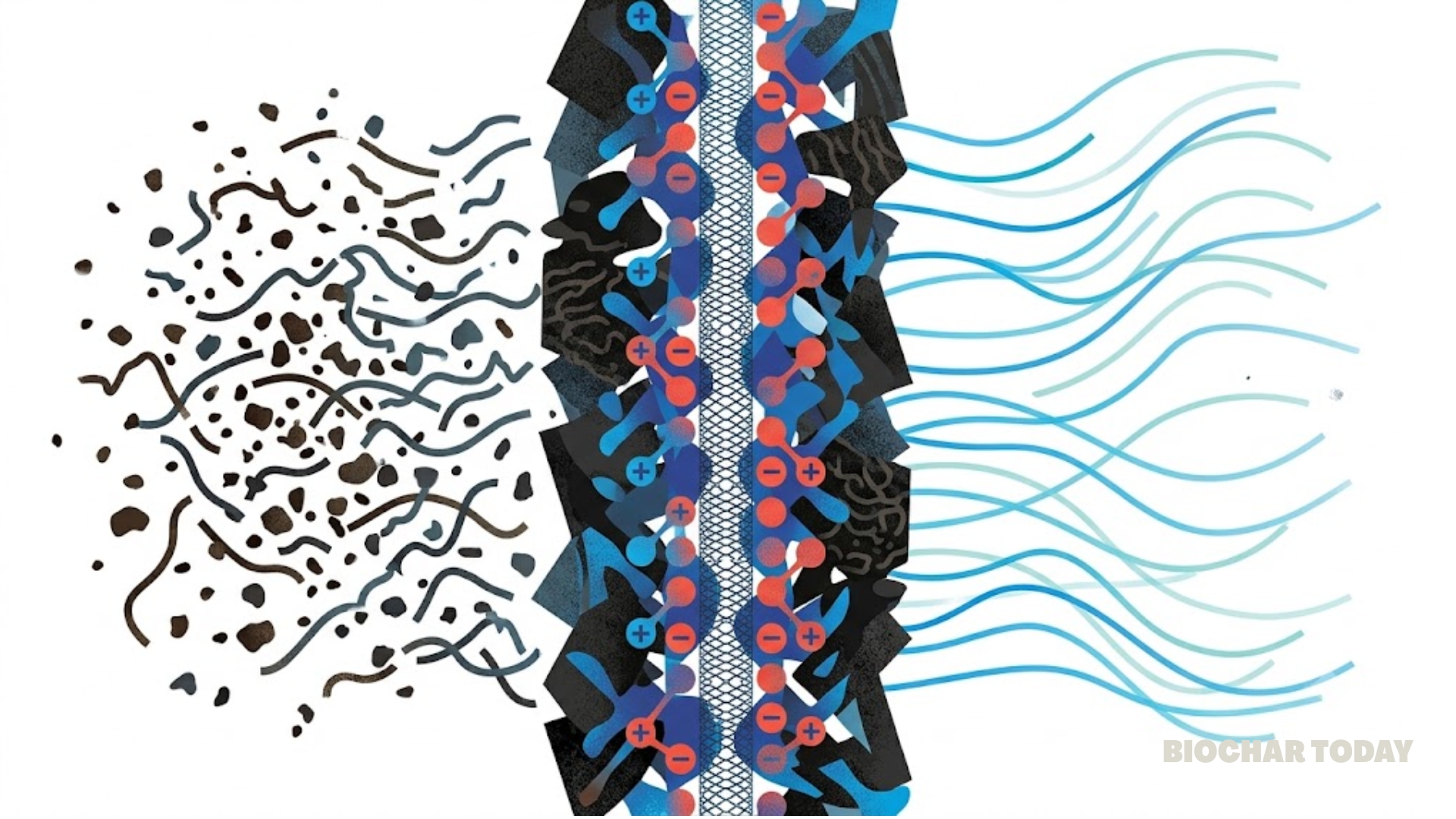
- Loading oxygen nanobubbles onto biocharBiochar is a carbon-rich material created from biomass decomposition in low-oxygen conditions. It has important applications in environmental remediation, soil improvement, agriculture, carbon sequestration, energy storage, and sustainable materials, promoting efficiency and reducing waste in various contexts while addressing climate change challenges. More transforms it from a passive material into an active soil regulator that prevents oxygen depletion in flooded rice fields.
- The oxygen-enriched biochar decreases mobile, toxic cadmium in paddy soil by nearly three times compared to untreated soil.
- Rice plants grown with oxygen-loaded biochar absorb significantly less heavy metal, resulting in a 2.7-fold reduction of cadmium in roots and a 1.9-fold reduction in shoots.
- The sustained oxygen release stimulates beneficial soil bacteria that lock cadmium into stable, non-toxic mineral forms.
- This technique provides a clean and effective way to protect food crops from metal contamination in flooded agricultural soils.
In a recent paper published in Biochar X, lead authors Qingnan Chu and Detian Li, along with Shuhan Xu, Dongrong Pan, Haoyu Cao, Hui Gao, Chengming Zhang, Shanliang Liu, Bin Liu, Wenjia Chen, Qiuyue Wang, Jinghua Wu, Ping He, and Zhimin Sha, presented a novel solution to heavy metal contamination in agricultural soils. Cadmium contamination in flooded paddy fields presents a critical challenge to agricultural productivity and global food safety. When rice fields are continuously submerged, oxygen levels in the soil drop rapidly. This anaerobic environment causes iron and manganese minerals to dissolve, releasing bound cadmium into soil water where rice roots can easily absorb it. Traditional soil amendments like standard biochar act primarily as passive filters. Under prolonged flooding, standard biochar quickly loses effectiveness because oxygen depletion remains unaddressed. To overcome this fundamental limitation, researchers engineered an oxygen-nanobubble-loaded biochar that delivers a continuous supply of micro-oxygenation directly to the root zone.
The experimental results demonstrate that oxygen-loaded biochar fundamentally alters the chemical and biological behavior of flooded paddy soils. Throughout a ninety-day rice growing period, the oxygen-loaded biochar maintained dissolved oxygen levels between two and four milligrams per liter in the overlying water, whereas untreated soil and soil treated with standard biochar rapidly plummeted to near-zero oxygen levels. At the end of the experiment, dissolved oxygen in the oxygen-loaded treatment was nearly five times higher than in the untreated control. Furthermore, the oxygen-loaded biochar maintained a positive soil redox potential around positive one hundred to three hundred millivolts, effectively preventing the severe chemical reduction that normally occurs in waterlogged soils.
This sustained oxygenation dramatically altered how cadmium is held within the soil matrix. The oxygen-loaded biochar reduced the exchangeable cadmium pool, which is the most easily absorbed and hazardous form of cadmium, by nearly three fold compared to untreated control soil. Simultaneously, carbonate-bound cadmium decreased markedly. Rather than remaining in mobile forms, cadmium shifted into far more stable chemical fractions. The proportion of cadmium bound to iron and manganese oxides, organic matter, and residual mineral structures increased to eighty-seven percent under the oxygen-loaded biochar treatment, compared to approximately seventy percent in untreated or standard biochar treatments.
By locking cadmium into stable mineral fractions within the bulk soil, the oxygen-loaded biochar substantially reduced metal accumulation in living plant tissues. Cadmium concentrations in rice roots decreased by 2.7 fold compared to untreated controls, 2.2 fold compared to standard biochar, and 1.9 fold compared to iron-loaded biochar. Similarly, cadmium concentrations in rice shoots decreased by 1.9 fold relative to untreated soil. Although both iron-loaded biochar and oxygen-loaded biochar promoted the formation of iron plaque coatings on root surfaces, the total amount of cadmium captured directly within the plaque was minor. Statistical modeling revealed that bulk soil stabilization driven by redox transformation was the primary mechanism preventing cadmium uptake by the rice plants.
Beyond direct chemical stabilization, metagenomic sequencing revealed that oxygen-loaded biochar successfully reprogrammed the microbial ecosystem surrounding the rice roots. The treatment increased overall bacterial diversity and significantly enriched functional bacterial genera known to oxidize iron and manganese, such as Geobacter, Rhodopseudomonas, Leptothrix, Variovorax, Pseudomonas, and Acinetobacter. In addition, functional gene analysis showed that the oxygen-loaded material reduced the expression of bacterial cadmium influx transporter genes while boosting the expression of cadmium efflux pump genes and cellular detoxification genes linked to glutathione metabolism.
Overall, the findings confirm that impregnating biochar with oxygen nanobubbles transforms a conventional carbon amendment into an active rhizosphere-regulating platform. By maintaining oxygen availability, altering metal speciation, and stimulating protective microbial communities, this material offers an actionable and highly effective strategy for securing crop safety in heavy metal contaminated paddy ecosystems.
Source: Chu, Q., Li, D., Xu, S., Pan, D., Cao, H., Gao, H., Zhang, C., Liu, S., Liu, B., Chen, W., Wang, Q., Wu, J., He, P., & Sha, Z. (2026). An oxygen-nanobubble-loaded biochar for cadmium stabilization in contaminated paddy soil. Biochar X, 2, e018.




Leave a Reply