
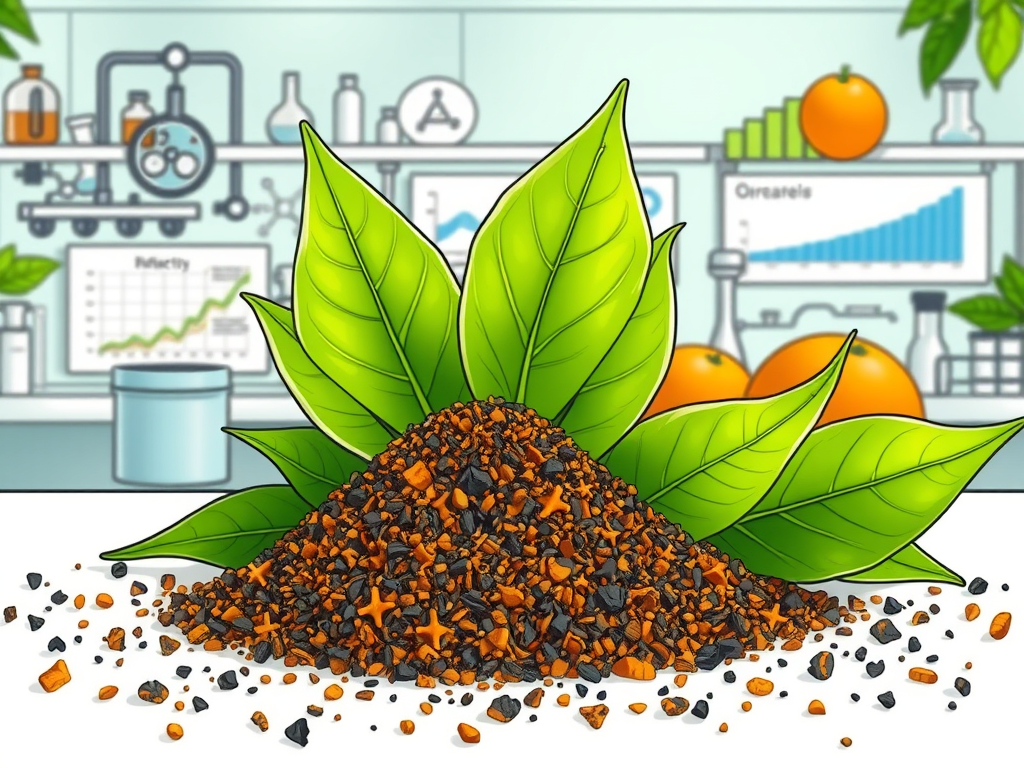
In a recent study published in Scientific Reports, Seyed Ehsan Azizzadeh, Saeed Ghasemzade Bariki, and Salman Movahedirad introduce a groundbreaking solution for pharmaceutical wastewater treatment: magnetic biocharBiochar is a carbon-rich material created from biomass decomposition in low-oxygen conditions. It has important applications in environmental remediation, soil improvement, agriculture, carbon sequestration, energy storage, and sustainable materials, promoting efficiency and reducing waste in various contexts while addressing climate change challenges. More derived from orange leaves (MBC-OL). This novel adsorbent demonstrates exceptional efficiency in removing Favipiravir (FVP), a widely used antiviral drug, from contaminated water, presenting a sustainable and cost-effective alternative to conventional methods.
The widespread use of pharmaceutical compounds, particularly antiviral drugs, poses a growing threat to water resources due to their incomplete removal by conventional wastewater treatment plants. These unmetabolized drugs can persist in aquatic ecosystems, leading to environmental pollution and potential public health concerns, including the development of antiviral resistance. Addressing this challenge requires innovative, sustainable, and economically viable technologies. The researchers synthesized MBC-OL by co-activating orange leaves with zinc chloride and iron (III) chloride hexahydrate, followed by pyrolysisPyrolysis is a thermochemical process that converts waste biomass into bio-char, bio-oil, and pyro-gas. It offers significant advantages in waste valorization, turning low-value materials into economically valuable resources. Its versatility allows for tailored products based on operational conditions, presenting itself as a cost-effective and efficient More at 600°C. This process yielded a material with a specific surface area of 13.31 m²/g and a total pore volume of 0.103 cm³/g. Comprehensive characterization using X-ray Diffraction (XRD), Fourier-transform infrared spectroscopy (FT-IR), and Energy Dispersive X-ray (SEM-EDX) confirmed the successful incorporation of magnetite (Fe3O4) nanoparticles and the presence of abundant oxygen-containing functional groups, crucial for adsorption.
The MBC-OL showed superior adsorption capabilities, achieving a maximum capacity of 416.67 mg/g for FVP, significantly outperforming other advanced adsorbents reported in recent literature. Optimization using Response Surface Methodology (RSM) identified ideal conditions for FVP removal: pHpH is a measure of how acidic or alkaline a substance is. A pH of 7 is neutral, while lower pH values indicate acidity and higher values indicate alkalinity. Biochars are normally alkaline and can influence soil pH, often increasing it, which can be beneficial More 8.3, an adsorbent dose of 0.161 g/L, and a contact time of 97.7 minutes, resulting in an impressive 97.5% FVP removal at an initial concentration of 14.1 mg/L. Kinetic studies indicated that the adsorption followed a pseudo-first-order model , suggesting that physical adsorption is the primary mechanism. Freundlich isotherm modeling indicated heterogeneous multilayer adsorption on the MBC-OL surface.
Beyond its high removal efficiency, MBC-OL demonstrated exceptional stability and reusability, maintaining 93.5% removal efficiency even after 10 regeneration cycles. The material’s magnetic properties, confirmed by 52 wt% iron retention, facilitate easy and rapid separation from treated water (less than 2 minutes), reducing energy consumption by 60% compared to traditional methods. From an economic standpoint, MBC-OL offers substantial advantages. Its production cost is estimated at $12.50 per kilogram, representing a 73% reduction in material costs compared to activated carbonActivated carbon is a form of carbon that has been processed to create a vast network of tiny pores, increasing its surface area significantly. This extensive surface area makes activated carbon exceptionally effective at trapping and holding impurities, like a molecular sponge. It is commonly More. This cost-effectiveness stems from utilizing agricultural waste as a zero-cost feedstockFeedstock refers to the raw organic material used to produce biochar. This can include a wide range of materials, such as wood chips, agricultural residues, and animal manure. More, an energy-efficient one-step synthesis process (consuming only 8.3 kWh/kg, 60% below WHO green technology targets), and optimized chemical ratios. Operational costs are also significantly lower, with a 65% reduction compared to activated carbon systems.
These advancements position MBC-OL as a transformative solution for pharmaceutical wastewater treatment, capable of meeting stringent World Health Organization (WHO) water safety standards. The developed system reduces FVP concentrations from typical hospital effluent levels (1-5 mg/L) to 10 ng/L, which is 100 times below the WHO’s maximum permissible concentration of 100 ng/L for FVP in treated wastewater. This innovation not only addresses environmental pollution but also contributes to agricultural waste valorization within a circular economy framework.
Source: Azizzadeh, S. E., Bariki, S. G., & Movahedirad, S. (2025). Magnetic orange leaf biochar for favipiravir removal from wastewater. Scientific Reports, 15(25388)


Leave a Reply