
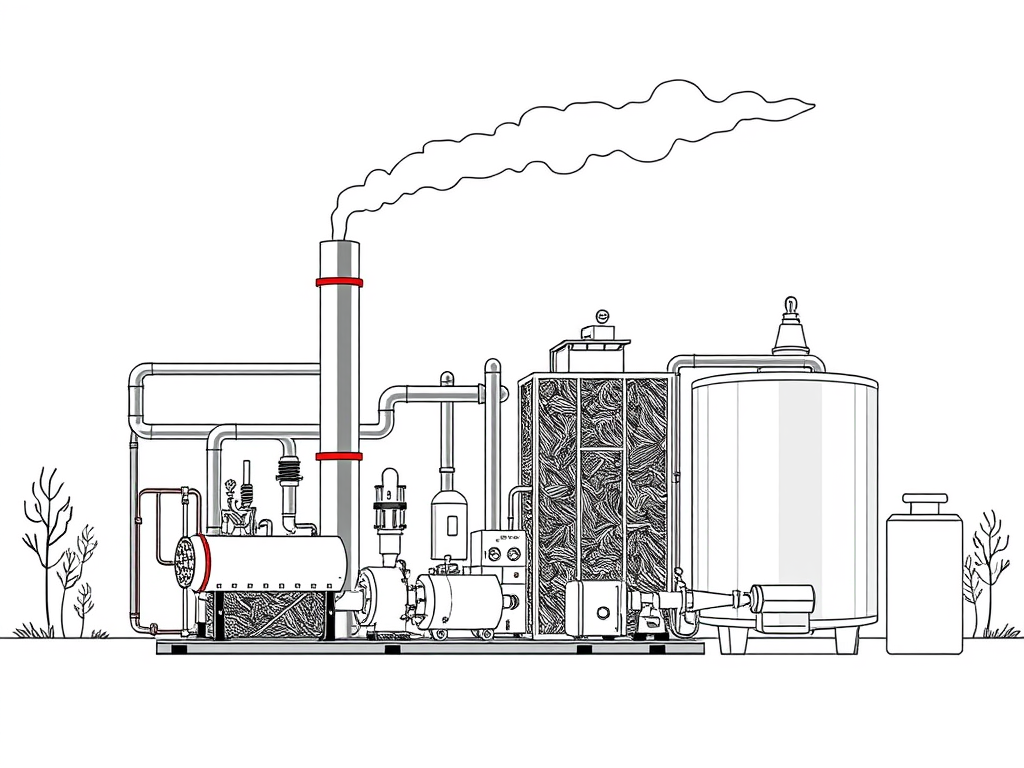
The global transportation sector faces the significant challenge of reducing its environmental impact. While the Direct Coal Liquefaction (DCL) process has historically converted fossil coal into liquid fuels, its potential for sustainable fuel production using renewable biomass-derived feedstocks has gained recent attention. A Master’s thesis from Lappeenranta-Lahti University of Technology LUT, authored by Harri Huttunen, evaluates the technical and economic feasibility of utilizing biocharBiochar is a carbon-rich material created from biomass decomposition in low-oxygen conditions. It has important applications in environmental remediation, soil improvement, agriculture, carbon sequestration, energy storage, and sustainable materials, promoting efficiency and reducing waste in various contexts while addressing climate change challenges. More as a feedstockFeedstock refers to the raw organic material used to produce biochar. This can include a wide range of materials, such as wood chips, agricultural residues, and animal manure. More for this very process. The research aims to bridge existing gaps in understanding the economic viability and scalability of biochar-based DCL under current market conditions, particularly where high-temperature liquefaction studies for producing high-quality liquid fuels remain underexplored.
Huttunen’s thesis addresses critical questions about whether biochar possesses the appropriate technical properties for DCL feedstock and if such a process can achieve economic success today. Previous studies have shown promising results in converting biomass-based biochars to liquid fuels, noting that bio-based feedstocks have the advantage of low sulfur content, eliminating the need for costly sulfuric acid plants or flue gas cleaning. However, a comprehensive economic feasibility study for industrial-scale implementation, including determining the necessary scale for commercial success, was still needed. This research combines a thorough literature review with detailed technical and economic analyses to fill this void, focusing on a proposed 100,000-ton (biochar input) per year production facility.
One of the most significant quantitative findings from the thesis is the identification of a minimum 33% conversion yield from biochar to liquid fuel as a key technical parameter for viability. This benchmark is crucial for the process to be considered economically feasible. The mass balance calculations and investment analysis for a 100,000-ton per year biochar input facility revealed favorable economics, demonstrating a positive gross profit under current assumptions. Specifically, with a liquid fuel price between 2,000€ and 2,500€ per ton and a biochar cost of 200€ per ton, the process shows profitability. The cash cost of production, representing the minimum selling price needed, is approximately 1,606€ per ton, while the full cost, including capital charges, rises to 2,155€ per ton.
Another key quantitative result highlighted by the thesis involves the process’s sensitivity to product pricing. Sensitivity analyses demonstrate that the biochar-based DCL process maintains profitability when the final product price is a minimum of 2,000€ per ton. Hydrogen consumption is identified as a major variable cost element, and its economics significantly influence long-term viability. At a current assumed hydrogen cost of 3,000€ per ton, the plant requires liquid fuel prices above 2,200€ per ton to maintain a healthy gross profit, a challenging target in markets linked to fossil fuels. However, the study notes that as green hydrogen production scales up, particularly in regions with low electricity costs, the economics of the process could improve significantly.
The practical implications of these findings are substantial for the sustainable transportation fuel sector. By validating the economic feasibility of utilizing biochar in the DCL process, the research offers a promising alternative route towards carbon-neutral liquid fuels without necessitating a complete overhaul of existing fuel infrastructure. This approach can particularly benefit countries with abundant coal resources but limited crude oil, improving national energy security and diversifying energy structures. The potential for using lower-grade biochars, unsuitable for soil applications, could also lead to a tiered market, ensuring value creation across different biochar qualities.
This research significantly advances our understanding of biochar’s role beyond traditional applications. It provides a detailed techno-economic assessment, moving beyond laboratory-scale promises to evaluate industrial-scale implementation, which was a critical gap in previous studies. The comparative analysis with Fischer-Tropsch technology further indicates potential advantages for the biochar-based DCL process in terms of process simplicity, carbon efficiency, and potentially lower capital expenditure requirements, though it acknowledges Fischer-Tropsch’s decades of commercial optimization. The thesis ultimately supports the technical and economic feasibility of this process under current market conditions and strongly recommends pilot-scale validation as the next essential step. Harri Huttunen’s work contributes valuable insights toward establishing a viable pathway for sustainable liquid fuel production from renewable biomassBiomass is a complex biological organic or non-organic solid product derived from living or recently living organism and available naturally. Various types of wastes such as animal manure, waste paper, sludge and many industrial wastes are also treated as biomass because like natural biomass these More resources.
Source: Huttunen, H. (2025). Fuel Fractions Derived from Biochar Through the Direct Coal Liquefaction Process (Master’s thesis). Lappeenranta-Lahti University of Technology LUT, Lappeenranta, Finland.




Leave a Reply