
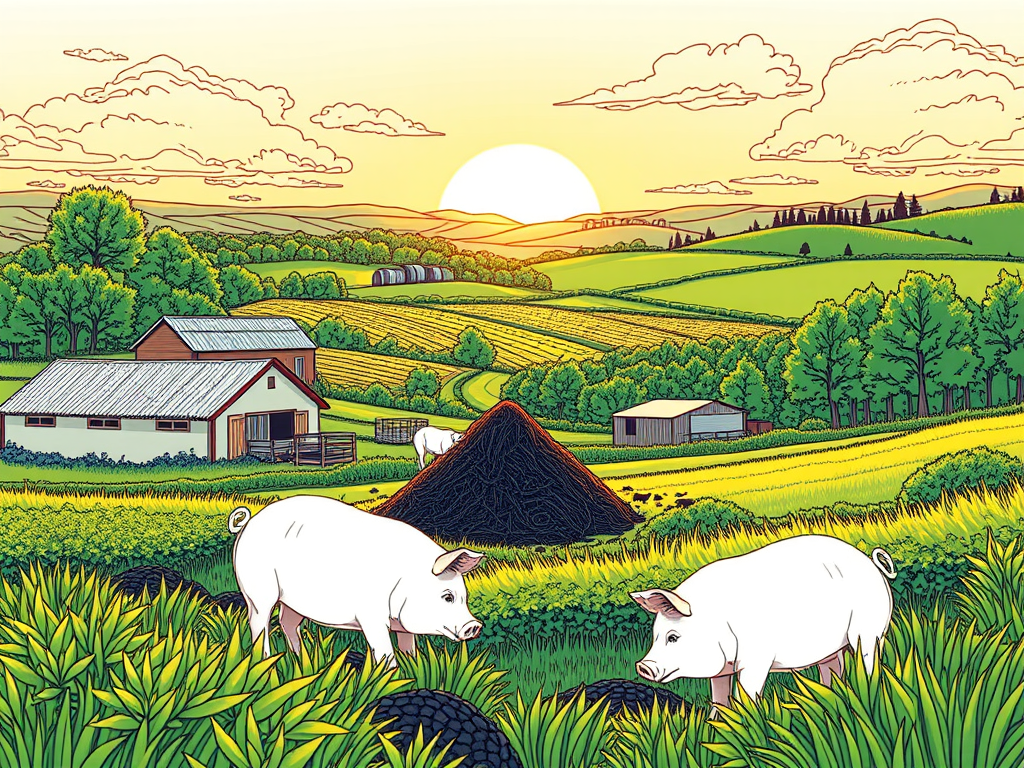
In a recent study published in the journal Recycling, César Omar Díaz Lara, Diana Cabañas Vargas, Julio César Sacramento Rivero, and colleagues explored a method to enhance methane production from anaerobic digestion by using biocharBiochar is a carbon-rich material created from biomass decomposition in low-oxygen conditions. It has important applications in environmental remediation, soil improvement, agriculture, carbon sequestration, energy storage, and sustainable materials, promoting efficiency and reducing waste in various contexts while addressing climate change challenges. More. This innovative approach uses biochar produced from the co-pyrolysis of anaerobic pig sludge (APS) and residual lignocellulosic biomassBiomass is a complex biological organic or non-organic solid product derived from living or recently living organism and available naturally. Various types of wastes such as animal manure, waste paper, sludge and many industrial wastes are also treated as biomass because like natural biomass these More, turning agricultural waste into a valuable resource. The study revealed that biochar made from a mixture of up to 25% anaerobic pig sludge can significantly increase methane yield—by as much as 74%—without compromising its effectiveness.
Pig farming is a significant economic driver in Mexico, producing 1.32 million tonnes of pig meat annually. However, it also poses environmental challenges, particularly regarding the disposal of pig manure. Anaerobic digestion (AD) offers a promising solution by converting manure into biogas, a renewable energy source. Yet, the process generates anaerobic pig sludge (APS), a byproduct that requires further treatment, adding to the operational costs. To address this, researchers investigated the possibility of transforming anaerobic pig sludge (APS) into biochar, a versatile material that can enhance biogas production during AD.
The study also examined how biochar particle size and dosage affect methane production. They found that the ideal biochar dosage is between 12 and 18 g/L. Additionally, larger biochar particles (0.5-1 cm) were more effective in enhancing methane yield compared to smaller particles.
This research offers a sustainable solution for managing pig farming waste while maximizing energy production. By converting APS into biochar and using it to enhance methane production, it reduces the environmental impact of waste disposal and generates a valuable renewable energy source. This approach not only supports a circular economy but also provides an economically viable option for rural communities.
Source: Díaz Lara, C. O., Cabañas Vargas, D., Sacramento Rivero, J. C., Baz-Rodríguez, S., Ruiz Espinoza, J. E., Aguilera-Cauich, E. A., … & Pacheco-Catalán, D. E. (2025). Towards Circularity in Anaerobic Digestion: Methane Yield Enhancement Using Biochar from Co-Pyrolysis of Anaerobic Sludge and Residual Lignocellulosic Biomass. Recycling, 10(3), 84



Leave a Reply