
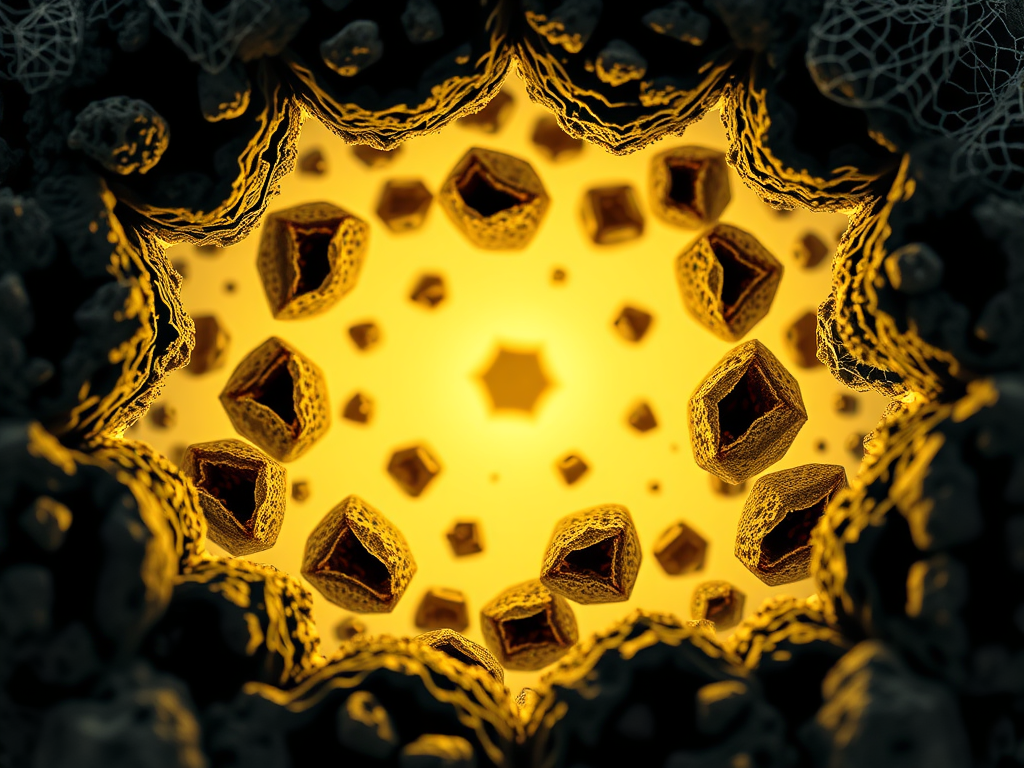
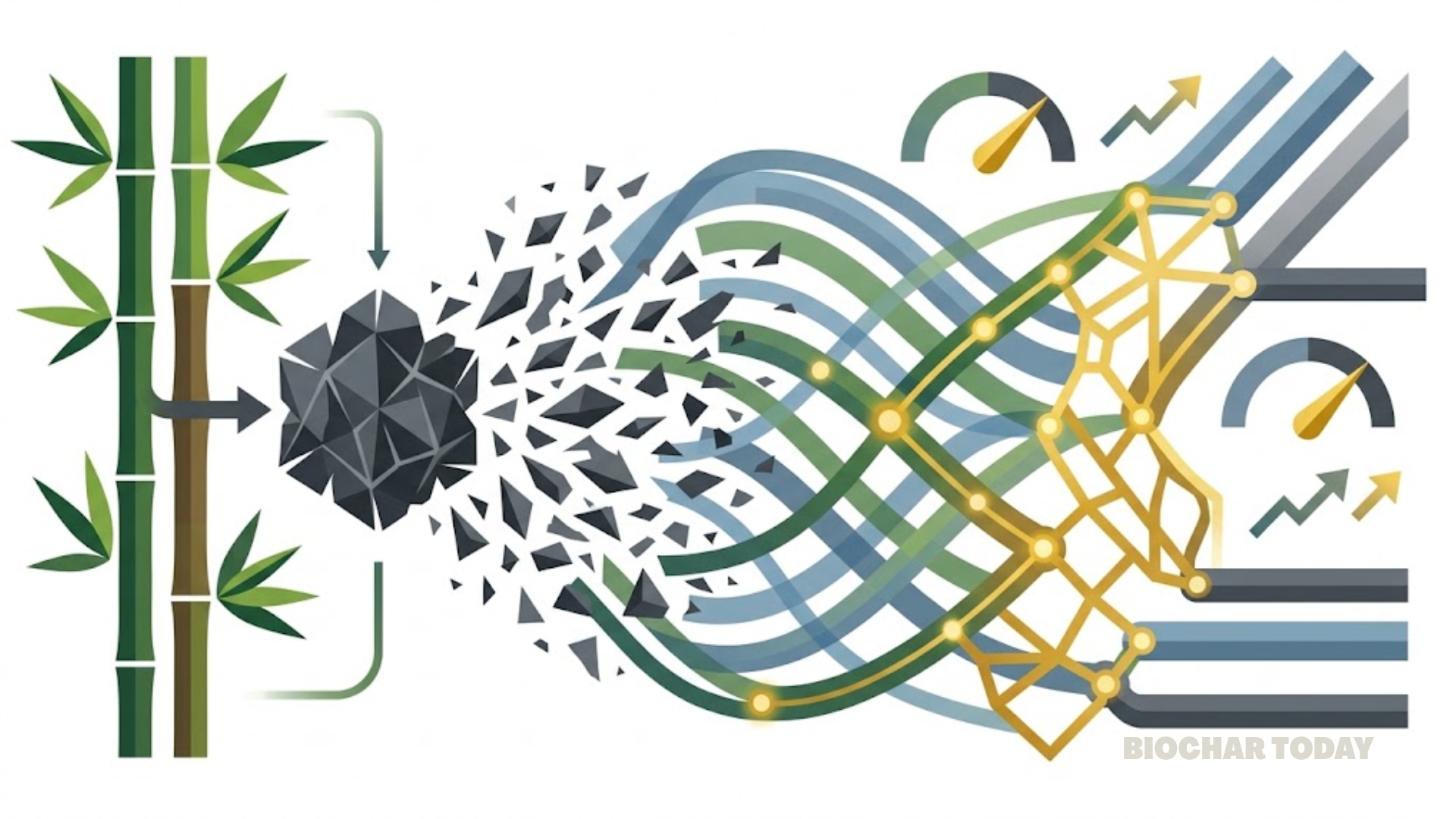
In a new paper published in Energy Conversion and Management, Ali Kasebi Vayghan, Maryam Roza Yazdani McCord, Annukka Santasalo-Aarnio, and Ari Seppälä detail the creation of a high-performance thermochemical energy storage (TCES) composite. Their work addresses the critical need for sustainable, long-term energy storage solutions to support intermittent renewable energy sources and recover industrial waste heat. The material is a sustainable and inexpensive composite made of a wood-derived activated biocharBiochar is a carbon-rich material created from biomass decomposition in low-oxygen conditions. It has important applications in environmental remediation, soil improvement, agriculture, carbon sequestration, energy storage, and sustainable materials, promoting efficiency and reducing waste in various contexts while addressing climate change challenges. More matrix hosting the hygroscopic salt, calcium chloride (CaCl2). Hygroscopic salts are appealing for TCES due to their substantial energy storage density and long-term storage capability, but their practical use is limited by issues like agglomeration, deliquescence, and poor mass transfer during sorption. The researchers tackled these problems by using activated biochar, derived from alder wooden chips, which possesses a nature-inspired, multi-scale porous structure that not only has exceptional surface area but also facilitates mass transfer and salt impregnation.
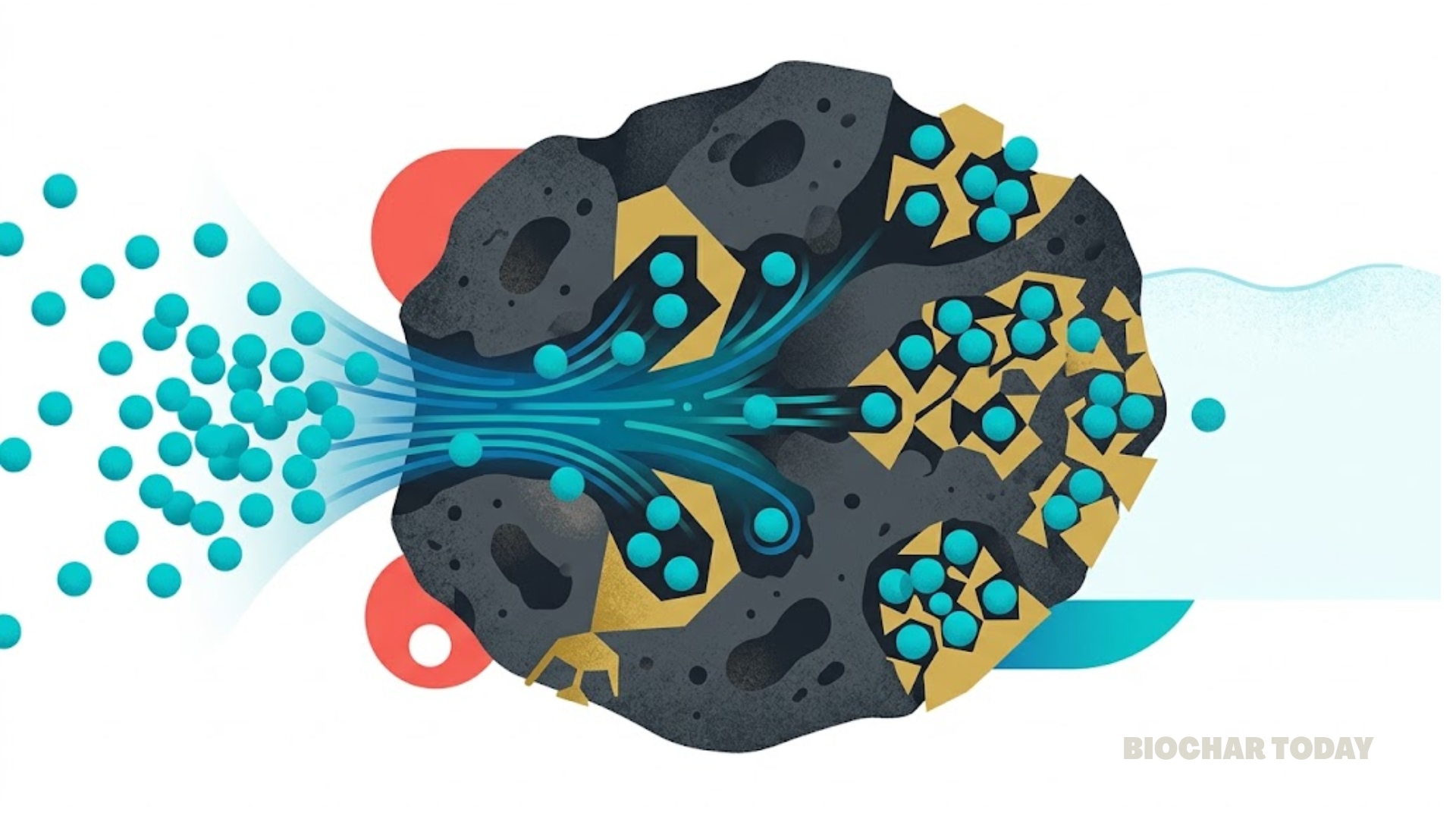
The core objective of the study was to investigate how the particle size of the biochar matrix affects the composite’s energy storage density and cyclic stability. The wood’s architecture provides a hierarchical structure of interconnected porous channels—vessels, tracheids, and pits—that act like highways for transporting salt solution into the core of the particles via capillary force during the impregnation process. Samples were prepared with six different particle size distributions and a consistent nominal composition of 35 wt% activated biochar and 65 wt% CaCl2.
Analysis of the initial energy storage density showed a strong dependence on the biochar particle size. Composites with the smallest particles ( d<125 μm) exhibited the lowest energy storage density, mainly due to damage to the crucial macropores caused by excessive crushing, which limited salt retention. Conversely, the largest particles (d>595 μm) showed diminished performance due to excessive salt depositing on their external surfaces rather than impregnating the inner pores. Such external deposition is undesirable as it is highly susceptible to loss or agglomeration.
The optimal performance was achieved by the composite sample, designated C4, which used a particle diameter between 354 μm and 595 μm. This optimal size range provided the best balance of structural integrity and surface area accessibility. Sample C4 exhibited a remarkable average initial energy storage density of approximately 2480 J/g , which is 66.8% of the average energy density of the pure CaCl2 reference sample measured under the same conditions. The success of this sample was verified by X-ray micro-computed tomography, which confirmed uniform CaCl2 deposition coating the inner pore walls without blocking the crucial vessels and tracheids.
Cyclic stability and the critical problem of salt leakage were also quantitatively addressed using an innovative test designed by the researchers, which measured energy storage density loss after sequential leakage cycles. This method proved to be significantly more accurate than conventional STA cycling, which artificially retains leaked salt in the sample holder. Sample C4 showed excellent long-term stability: it maintained 2310 J/g after 10 consecutive hydration/dehydration cycles in the STA (assessing matrix degradation) and a maximum of 1780 J/g after five cycles of the aggressive leakage test. This retention of high energy density after the leakage test confirms the material’s promise for long-term applications like space heating. The study successfully created a sustainable TCES composite with a high energy density, surpassing most other carbon-based TCES materials reported in the literature, even at lower relative humidity.
Source: Vayghan, A. K., McCord, M. R. Y., Santasalo-Aarnio, A., & Seppälä, A. (2026). High energy density long-term thermochemical energy storage composite based on salt and wood-derived activated biochar. Energy Conversion and Management, 347, 120532.


Leave a Reply