
Key Takeaways
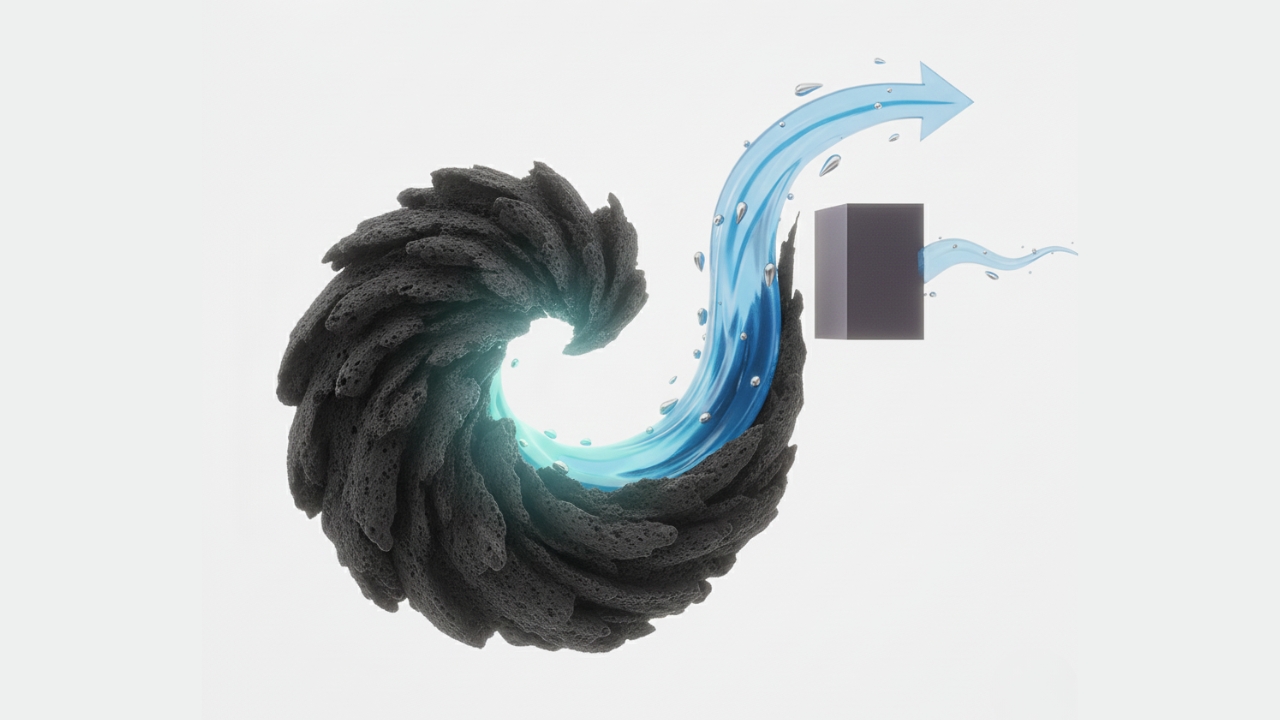
- Agricultural waste, specifically rubber seed shells, can be converted into a highly effective, low-cost material called biocharBiochar is a carbon-rich material created from biomass decomposition in low-oxygen conditions. It has important applications in environmental remediation, soil improvement, agriculture, carbon sequestration, energy storage, and sustainable materials, promoting efficiency and reducing waste in various contexts while addressing climate change challenges. More to clean heavy metals from water.
- The best material was produced using a simple, chemical-free heating process resulting in lead (Pb(II)) removal.
- This homemade biochar was superior to a commercial-grade activated carbonActivated carbon is a form of carbon that has been processed to create a vast network of tiny pores, increasing its surface area significantly. This extensive surface area makes activated carbon exceptionally effective at trapping and holding impurities, like a molecular sponge. It is commonly More (CGA), which achieved removal under optimal conditions.
- The material works exceptionally fast, reaching its maximum cleaning power in just 30 minutes, significantly quicker than the 4 hours required by the commercial carbon.
- Its success is due to its highly accessible internal structure of fine pores and reactive chemical groups on its surface, which physically trap and chemically bind the lead ions.
The extensive pollution of our water sources with heavy metals like lead (Pb(II)), iron (Fe(II)), and zinc (Zn(II)) is a major global problem for both the environment and our health. These metals are toxic, do not biodegrade, and accumulate in the food chain. Current water cleaning methods often require expensive equipment, lots of energy, and produce toxic sludge. A simpler, more efficient, and cheaper solution is adsorption, where pollutants stick to a solid material. Researchers from Kalasin University and the Nanotechnology Center investigated a sustainable solution: turning waste rubber seed shells into a super-cleaner biochar.
Since Thailand is a huge rubber producer, these shells are an abundant agricultural waste , making them an ideal, low-cost raw material. The team created the biochar using a simple, two-step heating process without relying on expensive and corrosive activating chemicals, which simplifies production and reduces environmental impact. They tested final heating temperatures of 850°C, 900°C, and 950°C. The team found that the biochar heated at 850°C (called PRC850) was the champion for cleaning up water, as it exhibited the most favorable properties. This heating temperature gave the material the best characteristics, including a high internal surface area and a dense network of mesopores (mid-sized holes). This material satisfied the requirements of the Thai Industrial Standard for activated carbon, confirming its quality. The PRC850 was tested against a common commercial-grade activated carbon (CGA) and consistently demonstrated superior performance. For lead (Pb(II)) removal, the most toxic element studied , PRC850 achieved up to 98.13% removal efficiency, significantly surpassing the commercial carbon’s 85.52% removal. Furthermore, PRC850 performed better than CGA in removing Fe(II) and Zn(II) as well.
The reasons for PRC850’s exceptional performance lie in its engineered internal architecture. The biochar’s fine mesoporous structure proved ideal for capturing small heavy metal ions. This efficient network of pores, also observed as an open and layered surface morphology under a microscope , enhanced the interaction between the lead ions and the carbon surface. The commercial carbon, by contrast, had a more compact structure and larger, less efficient pores, which limited the entry and interaction of the metal ions. The adsorption process was extremely fast, with PRC850 reaching its maximum cleaning power in just 30 minutes, whereas the commercial carbon required up to 4 hours to achieve equilibrium. This rapid action suggested a strong attraction mechanism. The process followed a pattern that pointed strongly to chemisorption—a very strong and fast chemical bond—as the dominant mechanism. This chemical grabbing is facilitated by the retention of important chemical groups on the biochar surface which easily bind with the lead ions.
Even when the concentration of lead in the water was increased, the PRC850 continued to perform strongly, while the commercial carbon’s efficiency dropped significantly because its limited number of available sites quickly became saturated. The high efficiency of PRC850, achieved with a simple, chemical-free production method and using an agricultural waste material, makes it a superior alternative to commercial carbons and conventional methods like chemical precipitation or membrane filtration, which are often complex and costly.
The stud shows that converting rubber seed shells into biochar provides a high-performing, sustainable, and cost-effective solution for cleaning up water contaminated with heavy metals.
Source: Chiamsathit, C., Toomsan, W., Khomyos, P., Thammarakcharoen, S., Khotwangouan, W., Phukaew, K., Yonwilad, W., & Taweetanawanit, P. (2026). Comparative adsorption study of Pb(II), Fe(II), and Zn(II) using non-chemically activated rubber seed shell biochar and commercial activated carbon. Engineering and Applied Science Research, 53(1), 1-17.




Leave a Reply