
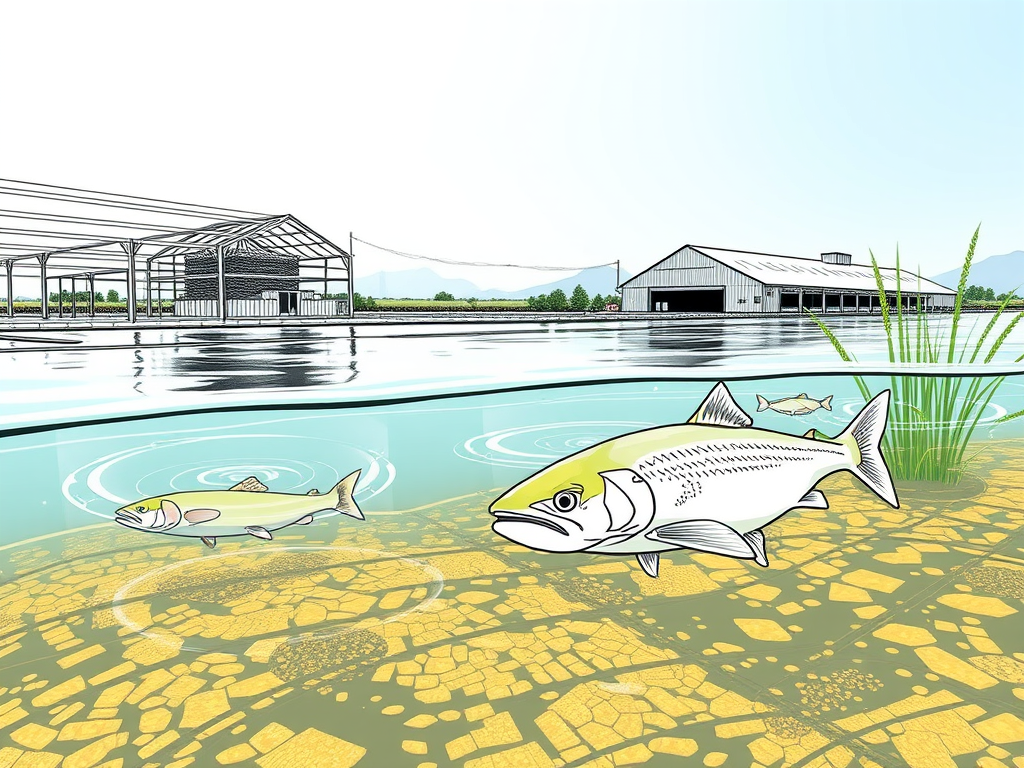
In a recent study published in Processes, Ethan Struhs, William F. Rance Bare, Amin Mirkouei, and Kenneth Overturf explored an innovative approach to mitigate water pollution from aquaculture facilities in Idaho. The research focused on using magnesium (Mg)-modified biocharBiochar is a carbon-rich material created from biomass decomposition in low-oxygen conditions. It has important applications in environmental remediation, soil improvement, agriculture, carbon sequestration, energy storage, and sustainable materials, promoting efficiency and reducing waste in various contexts while addressing climate change challenges. More to remove excess nutrients, specifically phosphorus and nitrogen, from aquaculture effluents, which often contribute to downstream eutrophication.
Aquaculture is a significant industry in Idaho, particularly in the Magic Valley, where numerous facilities raise trout, sturgeon, salmon, and other fish. However, the wastewater discharged from these farms contains pollutants land the current methods to manage this pollution include limiting production and diverting effluents, but researchers are seeking more effective and sustainable solutions.
This study investigated the effectiveness of Mg-modified biochar in adsorbing phosphorus and nitrogen from aquaculture wastewater. Biochar, produced from pinewood, was modified with magnesium to enhance its adsorption capacity. The experiment compared the performance of this modified biochar against unmodified biochar in real-world conditions at fish farms. The results indicated that Mg-modified biochar significantly outperformed unmodified biochar. Notably, the modified biochar removed 56.3% more nitrate-nitrogen and 13.3% more phosphorus. Over time, the modified biochar also demonstrated a substantial increase in nitrogen concentration, suggesting its superior capacity for nutrient sequestration.
Furthermore, the study included a techno-economic analysis and a life cycle assessment (LCA). The techno-economic analysis evaluated the feasibility of a portable pyrolysisPyrolysis is a thermochemical process that converts waste biomass into bio-char, bio-oil, and pyro-gas. It offers significant advantages in waste valorization, turning low-value materials into economically valuable resources. Its versatility allows for tailored products based on operational conditions, presenting itself as a cost-effective and efficient More unit for biochar production, while the LCA assessed the environmental impacts of the modified biochar.
In conclusion, this research highlights the potential of Mg-modified biochar as an effective and sustainable solution for treating aquaculture wastewater, offering a pathway to reduce eutrophication and support the aquaculture industry’s environmental sustainability.


Leave a Reply