
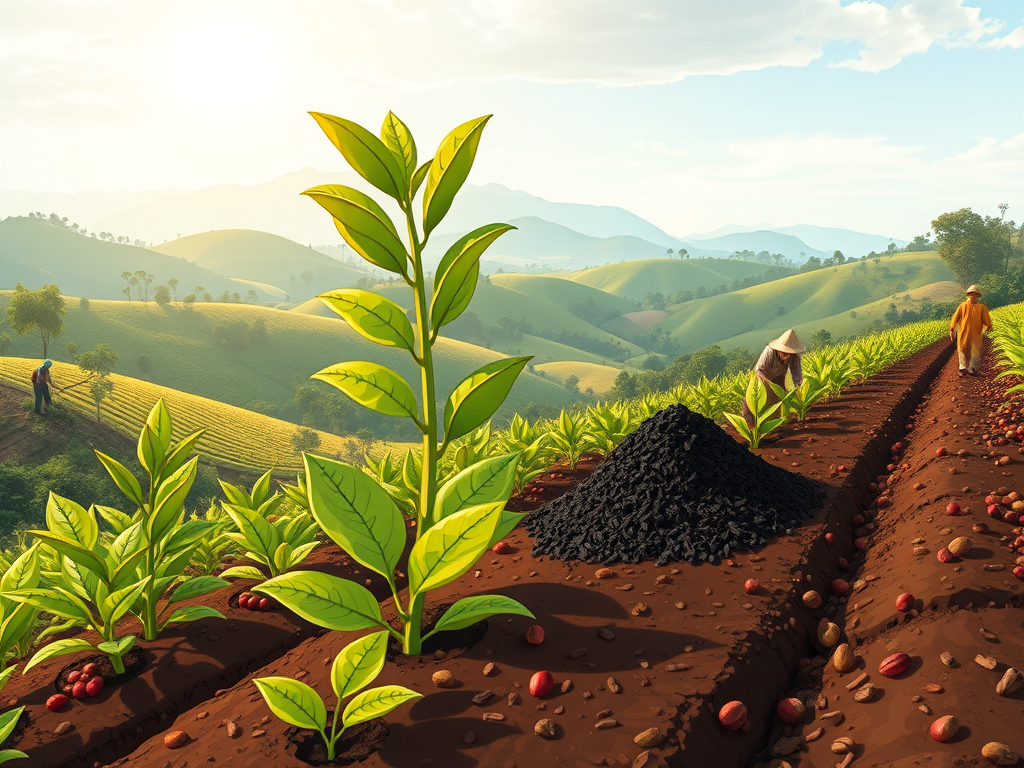
A new strategic partnership between Neumann Kaffee Gruppe (NKG) and Cotierra is set to introduce biocharBiochar is a carbon-rich material created from biomass decomposition in low-oxygen conditions. It has important applications in environmental remediation, soil improvement, agriculture, carbon sequestration, energy storage, and sustainable materials, promoting efficiency and reducing waste in various contexts while addressing climate change challenges. More projects to coffee farmers in Colombia. The collaboration, which also involves NKG’s Colombian export company SKN Caribecafé, aims to address significant challenges faced by the coffee industry, including soil degradation, climate change, and biodiversity loss.
The use of biochar for soil enrichment is not new to the region; indigenous populations in parts of South America have utilized similar methods for millennia to create the highly fertile “terra preta” soils. This modern initiative aims to provide a scalable and farm-ready biochar solution to contemporary challenges. Biochar, a carbon-rich material produced from biomassBiomass is a complex biological organic or non-organic solid product derived from living or recently living organism and available naturally. Various types of wastes such as animal manure, waste paper, sludge and many industrial wastes are also treated as biomass because like natural biomass these More, is a potent tool for soil health. When correctly applied, it can lead to improved soil structure and biodiversity, enhanced drought resilience, and the long-term sequestration of carbon from the atmosphere. These benefits are expected to not only help farmers mitigate the effects of climate change but also to boost their productivity and secure their livelihoods.
The partnership has already launched two pilot projects in Huila, a region in Colombia home to more than 84,000 coffee-farming families. This region is a major coffee-growing area and is particularly vulnerable to environmental shifts. By leveraging Cotierra’s mobile, user-friendly technology and SKN Caribecafé’s deep local knowledge and network, the program is designed to deliver the biochar solution directly to the farms that need it most. There is concern within the industry that biochar is being perceived as a ‘silver bullet’, which could lead to low quality charred wood (as opposed to proper thermo converted biochar) being applied to soils as supply chains rush to claim carbon credits.
Nevertheless, this project is a significant step forward in making the coffee supply chain more resilient and sustainable. The application of biochar on a large scale has the potential to significantly impact the industry by creating a low-carbon model for coffee production. The success of these pilot projects could serve as a blueprint for expanding similar initiatives to other coffee-growing regions globally, marking a new era of climate-smart agriculture within the coffee sector. Considering the earnest placed on value, ethics and traceability in the supply chain; coffee could become a future Biochar powerhouse.



Leave a Reply