
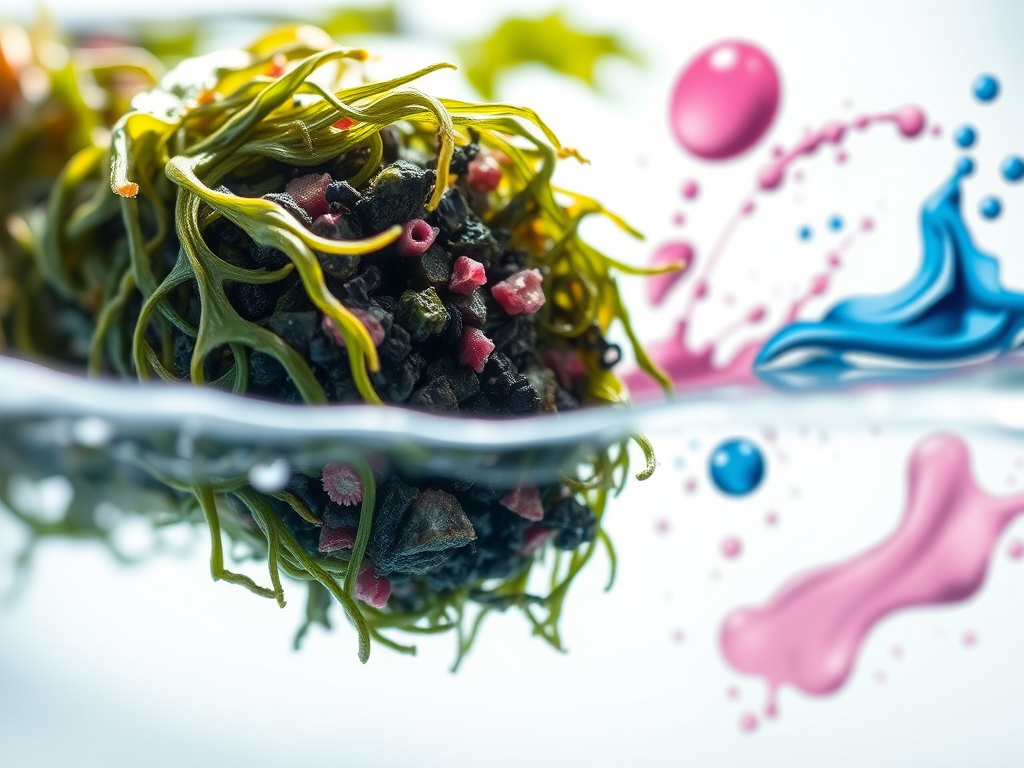
A study published in ACS Omega by Meiyuan Fu and colleagues details the successful synthesis of nitrogen-doped algal biocharBiochar is a carbon-rich material created from biomass decomposition in low-oxygen conditions. It has important applications in environmental remediation, soil improvement, agriculture, carbon sequestration, energy storage, and sustainable materials, promoting efficiency and reducing waste in various contexts while addressing climate change challenges. More (NABC) from seaweed to efficiently remove cationic dyes from water. The researchers found that NABC achieved a dye removal efficiency of up to 99.4% for rhodamine B and 96.2% for methylene blue within 90 minutes.
The rapid growth of global population, industry, and agriculture has led to a dramatic increase in wastewater discharge, particularly from the dye industry. Traditional treatment methods struggle to effectively remove these pollutants, posing a significant threat to aquatic ecosystems and human health. Biochar produced from biomassBiomass is a complex biological organic or non-organic solid product derived from living or recently living organism and available naturally. Various types of wastes such as animal manure, waste paper, sludge and many industrial wastes are also treated as biomass because like natural biomass these More, is gaining attention as a novel adsorbent due to its affordability, simple preparation, and effectiveness in removing various pollutants.
This study focuses on enhancing the adsorption capacity of biochar by modifying it with nitrogen. The researchers synthesized nitrogen-doped algal biochar (NABC) from seaweed, using dicyandiamide as a modifier. They then thoroughly characterized its structure and performance in removing two common cationic dyes: rhodamine B and methylene blue.
The results of the study demonstrated that NABC significantly outperformed unmodified biochar in removing both dyes. The nitrogen doping process increased the specific surface area and introduced more active sites for adsorption. Notably, NABC achieved a 99.4% removal rate for rhodamine B and a 96.2% removal rate for methylene blue within 90 minutes.
The researchers also found that the removal efficiency was influenced by the amount of nitrogen doping, with a specific formulation (NABC1%) showing the best results. This study highlights the potential of N-doped seaweed biochar as a cost-effective and efficient adsorbent for removing cationic dyes from wastewater. Its high removal efficiency and relatively fast adsorption rate make it a promising candidate for practical applications in environmental remediation.
Source: Fu, M., Xu, J., Lu, T., Ma, Q., Luo, Y., Feng, W., & Wang, X. (XXXX). Synthesis and Characterization of N-Doped Seaweed Biochar and Removal of Cationic Dyes. ACS Omega,


Leave a Reply