
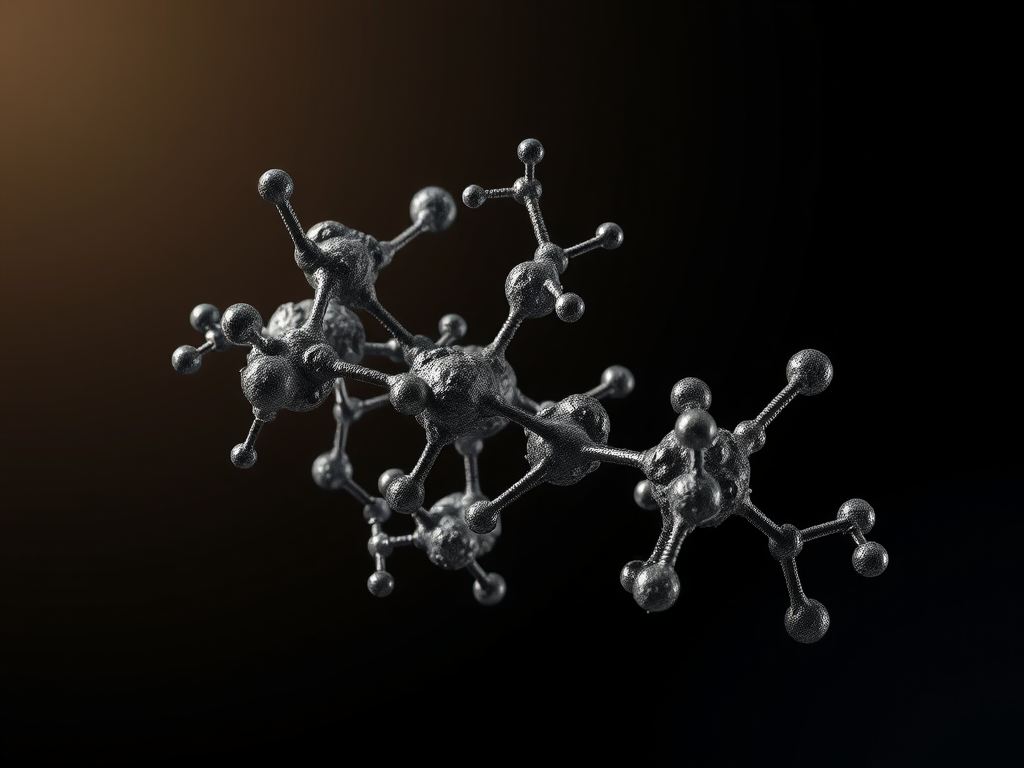
A new study by Adewale T. Irewale and his co-authors in RSC Sustainability used computational modeling to understand how biocharBiochar is a carbon-rich material created from biomass decomposition in low-oxygen conditions. It has important applications in environmental remediation, soil improvement, agriculture, carbon sequestration, energy storage, and sustainable materials, promoting efficiency and reducing waste in various contexts while addressing climate change challenges. More, a carbon-rich material made from biomassBiomass is a complex biological organic or non-organic solid product derived from living or recently living organism and available naturally. Various types of wastes such as animal manure, waste paper, sludge and many industrial wastes are also treated as biomass because like natural biomass these More, interacts with key nanonutrients, specifically zinc oxide (ZnO) and copper oxide (CuO). The research focuses on developing biochar from invasive water hyacinth to create nano-enabled, slow-release fertilizers. This innovative approach aims to improve nutrient delivery to plants, reduce environmental impact, and advance precision agriculture.
The study used molecular dynamics (MD) simulations to analyze the adsorption of ZnO and CuO onto a conceptualized biochar (CBC) structure. The CBC molecule was designed to be a representative model of biochar, which is normally a crude mixture of various components. The simulations revealed that the CBC molecule is thermodynamically stable, with a heat of formation of -226.45 kcal/mol, which supports why biochar is resistant to degradation in soil.
The researchers found that biochar showed energetically favorable interactions with both nanonutrients. However, there were significant differences in the adsorption mechanisms for each nutrient. CuO demonstrated a stronger binding affinity with a more negative average rigid adsorption energy of -17.64 eV compared to ZnO’s -14.15 eV. This indicates that CuO binds more strongly to the biochar without causing major structural changes. In contrast, ZnO exhibited a higher deformation energy, averaging -687.68 eV, which suggests its interaction is strengthened through structural adjustments of both the biochar and the ZnO itself.
Interestingly, the study also simulated the co-adsorption of both nanonutrients. When both were present, the overall system showed enhanced stability. The authors discovered a synergistic effect: while ZnO’s interaction with the biochar weakened (from -701.83 eV to -529.52 eV), CuO’s interaction strengthened significantly (from -23.94 eV to -326.05 eV). This suggests that the presence of ZnO may create a more favorable environment for CuO to bind to the biochar. This is supported by experimental data from other studies.
The computational data provide a molecular-level understanding of how these interactions occur, which can inform the design of more effective fertilizers. The researchers note that this type of molecular dynamics simulation is underutilized in nanofertilizer research. The use of biochar as a foundation for these nano-fertilizers has broader environmental benefits, including carbon sequestration and reduced nutrient runoff, which aligns with several UN Sustainable Development Goals. While this study provides a crucial theoretical framework, the authors acknowledge the need for future research to validate these findings experimentally and incorporate real-world factors like soil pHpH is a measure of how acidic or alkaline a substance is. A pH of 7 is neutral, while lower pH values indicate acidity and higher values indicate alkalinity. Biochars are normally alkaline and can influence soil pH, often increasing it, which can be beneficial More and moisture.
Source: Irewale, A. T., Elemike, E. E., Dimkpa, C. O., & Oguzie, E. E. (2025). Molecular Modelling of Biochar-ZnO-CuO Nano-biofertilizer: Adsorption Simulation for Optimized Nutrient Delivery. RSC Sustainability.





Leave a Reply