
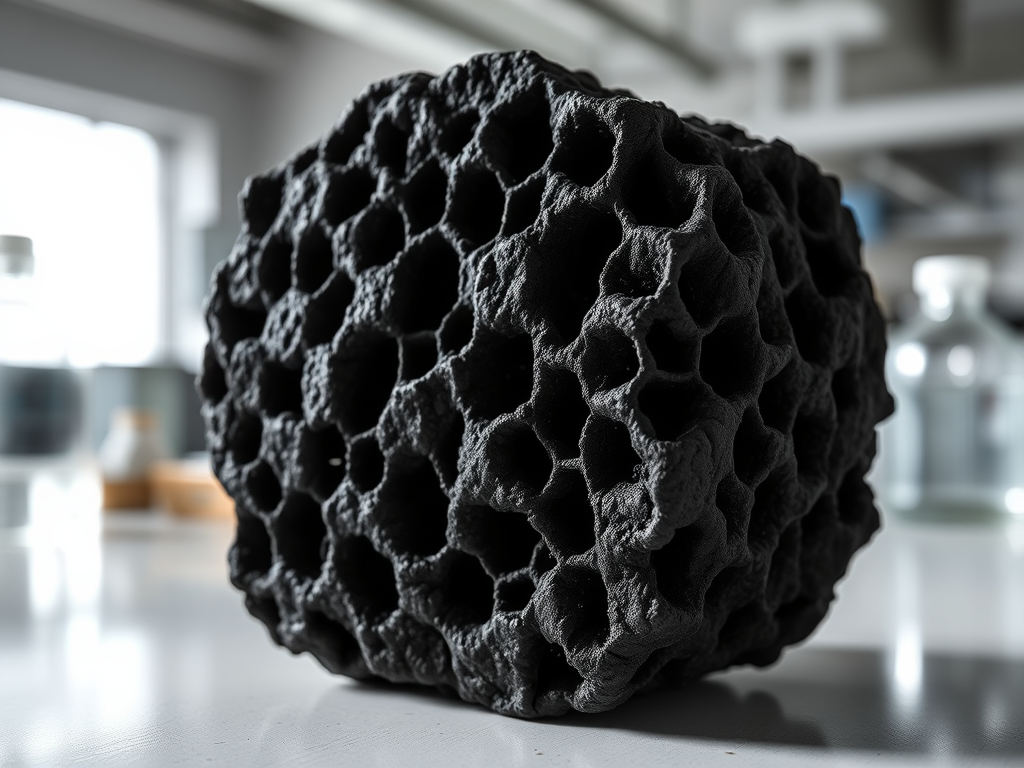
Chen et al., in Sustainable Environment Research, investigated the use of modified biocharBiochar is a carbon-rich material created from biomass decomposition in low-oxygen conditions. It has important applications in environmental remediation, soil improvement, agriculture, carbon sequestration, energy storage, and sustainable materials, promoting efficiency and reducing waste in various contexts while addressing climate change challenges. More derived from almond shells for the adsorption of phenol from wastewater. Phenol is a common organic pollutant found in industrial wastewater, and its removal is crucial due to its toxicity and potential for bioaccumulation. The researchers modified the biochar through combined pyrolysisPyrolysis is a thermochemical process that converts waste biomass into bio-char, bio-oil, and pyro-gas. It offers significant advantages in waste valorization, turning low-value materials into economically valuable resources. Its versatility allows for tailored products based on operational conditions, presenting itself as a cost-effective and efficient More with KOH and EDTA-4Na at 750 °C, resulting in a material with enhanced adsorption properties.
The modified biochar exhibited a honeycomb-like structure with a high specific surface area and a large proportion of micropores, which are ideal for adsorption processes. The material was also rich in functional groups, such as -OH, -CH2, N–C, C-H, and N–H, which further contributed to its adsorption capacity. The adsorption of phenol by the modified biochar was found to be a spontaneous exothermic process involving both physical and chemical adsorption, including hydrogen bonding and π-π interactions.
The study demonstrated that the modified biochar had a significant adsorption capacity for phenol, reaching 161 mg g−1 for simulated water and 149 mg g−1 for actual phenol-containing wastewater from coal chemical industries. The material also showed good reusability, maintaining its adsorption capacity after multiple cycles.
The findings of this study suggest that modified biochar derived from almond shells is a promising material for the removal of phenol from wastewater. Its high adsorption capacity, good reusability, and cost-effectiveness make it a potential alternative to conventional adsorbents for the treatment of industrial wastewater.
SOURCE: Chen, Y., Wang, D., Wang, X., Wu, J., & Song, S. (2025). Enhanced adsorption of phenol using EDTA4Na- and KOH-modified almond shell biochar. Sustainable Environment Research, 35(4). https://doi.org/10.1186/s42834-025-00243-3





Leave a Reply