
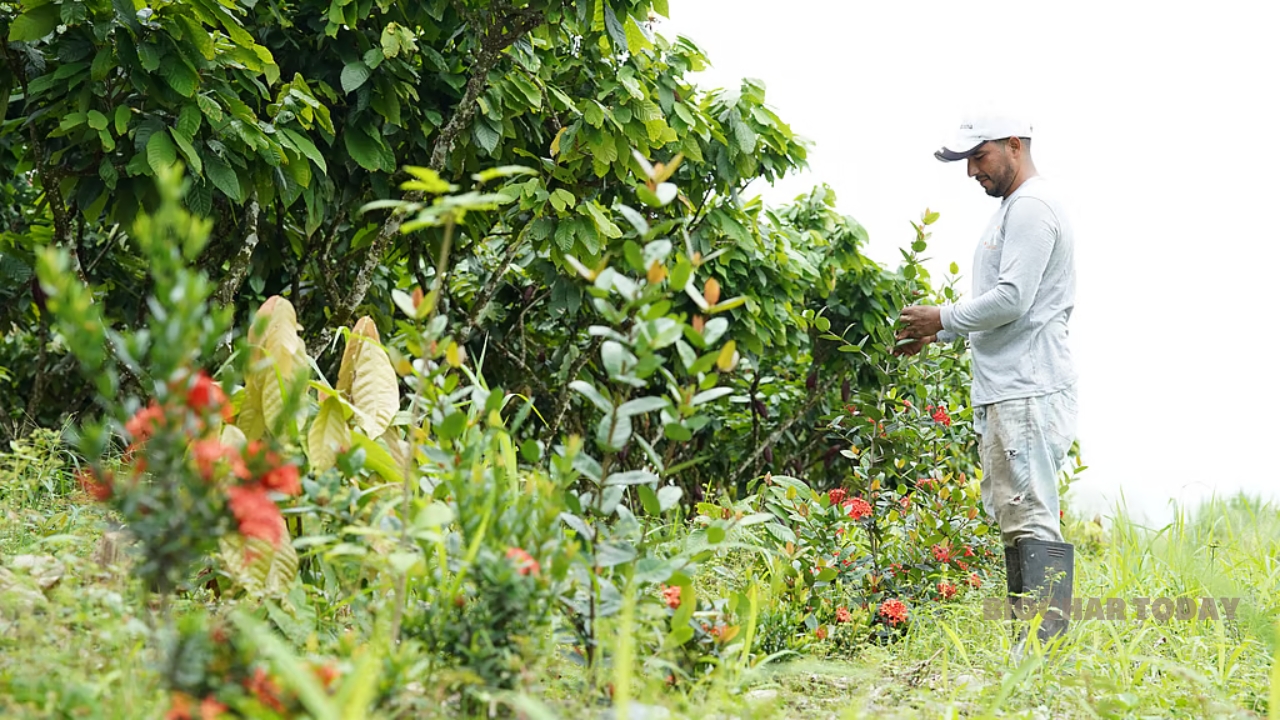
Mars, Incorporated and ofi (Olam Food Ingredients) have launched a five-year strategic collaboration (2025–2029) aimed at implementing regenerative agriculture practices across their shared cocoa supply chain in Ecuador. This initiative focuses on transitioning 9,000 hectares of farmland toward climate-smart models that include the application of biocharBiochar is a carbon-rich material created from biomass decomposition in low-oxygen conditions. It has important applications in environmental remediation, soil improvement, agriculture, carbon sequestration, energy storage, and sustainable materials, promoting efficiency and reducing waste in various contexts while addressing climate change challenges. More. The program is designed to align with the 2050 Net Zero ambitions of both organizations, as validated by the Science Based Targets initiative (SBTi). By integrating biochar with other regenerative techniques, the partnership seeks to enhance soil health and provide measurable carbon removals within the regional agricultural landscape.
The primary challenge addressed by this collaboration is the environmental and economic vulnerability of traditional full-sun monoculture cocoa farming. In Ecuador, these conventional practices often lead to soil degradation, high greenhouse gas emissions, and a lack of resilience against climate-induced pests and diseases. Furthermore, farmers frequently face high costs for synthetic inputs and limited access to the technical tools necessary for carbon sequestration. Scaling regenerative practices like biochar application requires overcoming these barriers of accessibility and high initial costs to ensure long-term productivity and farmer livelihoods are not compromised during the transition.
The solution proposed by Mars and ofi involves a transition to multistrata agroforestry systems, complemented by the targeted application of biochar and low-carbon fertilizers. By mimicking natural forest ecosystems, these agroforestry systems protect the cocoa crop while biochar serves as a critical tool for enhancing soil structure and sequestering carbon directly on-site. This technical intervention is supported by co-investment from both companies, which reduces the financial burden on individual farmers. The program provides the necessary infrastructure and expertise to more than 960 farmers, enabling the effective management of crop residues and the systematic application of biochar to improve soil fertility.
Anticipated outcomes of this five-year collaboration include a significant reduction in the carbon footprint of Ecuadorian cocoa and a rise in total carbon dioxide removals. For the participating farmers, the shift is expected to improve crop yields and strengthen long-term economic resilience through enhanced soil health and reduced reliance on costly external inputs. Beyond the environmental metrics, the project aims to benefit approximately 4,800 people within the local cocoa-growing communities. Ultimately, the integration of biochar into these large-scale supply chains serves as a credible pathway for Mars and ofi to reach their SBTi-validated net-zero targets by 2050.





Leave a Reply