
Key Takeaways
- Modifying rice husk biocharBiochar is a carbon-rich material created from biomass decomposition in low-oxygen conditions. It has important applications in environmental remediation, soil improvement, agriculture, carbon sequestration, energy storage, and sustainable materials, promoting efficiency and reducing waste in various contexts while addressing climate change challenges. More with magnesium significantly improves its ability to capture harmful fertilizers and nutrients from wastewater.
- A scaled-up system can successfully purify over four thousand liters of contaminated water every single day.
- Reusing the nutrient-enriched charcoalCharcoal is a black, brittle, and porous material produced by heating wood or other organic substances in a low-oxygen environment. It is primarily used as a fuel source for cooking and heating. More in agricultural soils can help lower overall water irrigation needs and reduce synthetic fertilizer demands.
- The high commercial cost of magnesium chemicals currently poses the primary barrier to making this treatment setup financially profitable.
- Preparing the charcoal requires a large amount of energy, which creates environmental burdens that can be balanced by generating renewable wind power.
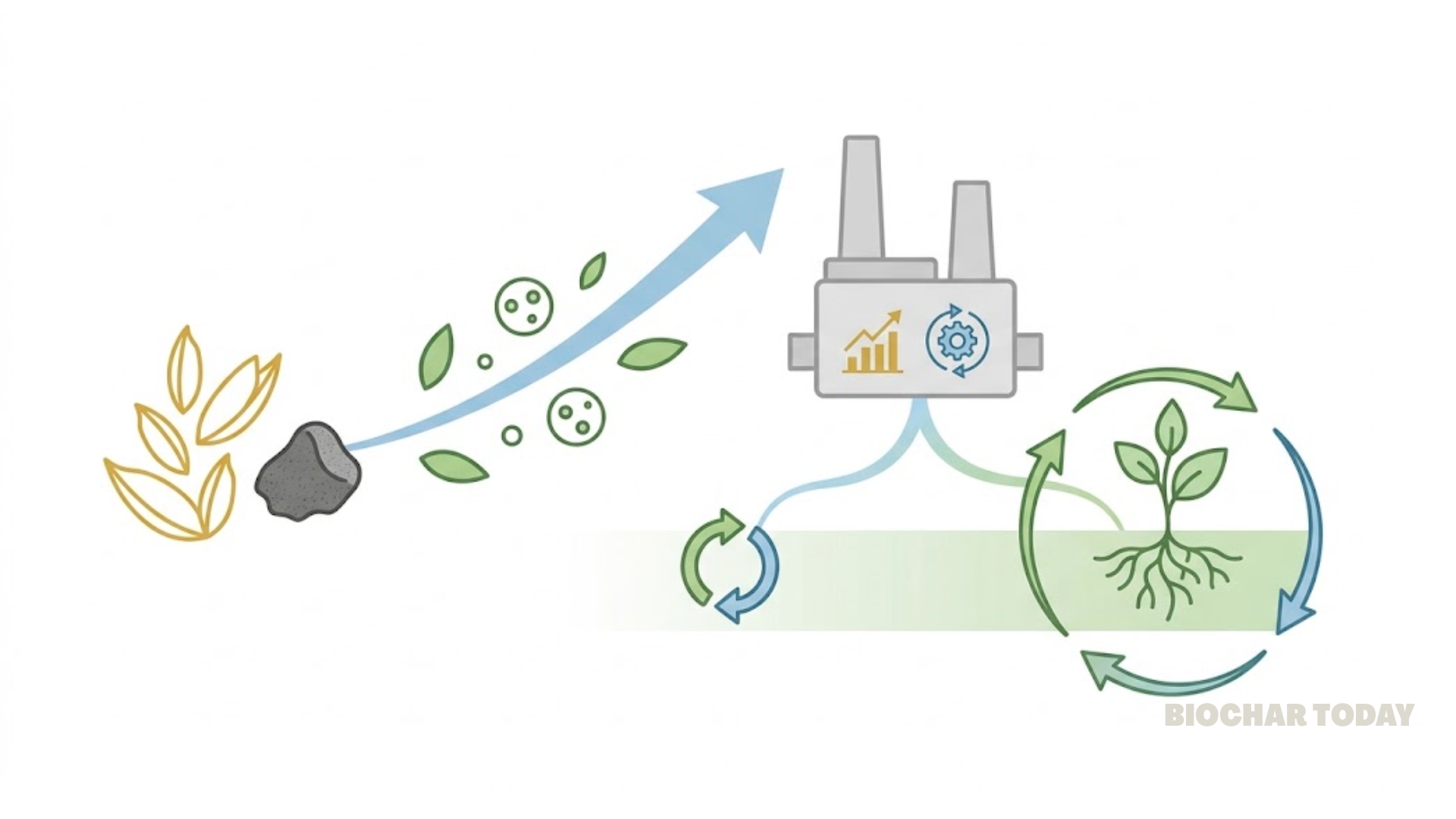
The discharge of excess agricultural and municipal nutrients into natural water systems poses severe ecological risks, necessitating efficient and circular waste-management solutions. In a study published in Water Environment Research, authors José Lugo-Arias, Sandra Vargas, Jose Villa-Parejo, Julia González-Álvarez, Guido Escorcia, and Elkyn Lugo-Arias evaluated the techno-economic and life-cycle performance of an engineered wastewater purification system. The researchers focused on using agricultural waste in the form of rice husks, which are chemically altered with magnesium chloride and transformed through a high-temperature thermal process known as pyrolysisPyrolysis is a thermochemical process that converts waste biomass into bio-char, bio-oil, and pyro-gas. It offers significant advantages in waste valorization, turning low-value materials into economically valuable resources. Its versatility allows for tailored products based on operational conditions, presenting itself as a cost-effective and efficient More into a functionalized charcoal material. Unmodified plant charcoal typically carries a negative surface charge that repels critical polluting nutrients like nitrate and phosphate, which exist as negatively charged molecules in wastewater. Impregnating the rice husk material with magnesium overcomes this limitation by introducing positive surface charges and oxide structures that actively bind, precipitate, and trap these targeted agricultural pollutants.
The scaled-up design demonstrates a robust technical capacity to treat wastewater continuously under realistic operating conditions. Based on laboratory data, the engineered system is scaled to process a daily wastewater flow rate of 4.32 cubic meters, requiring a continuous supply of 56.91 kilograms of modified biochar per day. During continuous column operations, the filter successfully decreases pollutant concentrations below the strict regulatory discharge limits established in Colombia, reducing nitrates to 10 milligrams per liter and phosphates to 0.5 milligrams per liter. A mass balance analysis confirms that the system removes 21.16 grams of nitrate and 12.1 grams of phosphate each day. However, the filtration columns encounter a technical limitation because nitrate reaches its breakthrough point after only one hour of operation, whereas phosphate takes four hours to saturate the material. Because nitrate escapes into the treated water much faster, the entire filtration cycle must be terminated prematurely after one hour to maintain regulatory compliance, leaving a large portion of the phosphate-binding capacity unutilized.
A comprehensive financial evaluation spanning a twenty-year project lifetime reveals major economic challenges under standard market conditions. The baseline analysis indicates that producing the modified biochar costs a steep 249,479 Colombian pesos per kilogram, which translates to an overall wastewater treatment cost of 3,202,735 Colombian pesos per cubic meter. This cost is significantly higher than conventional options like biological treatment or chemical precipitation. Probabilistic uncertainty analysis using ten thousand simulation cycles confirms a zero percent probability of achieving commercial profitability under the baseline scenario. This economic barrier is driven almost entirely by the high local price of industrial-grade magnesium chloride in Colombia, which demands an annual consumption of 415 tons of chemical reagent. When substituting international market prices from Chinese industrial suppliers, the cost of the chemical drops drastically, rendering the entire wastewater enterprise highly profitable and enabling full recovery of the initial capital investment of 122,762,675 Colombian pesos within one to three years.
From an environmental standpoint, life-cycle tracking indicates that the system creates a mix of operational burdens and prospective agricultural benefits. The initial charcoal preparation phase acts as the primary environmental hotspot, driving up global warming impacts, nonrenewable energy depletion, and aquatic ecotoxicity due to the intensive electricity demand required to fuel the pyrolysis reactors. Sensitivity analysis shows that replacing standard hydroelectric power with renewable wind energy or biomass-derived synthesis gas can dramatically lower these production burdens. Conversely, the prospective soil application phase provides excellent environmental payback. Returning the nutrient-loaded spent biochar back to irrigated rice fields as an organic soil amendmentA soil amendment is any material added to the soil to enhance its physical or chemical properties, improving its suitability for plant growth. Biochar is considered a soil amendment as it can improve soil structure, water retention, nutrient availability, and microbial activity. More yields potential economic savings by reducing irrigation water requirements and lowering synthetic nitrogen fertilizer inputs. Furthermore, this circular economy framework enables stable underground carbon storage, achieving a potential climate mitigation benefit by capturing and locking away -1.34 kilograms of carbon dioxide equivalent for every single kilogram of modified rice husk biochar applied to the agricultural land.
Source: Lugo-Arias, J., Vargas, S., Villa-Parejo, J., González-Álvarez, J., Escorcia, G., & Lugo-Arias, E. (2026). Techno-economic and environmental assessment of magnesium-impregnated rice husk biochar for nutrient removal: A scale-up and prospective soil application approach. Water Environment Research, 98(6), e70434.




Leave a Reply