
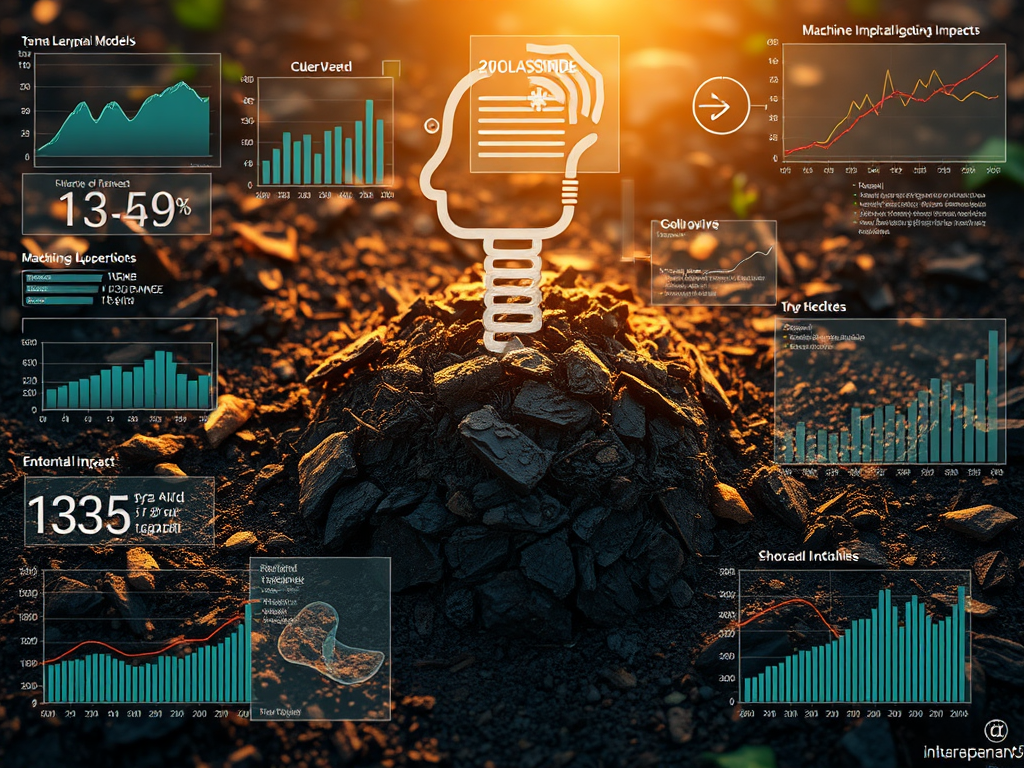
Li et al., in a study published in the Journal of Cleaner Production, propose a novel framework that combines machine learning (ML) and life cycle assessment (LCA) to evaluate the environmental impacts of biocharBiochar is a carbon-rich material created from biomass decomposition in low-oxygen conditions. It has important applications in environmental remediation, soil improvement, agriculture, carbon sequestration, energy storage, and sustainable materials, promoting efficiency and reducing waste in various contexts while addressing climate change challenges. More production from agricultural waste. Biochar, a charcoal-like material produced from the pyrolysisPyrolysis is a thermochemical process that converts waste biomass into bio-char, bio-oil, and pyro-gas. It offers significant advantages in waste valorization, turning low-value materials into economically valuable resources. Its versatility allows for tailored products based on operational conditions, presenting itself as a cost-effective and efficient More of biomassBiomass is a complex biological organic or non-organic solid product derived from living or recently living organism and available naturally. Various types of wastes such as animal manure, waste paper, sludge and many industrial wastes are also treated as biomass because like natural biomass these More, has gained significant attention for its potential to improve soil quality and sequester carbon.
The researchers developed and compared five different ML models to predict biochar yield and properties based on various input parameters, such as feedstockFeedstock refers to the raw organic material used to produce biochar. This can include a wide range of materials, such as wood chips, agricultural residues, and animal manure. More composition and pyrolysis conditionsThe conditions under which pyrolysis takes place, such as temperature, heating rate, and residence time, can significantly affect the properties of the biochar produced. More. The multi-layer perceptron neural network (MLP-NN) and Gaussian process regression (GPR) models demonstrated excellent performance in predicting biochar yield, carbon content, and nitrogen content. Using the MLP-NN model, the researchers identified the optimal pyrolysis conditions for maximizing carbon sequestration potential. The LCA component of the framework evaluated the environmental impacts of biochar production and soil application, considering carbon sequestration and the substitution of chemical fertilizers. The results showed that biochar production could achieve significant carbon savings, especially when used to replace conventional nitrogen fertilizers.
This study highlights the potential of ML-assisted LCA for optimizing biochar production and maximizing its environmental benefits. The proposed framework can help researchers and practitioners to better understand the complex interdependencies between process parameters and environmental impacts, facilitating the development of sustainable biochar systems for soil applications.
Source: Li, Y., Gupta, R., Li, W., Fang, Y., Toney, J., & You, S. (2025). Machine learning-assisted life cycle assessment of biochar soil application. Journal of Cleaner Production, https://doi.org/10.1016/j.jclepro.2025.145109



Leave a Reply