

Key Takeaways
- BiocharBiochar is a carbon-rich material created from biomass decomposition in low-oxygen conditions. It has important applications in environmental remediation, soil improvement, agriculture, carbon sequestration, energy storage, and sustainable materials, promoting efficiency and reducing waste in various contexts while addressing climate change challenges. More is a stable carbon material produced from plant and organic waste that enriches soil health.
- Applying biochar helps agricultural soils hold more water and essential nutrients while reducing water runoff and erosion.
- Adding biochar increases crop yields and enhances plant resilience against drought, salinity, and heavy metal toxicity.
- Biochar promotes beneficial soil bacteria and fungi that suppress plant diseases and improve soil structure over time.
- The success of biochar depends on matching the specific material properties to local soil needs and farm management practices.
In a comprehensive scientific review published in the journal Sci, researchers Ágata Cristiana Correia, Cláudia Campos Pessoa, Paulo Alexandre Legoinha, Fernando Henrique Reboredo, Fernando Cebola Lidon, and Maria Manuela Silva evaluated the transformative potential of biochar in modern agriculture. Biochar is a carbon-rich material produced by heating organic waste, such as crop residues, wood chips, animal manure, or marine biomassBiomass is a complex biological organic or non-organic solid product derived from living or recently living organism and available naturally. Various types of wastes such as animal manure, waste paper, sludge and many industrial wastes are also treated as biomass because like natural biomass these More, in an environment with little to no oxygen. This thermal conversion transforms raw biomass into a porous, highly stable form of carbon that can remain intact in agricultural soils for decades or centuries. Rather than treating biochar as a simple fertilizer, the findings emphasize that its true value lies in its ability to permanently enhance soil physical structure, chemical balance, and biological activity.
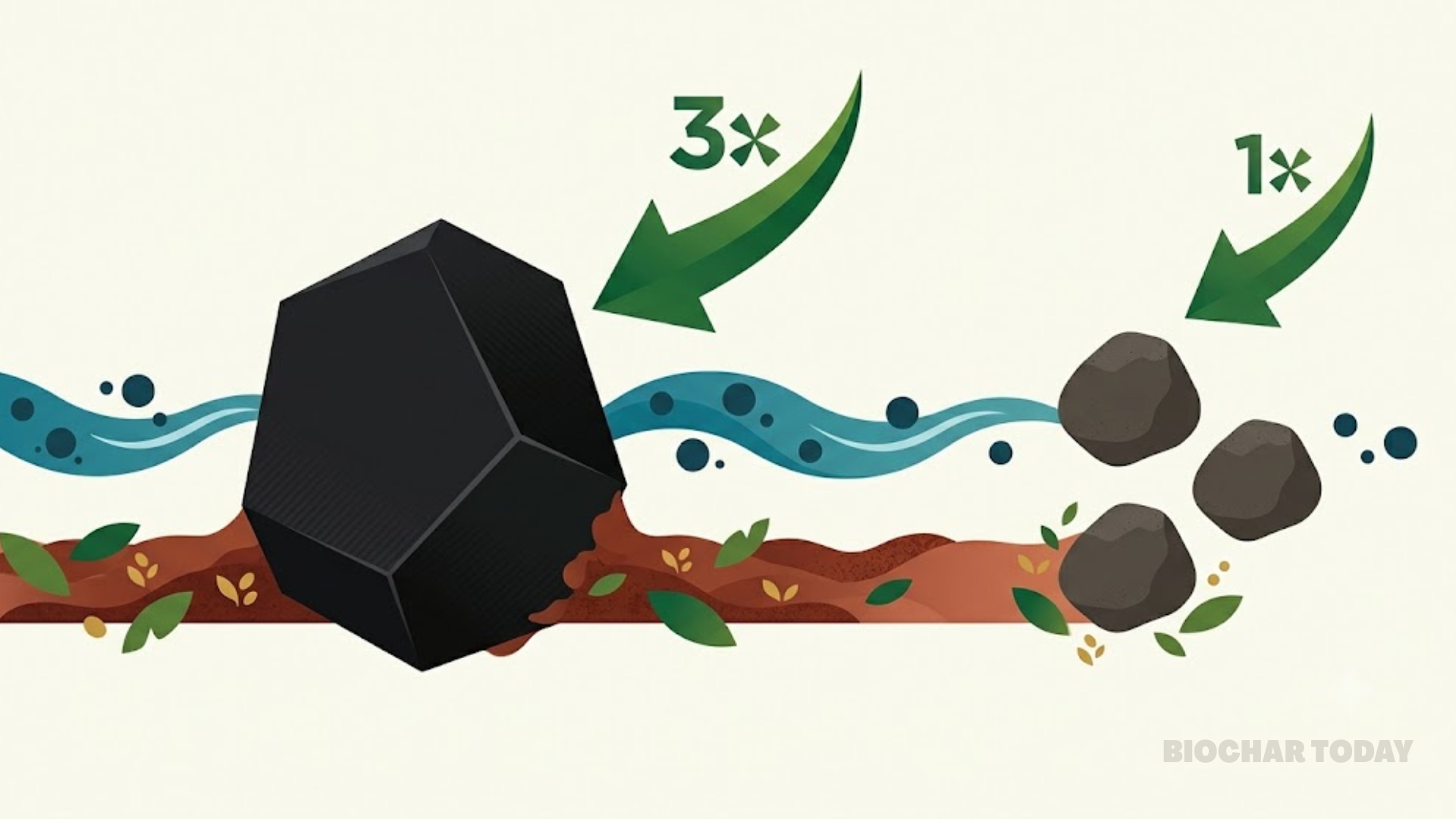
The synthesis demonstrates that biochar significantly alters soil carbon storage and structural stability. In degraded and saline soils, applying high-purity biochar increases organic carbon content in topsoil by up to forty-seven percent while building stable mineral-bound carbon pools. Fine-textured soils retain biochar especially well, protecting carbon from rapid microbial decomposition and strengthening soil aggregation. Beyond carbon storage, biochar dramatically improves soil physical structure. In sandy soils, the porous network of biochar decreases soil bulk density by up to thirty-one percent and boosts water retention capacity by nearly one hundred thirty percent. In sloped farming landscapes, biochar enhances water infiltration and reduces surface runoff and soil erosion by more than ninety percent, acting like a natural sponge that buffers crops against heavy rains and dry spells.
Biochar also serves as a vital platform for improving nutrient availability and plant health. When integrated with balanced fertilizers, biochar increases global crop yields by an average of fourteen percent, with yield improvements exceeding twenty-one percent in long-term field management trials lasting over five years. By increasing the cation exchange capacity of the soil, biochar holds onto essential nutrients such as potassium, calcium, and magnesium, preventing them from washing away into waterways. Furthermore, custom biochar formulations and coatings slow down fertilizer breakdown, matching nutrient release directly to plant roots. This enhanced nutrient efficiency allows farmers to achieve high harvest yields while minimizing synthetic fertilizer applications, lowering farming costs and environmental runoff.
In addition to boosting yield, biochar plays a critical biological role by stimulating soil microbiomes and mitigating crop stress. The porous architecture of biochar provides protective microhabitats for beneficial bacteria and fungi, such as mycorrhizal communities and phosphate-solubilizing microbes. Biochars modified with minerals like silicon or produced at higher temperatures actively suppress soil-borne plant pathogens, including bacterial wilt, by promoting resilient microbial networks. Moreover, biochar protects crops growing under environmental stress, such as drought, salinity, or toxic heavy metals. In contaminated soils, biochar binds hazardous metals like lead, cadmium, and chromium, cutting metal accumulation in edible plant tissues and safeguarding food safety. Biochar also alters nitrogen cycling, reducing soil nitrous oxide emissions and helping farms lower their overall climate impact.
Despite these widespread benefits, the study stresses that biochar is not a one-size-fits-all solution. Agronomic performance varies widely depending on feedstockFeedstock refers to the raw organic material used to produce biochar. This can include a wide range of materials, such as wood chips, agricultural residues, and animal manure. More selection, production temperature, soil type, and climate. For instance, wood-derived biochars provide exceptional long-term carbon stability, whereas manure-derived biochars deliver higher immediate nutrient supplies. Low application rates on fertile, well-structured soils may produce negligible short-term yield gains, while excessive applications can temporarily disrupt soil chemical balance. To overcome production variability and economic hurdles, the authors advocate moving toward standardized quality certification and tailored deployment strategies. Matching specific biochar formulations to local soil limitations ensures predictable performance, economic viability, and long-term agricultural sustainability.
Source: Correia, Á. C., Pessoa, C. C., Legoinha, P. A., Reboredo, F. H., Lidon, F. C., & Silva, M. M. (2026). Biochar and sustainable crop performance: A synoptical review of its properties, agronomic potential and constraints. Sci, 8(8), 179.



Leave a Reply