
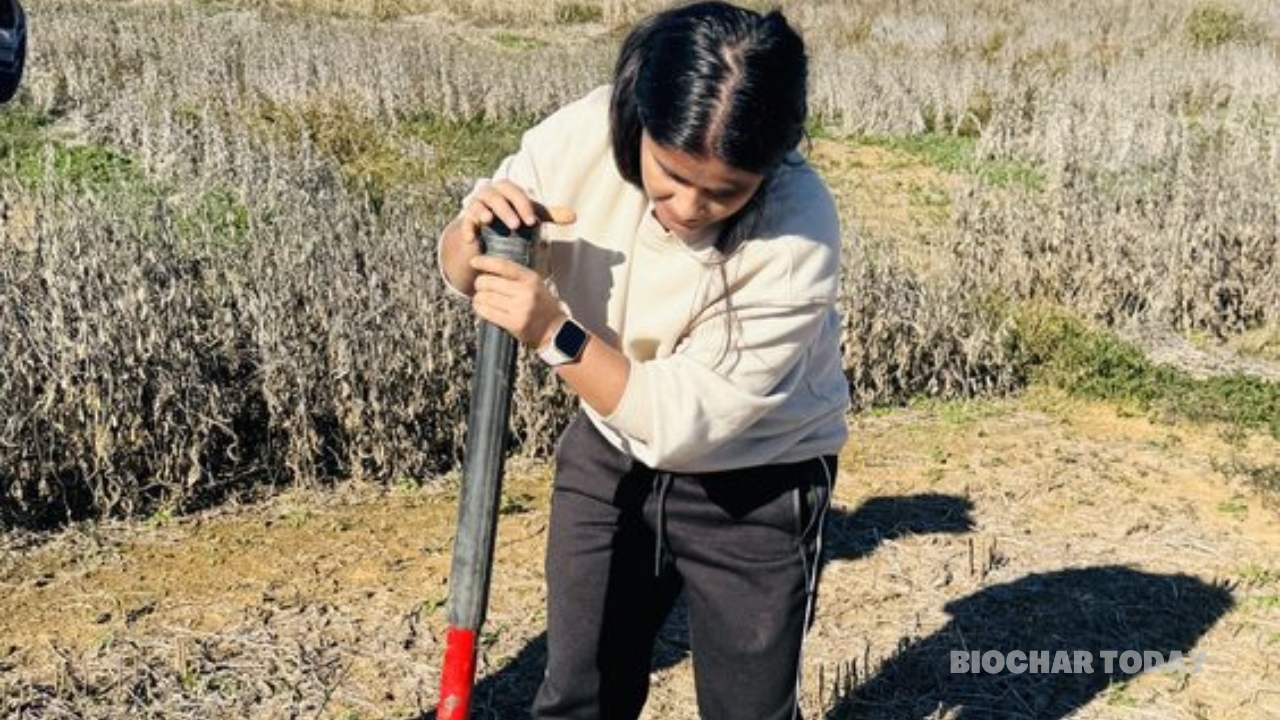
Researchers at Kentucky State University have published a third-year assessment examining the medium-term impacts of pine sawdust biocharBiochar is a carbon-rich material created from biomass decomposition in low-oxygen conditions. It has important applications in environmental remediation, soil improvement, agriculture, carbon sequestration, energy storage, and sustainable materials, promoting efficiency and reducing waste in various contexts while addressing climate change challenges. More amendments on agricultural soil properties under soybean cultivation in the United States. Building upon earlier findings published in Frontiers in Agronomy, the research team tracked changes in soil composition over multiple seasons to determine how soil characteristics evolve following initial amendments.
A primary challenge in agricultural soil amendmentA soil amendment is any material added to the soil to enhance its physical or chemical properties, improving its suitability for plant growth. Biochar is considered a soil amendment as it can improve soil structure, water retention, nutrient availability, and microbial activity. More research is determining whether short-term chemical and biological changes resulting from biochar application persist over extended periods in established, stable soils. Because long-term soil productivity and food security rely on continuous biological stability, investigators must distinguish between transient responses and sustained alterations in soil functionality.
To address this challenge, the research team—led by agricultural officer and master’s student Srijana Kandel under the mentorship of Dr. Anuj Chiluwal—conducted a medium-term assessment at the Harold R. Benson Research and Demonstration Farm. By sampling silty loam soil before planting and after harvest during the third year, the team compared treated and untreated plots at varying depths to measure changes in carbon fractions, nutrient levels, and acidity.
The analysis revealed a modest three percent increase in biologically active carbon in treated plots following harvest, alongside elevated levels of manganese. However, other metrics—including total carbon, soil acidity, and water-holding capacity—showed little measurable difference compared to untreated plots, and crop yield impacts were not evaluated. Researchers noted that the experimental site’s historical use for hay production yielded an already fertile and stable soil baseline, indicating that longer observation periods and studies on degraded soils are necessary to fully gauge biochar’s long-term agricultural utility.




Leave a Reply