
Kentucky State University researchers have partnered with regional producers across five Kentucky counties to evaluate how regenerative agriculture practices impact soil health and crop yields under real-world operating conditions. The project, titled “A Step Toward Regenerative Farming — Small-Scale Farming,” is led by Dr. Maheteme Gebremedhin and supported by funding from the U.S. Department of Agriculture’s Natural Resources Conservation Service (USDA-NRCS). Demonstrations held at Boulden Farms in Mason County showcased field trials comparing conventional management against reduced tillage, cover cropping, and biocharBiochar is a carbon-rich material created from biomass decomposition in low-oxygen conditions. It has important applications in environmental remediation, soil improvement, agriculture, carbon sequestration, energy storage, and sustainable materials, promoting efficiency and reducing waste in various contexts while addressing climate change challenges. More applications across working farms in Mason, Todd, Lincoln, Madison, and LaRue counties.
Small-scale agricultural producers face significant risk when transitioning away from conventional soil management practices due to initial costs, equipment requirements, and uncertain short-term yield impacts. Traditional academic research often relies on controlled university research plots, which can fail to replicate the practical operational constraints, labor demands, and variable field conditions encountered on commercial farms. Without localized, multi-year empirical data collected directly from working farm environments, producers remain hesitant to adopt conservation amendments like biochar or alter established tillage routines.
To address these implementation uncertainties, Kentucky State’s Soil Health Group established on-farm research trials directly managed by commercial agricultural producers raising corn, tobacco, and livestock. This participatory approach integrates biochar treatments, cover crops, and reduced tillage into active commercial rotations while tracking chemical, biological, and physical soil metrics over time. USDA-NRCS technical specialists provide complementary chemical and biological soil assessments to establish baseline metrics, helping farmers identify site-specific conservation goals and navigate the multi-year transition period required for biological soil stabilization.
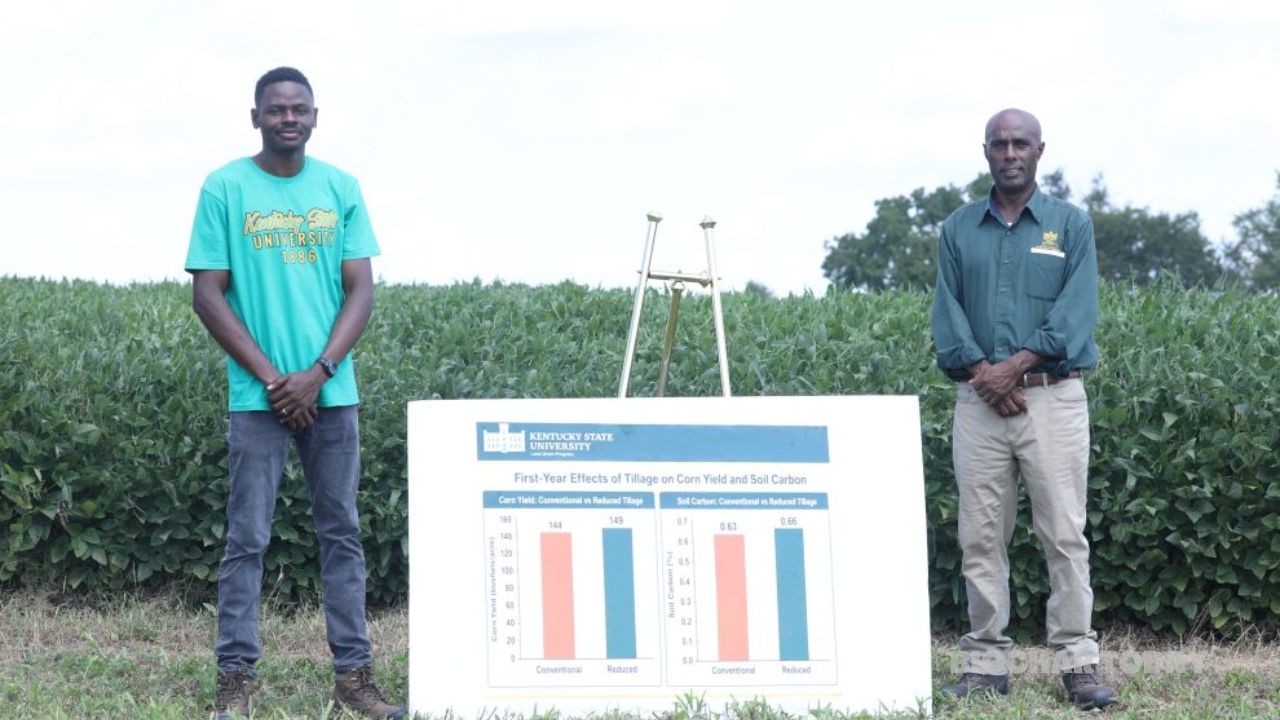
Preliminary findings from the first full cropping season revealed encouraging trends, including a 3.8% increase in corn yields and a 4.6% increase in soil carbon levels under reduced tillage management compared to conventional tillage. However, researchers emphasized that transitioning soils require multi-year monitoring before drawing definitive conclusions regarding the long-term agronomic benefits of biochar and conservation tillage. Ultimately, the collaborative framework provides Kentucky farmers with locally relevant, risk-mitigated data to inform sustainable land management decisions while establishing a repeatable model for practical on-farm soil health research in the United States.





Leave a Reply