
Key Takeaways
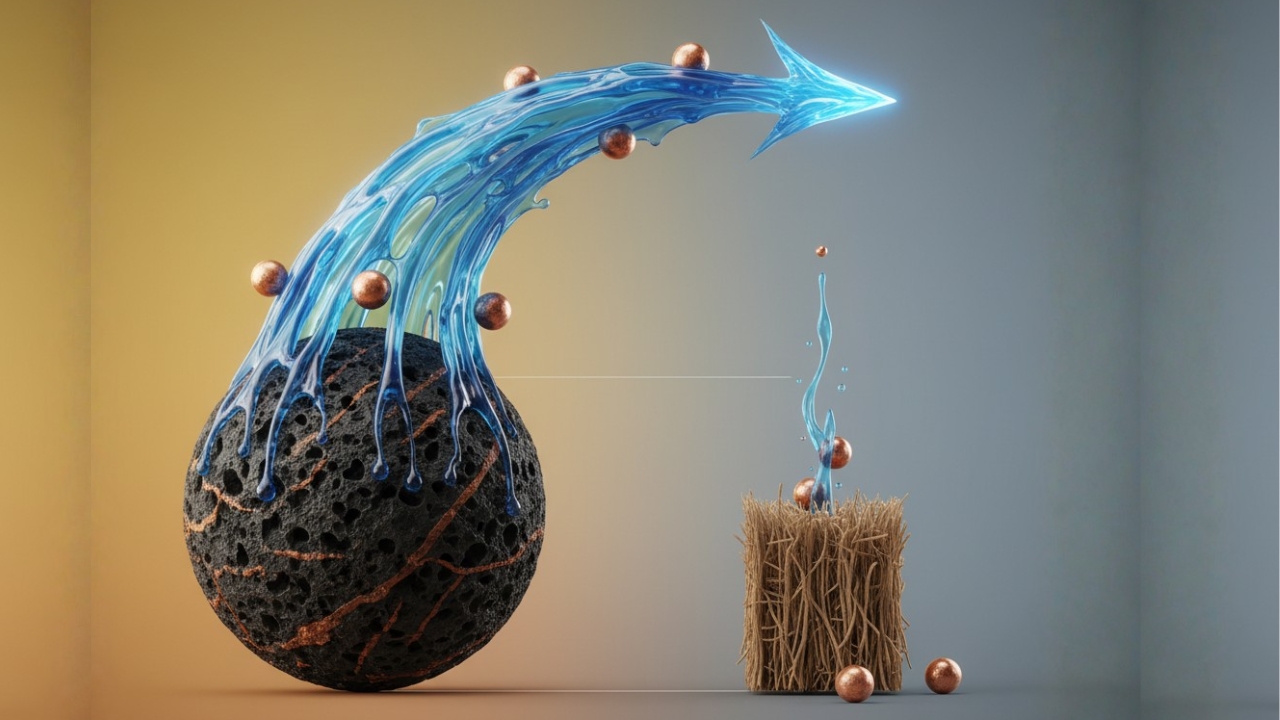
- Waste to Water Purifier: A potent water cleaner was made from fermented grain residues (a brewery waste product), offering a sustainable way to treat one waste product while solving another environmental problem.
- Near-Total Antibiotic Removal: This novel biocharBiochar is a carbon-rich material created from biomass decomposition in low-oxygen conditions. It has important applications in environmental remediation, soil improvement, agriculture, carbon sequestration, energy storage, and sustainable materials, promoting efficiency and reducing waste in various contexts while addressing climate change challenges. More catalyst achieved an impressive 92.1% removal of oxytetracycline (OTC) antibiotic from water, addressing a major source of antibiotic resistance.
- Reusable and Tough: The catalyst is durable, keeping its high performance and maintaining over 80% efficiency even after being reused four times. It also works well in real-world water (like tap and lake water), showing strong resistance to common contaminants.
- Safe Degradation: The process doesn’t just move the antibiotic; it breaks it down into pieces that are less toxic than the original antibiotic, ensuring the treated water is ecologically safer.
The pervasive presence of antibiotics like oxytetracycline (OTC) in our water systems poses a major environmental risk, driving the proliferation of antibiotic-resistant bacteria. Standard wastewater treatment often falls short in degrading these resilient contaminants. A recent study in the Ain Shams Engineering Journal detailed the development of a novel, highly efficient, iron-modified biochar catalyst derived from fermented grain residues. The research, led by Tiehong Song, Ying Zhang, Hongyan Wei, Ying Wang, and Yanjiao Gao, demonstrated an advanced oxidation process capable of nearly eliminating this stubborn pollutant from water.
The core innovation is the synthesis of a specialized material, 4MBC800, created by modifying fermented grain residues—a waste product from liquor production—with K2FeO4 (potassium ferrate) and pyrolyzing the mixture at 800∘C. This process successfully loaded Fe (iron) onto the biochar, forming various valence states of iron species like Fe3+ and Fe2+. The resulting biochar exhibited a highly developed porous structure and the largest specific surface area (264 m2/g) among all tested variants, which is crucial for maximizing contact between the pollutant and the catalyst. This high surface area essentially creates a concentrated reaction site on the biochar’s surface, which is beneficial for the subsequent oxidation process.
The team employed this 4MBC800 catalyst to activate periodate (PI), an oxidizing agent, in a reaction known as an Advanced Oxidation Process (AOP). While PI alone could only achieve 56% OTC removal, the addition of the biochar catalyst significantly boosted the degradation rate. Under optimal conditions—specifically, at a low pHpH is a measure of how acidic or alkaline a substance is. A pH of 7 is neutral, while lower pH values indicate acidity and higher values indicate alkalinity. Biochars are normally alkaline and can influence soil pH, often increasing it, which can be beneficial More of 3, with OTC at 20.4 mg/L, 4MBC800 at 1.1 g/L, and PI at 3.3 g/L—the system achieved a high 92.1% OTC removal within 150 minutes. This remarkable efficiency underscores the synergistic effect of the iron species and the carbon matrix in facilitating electron transfer and generating powerful reactive oxygen species (ROS).
The degradation of OTC was driven by a collaboration of reactive species, as confirmed by radical quenching experiments. The dominant species identified were hydroxyl radicals, superoxide radicals , and singlet oxygen. Furthermore, the analysis revealed the presence of iodate radicals, confirming that OTC elimination was achieved through both radical and non-radical pathways. Mechanistically, the high removal rate under acidic conditions is attributed to the enhanced iron redox cycle on the biochar surface, which efficiently reduces IO4− to generate these highly reactive radicals.
Beyond its efficiency, the 4MBC800/PI system demonstrated promising practical applicability. The degradation efficiency remained relatively stable, maintaining over 80% OTC removal even after four reuse cycles, which is critical for real-world cost-effectiveness and durability. The system also showed strong resistance to common water quality interferents like natural organic matter (NOM) and common anions (Cl− and NO3−). Finally, toxicological analysis of the degradation byproducts, performed using ECOSAR software, was encouraging: most OTC degradation intermediates were found to have lower ecotoxicity than OTC itself, falling into the non-toxic range. This dual success in pollutant removal and ecological safety highlights the potential of this waste-derived material for sustainable water treatment. Future studies will focus on pilot-scale experiments to validate the material’s performance in complex industrial wastewater and assess its long-term stability under continuous flow conditions.
Source: Song, T., Zhang, Y., Wei, H., Wang, Y., & Gao, Y. (2025). Iron-modified biochar from fermented grain residues for enhanced oxytetracycline degradation via periodate activation. Ain Shams Engineering Journal, 16(2025), 103789.





Leave a Reply