
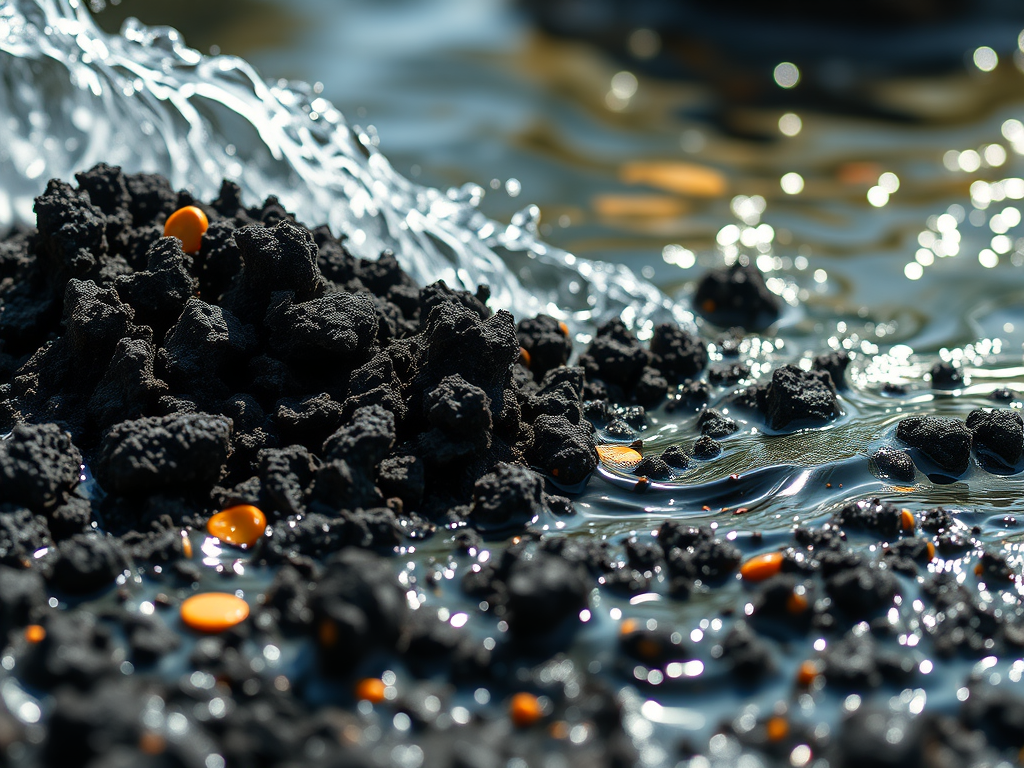
Iron-modified biocharBiochar is a carbon-rich material created from biomass decomposition in low-oxygen conditions. It has important applications in environmental remediation, soil improvement, agriculture, carbon sequestration, energy storage, and sustainable materials, promoting efficiency and reducing waste in various contexts while addressing climate change challenges. More, a cutting-edge composite material, has rapidly emerged as a focal point in environmental science due to its exceptional catalytic performance and stability. Combining the structural advantages of biochar with the high redox activity of iron, this material is gaining traction in wastewater treatment and environmental remediation. A recent bibliometric analysis by Jia Yi-xuan, Xu Jun-zeng, Li Ya-wei, and their colleagues, published in the Journal of Ecology and Rural Environment, provides a comprehensive overview of the research landscape, hotspots, and future trends of iron-modified biochar.
The study reveals a dramatic increase in publications related to iron-modified biochar since 2011, with particularly rapid growth in the last five years. This accelerating trend highlights the material’s growing importance in scientific inquiry. China stands at the forefront of this research, contributing a remarkable 78% of all publications in the field, far surpassing other countries like the United States and South Korea. This dominance is likely driven by China’s strategic environmental policies focused on remediation and sustainable resource utilization.
Zero-valent iron (ZVI) modification has emerged as the most researched approach for altering biochar, primarily due to its ability to enhance the biochar’s magnetic properties. These magnetic characteristics are highly valued because they allow for the quick and easy separation and recovery of biochar after it has adsorbed pollutants, effectively preventing secondary contamination and offering cost-effective reusability. The functionality of iron-modified biochar largely stems from three key mechanisms: adsorption, catalytic activity, and serving as a reaction carrier.
Initially, research on iron-modified biochar focused on a singular application: the removal of phosphates from water. However, the scope has significantly broadened over time. Current research hotspots include diverse areas such as general wastewater treatment, comprehensive soil and water environment remediation, and even bioenergy production. This expansion reflects a deepening understanding of the material’s versatility.
Beyond merely observing the effects, researchers are now delving into the intrinsic mechanisms behind iron-modified biochar’s performance. This includes investigating how it enhances specific functions and exploring methods for its low-cost preparation. For instance, in wastewater treatment, iron-modified biochar acts as a catalyst and reaction carrier, improving the degradation efficiency of organic pollutants. Advanced oxidation processes, involving reactive oxygen species, are key to this enhanced degradation, facilitated by the biochar’s oxygen-containing functional groups and electron transfer capabilities.
In the realm of soil remediation, iron-modified biochar is proving effective in immobilizing heavy metals like chromium, lead, and cadmium. Its application in paddy soils, for example, shows promise in regulating iron-carbon cycling and passivating heavy metals. In bioenergy production, iron-modified biochar demonstrates significant advantages in biochemical processes like anaerobic digestion, where it promotes direct electron transfer between microorganisms, increasing methane yields. It also enhances the production of combustible gases like hydrogen and carbon monoxide during biomassBiomass is a complex biological organic or non-organic solid product derived from living or recently living organism and available naturally. Various types of wastes such as animal manure, waste paper, sludge and many industrial wastes are also treated as biomass because like natural biomass these More pyrolysisPyrolysis is a thermochemical process that converts waste biomass into bio-char, bio-oil, and pyro-gas. It offers significant advantages in waste valorization, turning low-value materials into economically valuable resources. Its versatility allows for tailored products based on operational conditions, presenting itself as a cost-effective and efficient More and gasificationGasification is a high-temperature, thermochemical process that converts carbon-based materials into a gaseous fuel called syngas and solid by-products. It takes place in an oxygen-deficient environment at temperatures typically above 750°C. Unlike combustion, which fully burns material to produce heat and carbon dioxide (CO2), gasification More.
Looking ahead, future research will concentrate on strengthening the beneficial properties of iron-modified biochar, such as its magnetic, redox, and electron transfer capabilities. There’s a growing interest in co-doping biochar with multiple elements (e.g., iron-nitrogen, iron-phosphorus) to further enhance its pore structure, active sites, and electron transfer abilities. The application scope is also expected to expand, integrating with emerging biotechnologies and electrochemical techniques. Furthermore, optimizing green and sustainable preparation strategies will be crucial, focusing on low-cost raw materials like red mud (a high-iron industrial waste) to promote large-scale, cost-effective production and wider adoption of iron-modified biochar for a more sustainable future.
Source: Jia, Y., Xu, J., Li, Y., Liu, X., Xu, Y., Wei, Q., Hu, Z., & Tian, W. (2025). Analysis of Research Hotspots and Development Trends of Iron-modified Biochar Based on Bibliometrics. Journal of Ecology and Rural Environment, 41(5), 569-578.




Leave a Reply