
Key Takeaways
- Solving Two Problems at Once: Scientists converted the highly invasive and problematic shrub, Rhododendron ponticum, into a powerful water filter, simultaneously aiding ecosystem restoration and fighting pollution.
- Massive Performance Boost: Treating the material with acid and heat increased its ability to adsorb aspirin (a model pollutant) by over 160%, with the best material hitting an impressive 295.7mg g-1adsorption capacity.
- Energy-Smart Filtering: The best results for surface area were achieved at a lower-than-expected temperature , which suggests the cleaning process can be done more energy-efficiently, saving costs and enhancing sustainability.
- Effective on Real-World Levels: The filter works best at low concentrations of pollutants, which mirrors the typical contamination levels found in rivers and lakes, making it a highly practical solution for water purification.
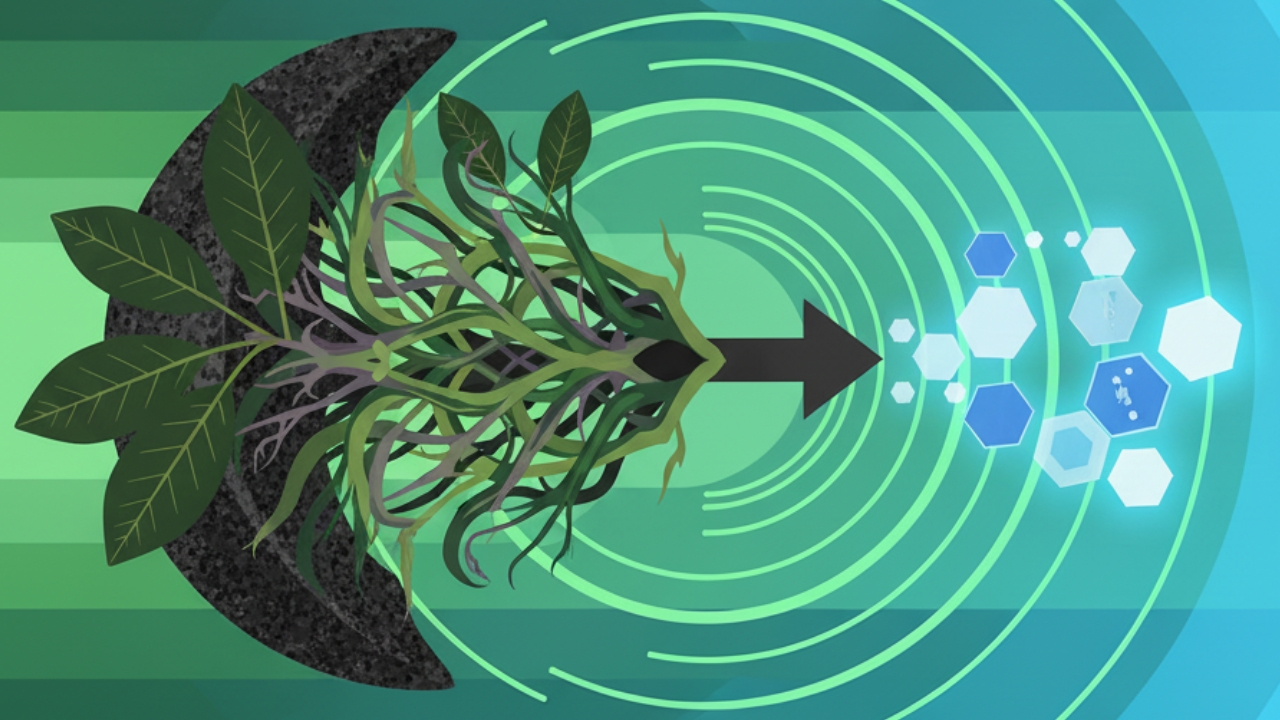
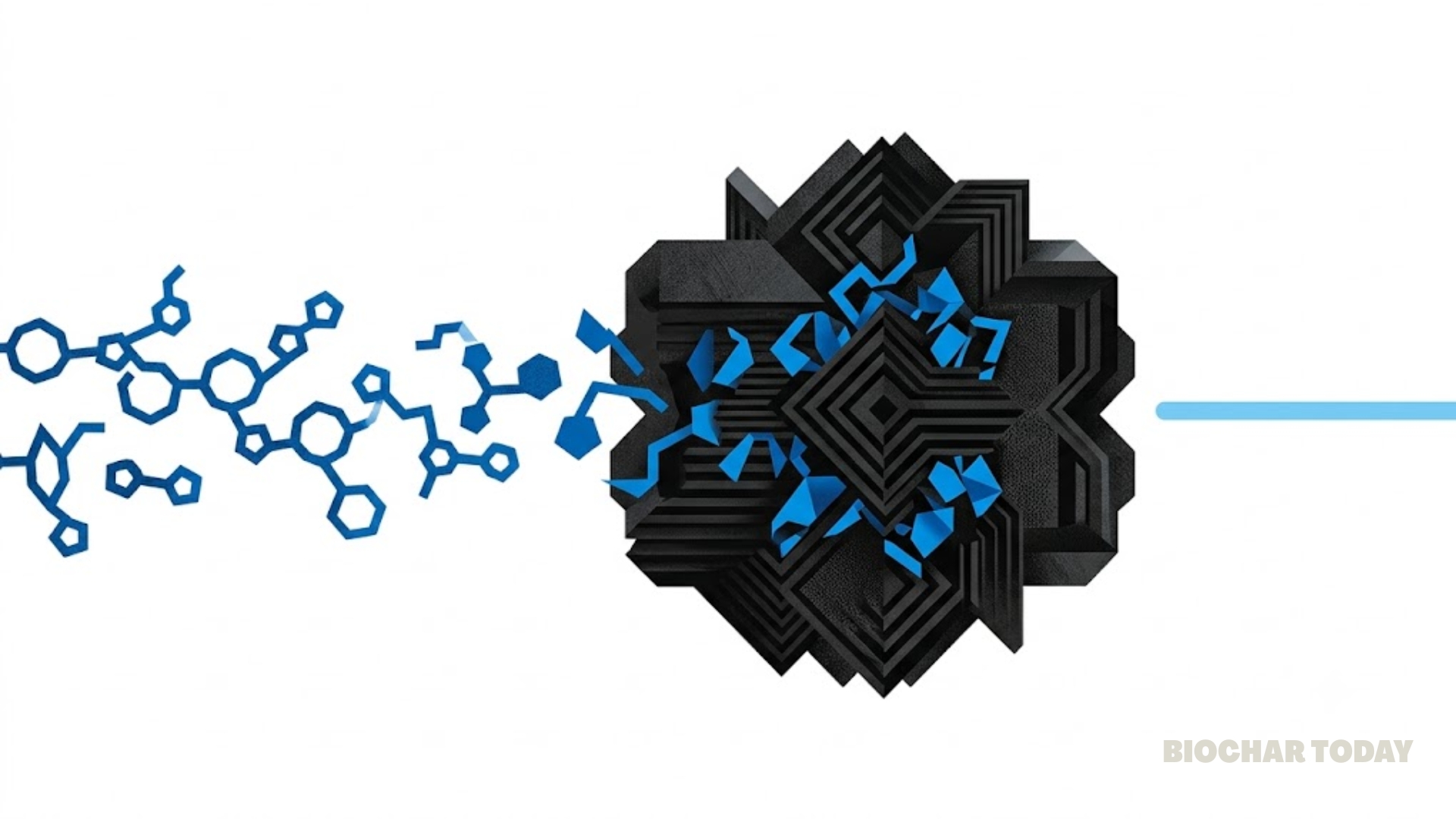
A recent study published in RSC Sustainability by Tielidy A. de M. de Lima and colleagues, including Michael J. D. Nugent, tackles two major environmental problems with a single, elegant solution: converting an invasive plant species into a powerful water purification filter. The focus was on valorizing the biomassBiomass is a complex biological organic or non-organic solid product derived from living or recently living organism and available naturally. Various types of wastes such as animal manure, waste paper, sludge and many industrial wastes are also treated as biomass because like natural biomass these More of Rhododendron ponticum, a species that aggressively invades ecosystems like Ireland’s National Parks, into high-surface-area activated biocharBiochar is a carbon-rich material created from biomass decomposition in low-oxygen conditions. It has important applications in environmental remediation, soil improvement, agriculture, carbon sequestration, energy storage, and sustainable materials, promoting efficiency and reducing waste in various contexts while addressing climate change challenges. More for the removal of emerging pharmaceutical contaminants. The central finding is highly quantitative and encouraging: the activation process significantly enhances the material’s performance. The highest adsorption capacity for the model pharmaceutical, Acetylsalicylic acid (ASA, or aspirin), reached an impressive 295.7 mg g-1for the activated biochar (ABC650), representing an increase of over 160% compared to the low adsorption demonstrated by the untreated biochar.
Pharmaceuticals are increasingly recognized as emerging contaminants in water bodies due to their persistence and resistance to conventional wastewater treatment technologies like coagulation and chlorination. Aspirin, for example, is consumed globally at a massive scale (approximately 35,000 tonnes per year), leading to its continuous detection in various aquatic environments. This raises concerns about bioaccumulation and public health.
Simultaneously, the invasive shrub R. ponticum poses a significant ecological burden in regions like Western France and the British Isles, requiring costly control efforts. The study successfully demonstrates a circular and sustainable approach by converting this problematic waste biomass into a functional, low-cost adsorbent. This aligns with multiple UN Sustainable Development Goals, including Clean Water and Sanitation (SDG 6) and Life on Land (SDG 15).
To achieve such high adsorption capacity, the raw R. ponticum biomass undergoes a sophisticated transformation process involving a combination of mechanochemical pre-treatment (ball-milling) and thermochemical acidic activation using phosphoric acid . This activation drastically enhanced the material’s properties: The activation process significantly boosts the internal structure of the biochar, resulting in a high Brunauer-Emmett-Teller (BET) surface area. This increase in available surface is directly responsible for the enhanced adsorption performance. Heating the biochar to higher temperatures resulted in a more purified carbon structure. The fixed carbon content increased from 63.5% in the inactivated biochar to a high of 78.0% in the ABC650 sample. Importantly, the sample activated at the lower temperature achieved a nearly identical surface area to the higher-temperature sample. This key finding suggests that effective activation can be achieved under more energy-efficient conditions, further strengthening the economic and environmental viability of the process.
The ability of the activated biochar to remove aspirin was highest at low initial concentrations, with the ABC650 sample reaching a removal efficiency of almost 90%. This is highly relevant, as typical pharmaceutical contamination levels found in surface water are low. The performance is highly competitive, even surpassing commercial activated charcoalCharcoal is a black, brittle, and porous material produced by heating wood or other organic substances in a low-oxygen environment. It is primarily used as a fuel source for cooking and heating. More, which had an adsorption capacity of 218 mg g-1 in a comparable study.
The success of this approach is validated by the Langmuir isotherm model, which provided an excellent fit for the experimental data, confirming that the adsorption occurs primarily through monolayer adsorption on a homogeneous surface. This work provides a scalable, sustainable solution for public health protection and advances the development of green technologies
Source: de M. de Lima, T. A., Arantes, M. S. T., Araújo, J. A., de Lima, G. G., Andrade, D. R. M., Murphy, E. J., Magalhães, W. L. E., & Nugent, M. J. D. (2025). Valorisation of invasive plant (Rhododendron ponticum) biomass into activated biochar as a sustainable adsorbent for emerging pharmaceutical contaminant removal from water. RSC Sustainability.


Leave a Reply