
Key Takeaways
- Inoculum is Key: Using enriched “starter” bacteria (CPI) boosted methane production by up to 38.7% more than the non-enriched type (SMI).
- BiocharBiochar is a carbon-rich material created from biomass decomposition in low-oxygen conditions. It has important applications in environmental remediation, soil improvement, agriculture, carbon sequestration, energy storage, and sustainable materials, promoting efficiency and reducing waste in various contexts while addressing climate change challenges. More is a Stabilizer: Even when it reduces methane, biochar is vital for system stability because it adsorbs excess ammonia (a common toxin in AD), reducing it by up to 14.95%.
- Better Waste Breakdown: Biochar facilitates organic matter degradation, increasing SCOD removal efficiency by up to 58.7%.
- Biochar Selects for “Tougher” Microbes: It promotes the growth of ammonia-resistant, hydrogen-using methane-producing microbes (Methanobrevibacter), whose abundance increased by up to 119%.
- Not All Biochar is Equal: The specific type of biochar matters. The coconut shell biochar used here had few of the beneficial redox properties that typically boost methane.
A recent study by Jingran Ding, Feng Zhen, and colleagues, published in the journal Fermentation (2024), investigated the intertwined effects of biochar and inoculum source on the performance of anaerobic digestion (AD) for swine manure. AD is an environmentally friendly method for converting manure into biogas and fertilizer, but it often struggles with high concentrations of ammonia, which can inhibit methane production. The researchers specifically compared a cellulose-peptone-swine inoculum (CPI), which was laboratory-enriched, against a swine manure inoculum (SMI), a non-enriched source, to determine how each responded to biochar addition across different substrate concentrations.
The initial findings clearly established the superiority of the enriched inoculum. Without biochar, the CPI seeds showed methane yields that were 20.3% to 38.7% higher than those from the SMI seeds across different total solid (TS) concentrations (1%, 3%, and 6%). This improved performance was attributed to the faster organic degradation achieved in the CPI groups, as seen by their first peak in daily methane production occurring earlier than in SMI groups. Further investigation into Volatile Fatty Acids ( VFAs) confirmed this: CPI groups had lower accumulation of propionic acid—an unfavorable substrate for methanogens—compared to SMI groups, explaining the better methane output.
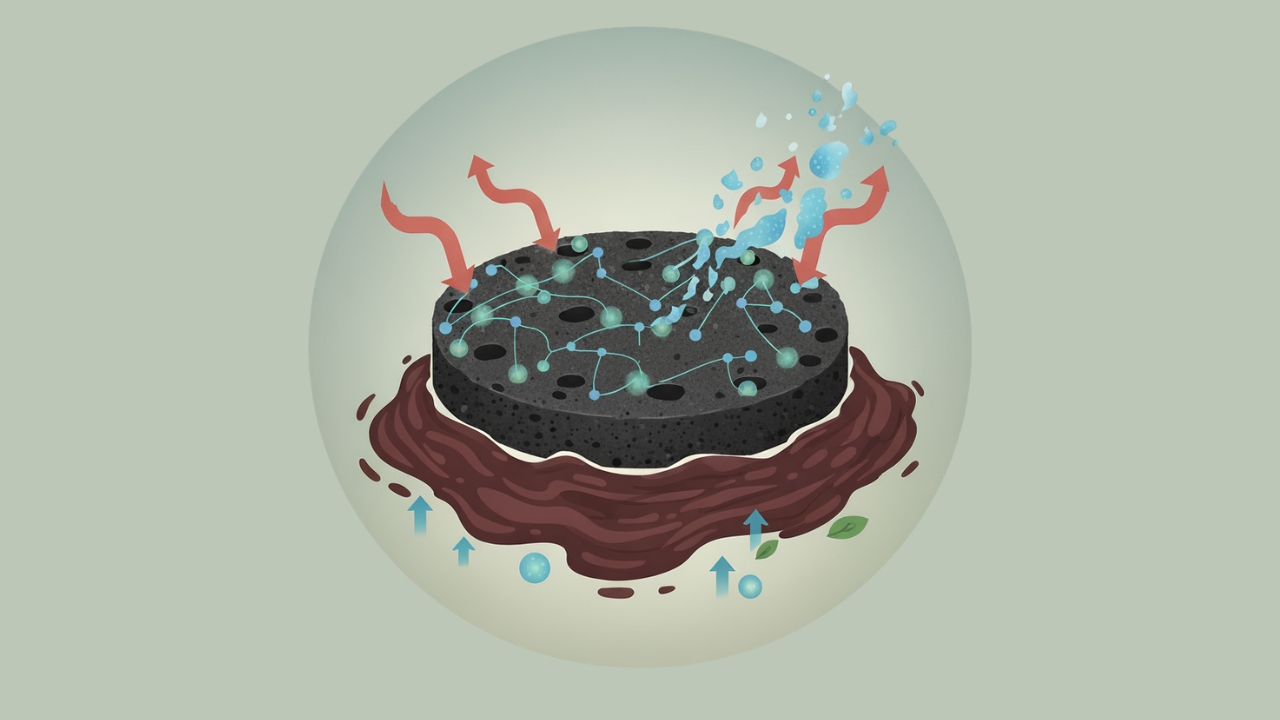
Counterintuitively, the addition of coconut shell biochar in this study did not improve methane yield; rather, it caused an inhibitory effect. For the 3% TS concentration groups, the cumulative methane yield for the biochar-added CPI (BCPI3) was 5.3% lower than the non-biochar CPI3 group. The inhibition was more severe for the non-enriched inoculum, as the biochar-added SMI (BSMI3) was 23.1% lower than the non-biochar SMI3 group. The authors theorize that the specific coconut shell biochar used might have possessed few redox-active functional groups, leading to a high potential that negatively affected methanogens.
Despite the decrease in methane output, biochar still played a crucial role in enhancing system stability and degradation efficiency. Biochar helped mitigate the common challenge of ammonia inhibition in swine manure AD by adsorbing ammonium ions (NH4+). For BCPI3 and BSMI3, the NH4+−N concentration on day 30 dropped by 11.39% (p<0.05) and 14.95% (p<0.01), respectively, compared to day 1. This resistance to ammonia stress allowed for improved degradation of organic matter. The soluble COD (SCOD) removal efficiency in BSMI3 was 68.06%±0.09%, representing a 58.7% increase compared to the SMI3 group without biochar. Biochar addition also resulted in a reduction in pHpH is a measure of how acidic or alkaline a substance is. A pH of 7 is neutral, while lower pH values indicate acidity and higher values indicate alkalinity. Biochars are normally alkaline and can influence soil pH, often increasing it, which can be beneficial More fluctuation, another indicator of system stability.
Microbial community analysis at the genus level provided the mechanistic link. Biochar promoted the growth of proteolytic bacteria, notably Bacteroidetes and Clostridiales, enhancing the conversion of organic matter into VFAs and ammonia. For example, the abundance of Bacteroidetes increased by 12.11% in BSMI3 and 34.97% in BCPI3 on day 5 compared to their controls. More importantly, biochar favored the growth of hydrogenotrophic methanogens like Methanobrevibacter and Methanobacterium, which are less vulnerable to ammonia stress than other methanogens. The relative abundance of Methanobrevibacter increased by 119% in BSMI3 and 34.17% in BCPI3 on day 1 compared to the SMI3 and CPI3 groups. The resulting stabilization effect—promoting beneficial microbes and mitigating inhibition—confirms biochar’s contribution to overall AD stability and efficiency, even when methane production is initially inhibited. The research underscores that the overall effectiveness of biochar as an AD additive is influenced by multiple factors, including biomassBiomass is a complex biological organic or non-organic solid product derived from living or recently living organism and available naturally. Various types of wastes such as animal manure, waste paper, sludge and many industrial wastes are also treated as biomass because like natural biomass these More source, pyrolysis conditionsThe conditions under which pyrolysis takes place, such as temperature, heating rate, and residence time, can significantly affect the properties of the biochar produced. More, particle size, and dosage, all of which must be carefully balanced.
Source: Ding, J., Zhen, F., Kong, X., Hu, Y., Zhang, Y., & Gong, L. (2024). Effect of biochar in modulating anaerobic digestion performance and microbial structure community of different inoculum sources. Fermentation, 10(3), 151.




Leave a Reply