
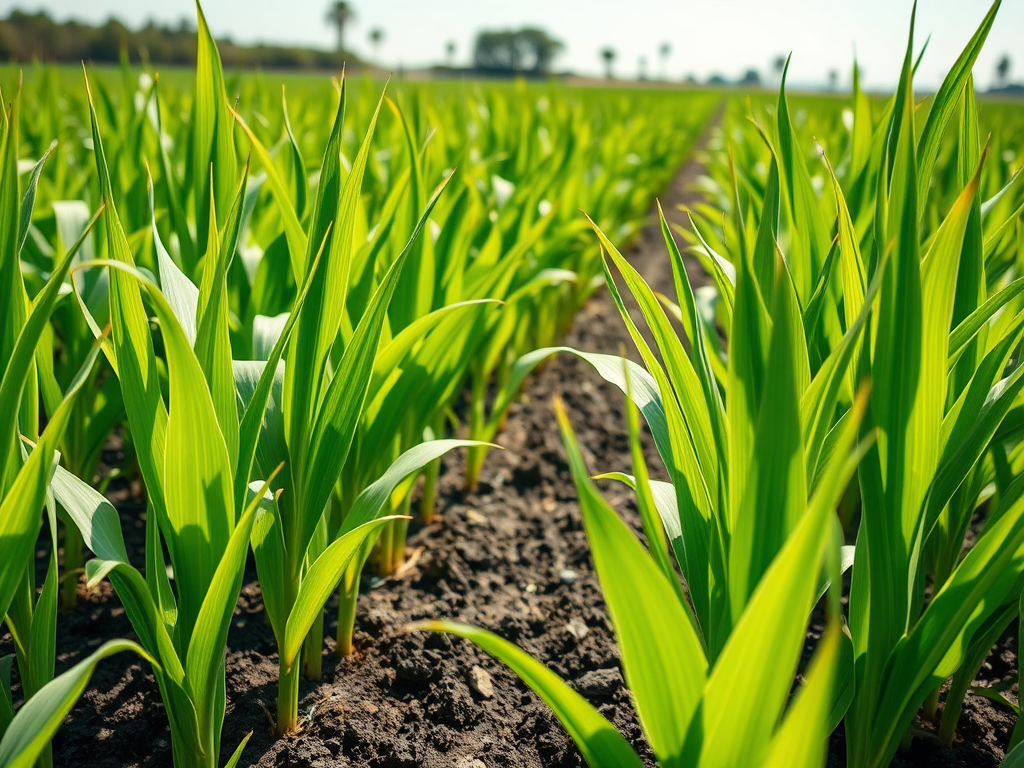
A recent study published in Scientific Reports by Henry Diaz-Chuquizuta et al. explores a promising strategy for improving agricultural productivity in acidic soils, a major challenge for farmers, particularly in regions like Peru, where approximately 50% of agricultural land is affected. The research investigates the combined use of biocharBiochar is a carbon-rich material created from biomass decomposition in low-oxygen conditions. It has important applications in environmental remediation, soil improvement, agriculture, carbon sequestration, energy storage, and sustainable materials, promoting efficiency and reducing waste in various contexts while addressing climate change challenges. More and the beneficial bacterium Bacillus subtilis to improve the growth, yield, and soil quality of hard yellow maize. The findings indicate that this integrated approach not only helps rehabilitate degraded soils but also significantly boosts crop performance. The study utilized a randomized complete block design with a factorial arrangement, testing five different amendments, including biochar, both with and without the application of B. subtilis.
Soil acidity presents a major obstacle to crop cultivation by limiting the availability of essential nutrients like phosphorus, magnesium, and calcium. While traditional methods such as liming have been used to counteract this, they often offer only short-term effectiveness and do not improve soil structure or sequester carbon. Biochar has emerged as a sustainable alternative. It enhances water and nutrient retention, increases cation exchange capacity (CEC), and promotes beneficial microbial activity, which are all crucial for mitigating the effects of acidic soils. When combined with plant growth-promoting microorganisms (PGPMs) like B. subtilis, which act as bioinoculants by enhancing nutrient availability and stimulating root development, these two components can work together to regenerate degraded soils. The researchers aimed to provide scientific evidence for a combined strategy that addresses the limitations of using these materials individually.
One of the most notable outcomes was the significant increase in plant and ear height when biochar was combined with B. subtilis. This treatment resulted in the highest values for these variables, suggesting a robust vegetative development. The study found a strong positive correlation between stem diameter and leaf area, which highlights that treatments improving vegetative growth lead to a healthier structural framework for the plant. Furthermore, the combination of biochar and B. subtilis led to the largest leaf area, indicating improved nutritional status and a greater capacity for photosynthesis. The same treatment also significantly increased leaf chlorophyll content, which points to enhanced photosynthetic capacity and is a direct result of better soil properties, like reduced aluminum toxicity and improved nutrient retention.
The combined use of biochar and B. subtilis also had a highly significant impact on flowering time, reducing it by seven days. This suggests that the improved soil environment and enhanced nutrient availability accelerated the maize’s phenological development, leading to a more efficient crop cycle. The study also found a strong correlation between male and female flowering, indicating that these events are closely synchronized by this integrated approach.
The most impressive result was the substantial increase in yield. The enhanced availability of essential nutrients, particularly phosphorus, was a key factor, with the biochar and B. subtilis treatment reaching up to 25.90 mg⋅kg−1. This is consistent with a previous study that showed a combined application of biochar and lime increased phosphorus availabilityPhosphorus is another essential nutrient for plant growth, but it can sometimes be locked up in the soil and unavailable to plants. Biochar can help release phosphorus from the soil and make it more accessible to plants, reducing the need for chemical fertilizers. More by 137% and maize yield by 77.6%. Additionally, the treatment effectively neutralized soil acidity, with the pHpH is a measure of how acidic or alkaline a substance is. A pH of 7 is neutral, while lower pH values indicate acidity and higher values indicate alkalinity. Biochars are normally alkaline and can influence soil pH, often increasing it, which can be beneficial More increasing from an initial 4.50 to 4.90, and eliminated toxic soil aluminum. These findings confirm that integrating biochar and B. subtilis is a powerful, sustainable strategy for improving maize growth, yield, and soil quality in challenging environments.
Source: Diaz-Chuquizuta, H., Coral-Cardenas, S. A., Arévalo-Aranda, Y. G., Sánchez-Ojanasta, M., Diaz-Chuquizuta, P., Ocaña-Reyes, J. A., Solórzano Acosta, R. A., & Cuevas Giménez, J. P. (2025). Inoculation of Bacillus subtilis in acidic soil amended with biochar and liming materials in maize cultivation. Scientific Reports, 15(28678).





Leave a Reply