
Key Takeaways
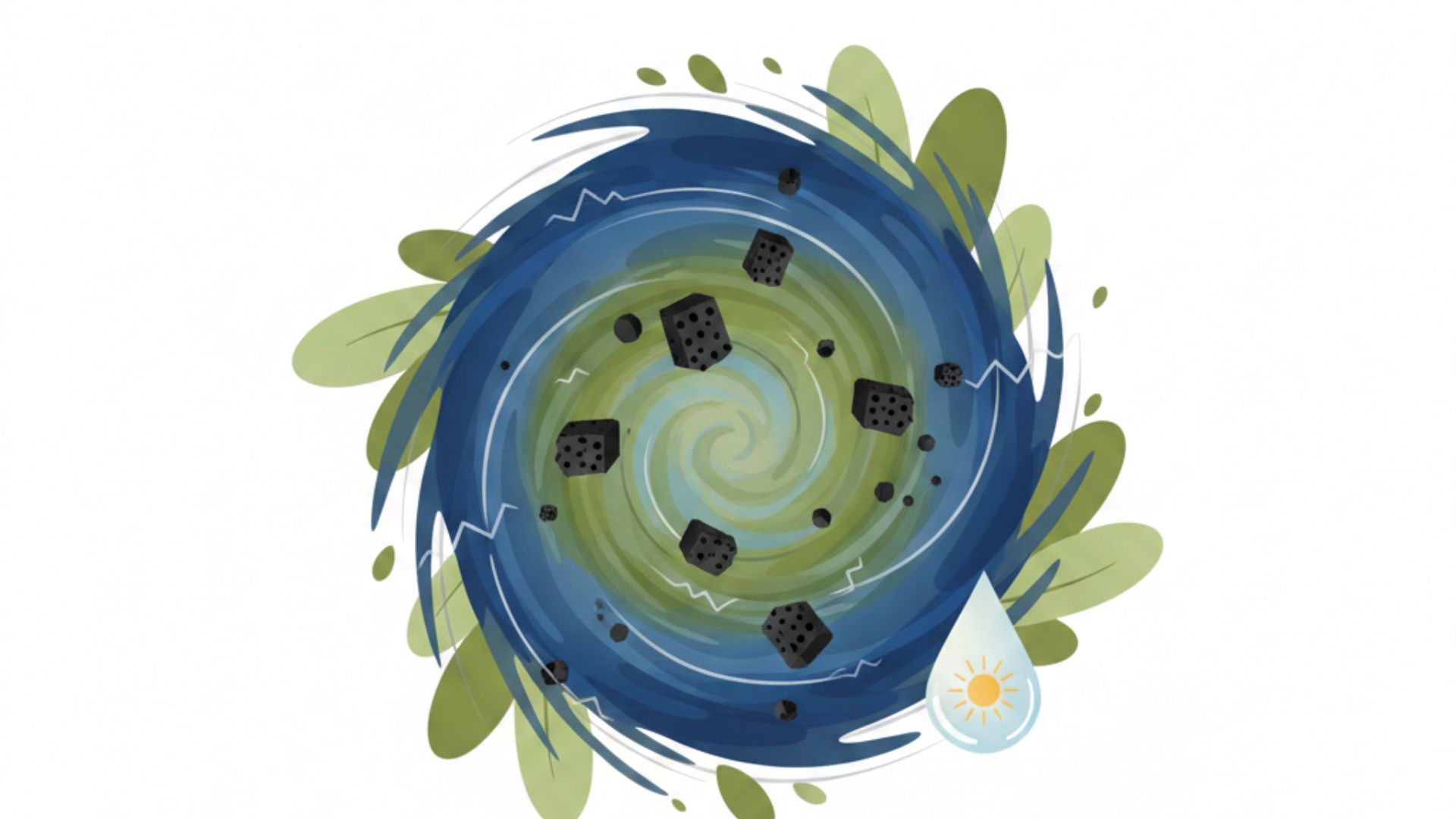
- Scientists have developed a hybrid system that combines electrocoagulation with olive stone biocharBiochar is a carbon-rich material created from biomass decomposition in low-oxygen conditions. It has important applications in environmental remediation, soil improvement, agriculture, carbon sequestration, energy storage, and sustainable materials, promoting efficiency and reducing waste in various contexts while addressing climate change challenges. More to significantly improve the removal of complex pollutants from industrial wastewater.
- The integrated treatment process achieved notably higher efficiencies than standalone methods, reaching up to 81.92% turbidity reduction and 77.78% nitrogen removal.
- Sustainable biochar produced from olive stones—a local agricultural byproduct—functions as an effective and low-cost adsorbent for post-treating the water.
- Optimizing the pyrolysisPyrolysis is a thermochemical process that converts waste biomass into bio-char, bio-oil, and pyro-gas. It offers significant advantages in waste valorization, turning low-value materials into economically valuable resources. Its versatility allows for tailored products based on operational conditions, presenting itself as a cost-effective and efficient More of olive stones creates a highly crystalline and ordered biochar structure, which is critical for superior pollutant adsorptionBiochar has a remarkable ability to attract and hold onto pollutants, like heavy metals and organic chemicals. This makes it a valuable tool for cleaning up contaminated soil and water. More.
- Smaller particle sizes of the biochar are significantly more effective at capturing contaminants like chemical oxygen demand and total phenols due to their increased surface area.
A recent study in Water by Ahmad Jamrah and colleagues utilized Response Surface Methodology to optimize a combined treatment system for Olive-Mill Wastewater (OMW), utilizing aluminum electrodes for electrocoagulation (EC) and olive stone biochar as a sustainable adsorbent. The researchers addressed the significant environmental challenges posed by OMW, which is characterized by high toxicity, acidity, and complex organic matter. By integrating EC with an adsorption polishing step, the team aimed to exceed the limitations of traditional biological and chemical treatments that often struggle with the recalcitrant nature of industrial wastewater.
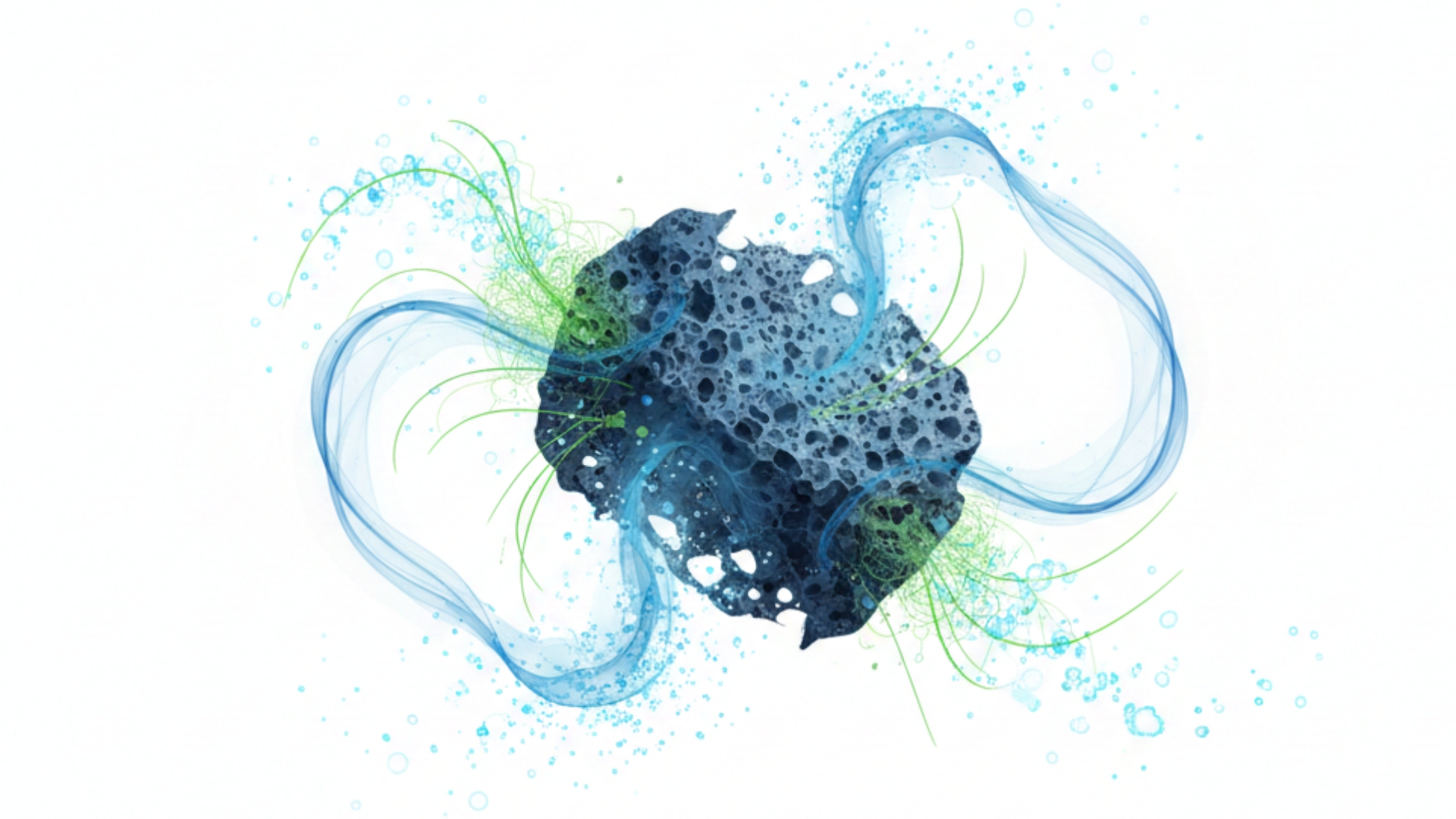
The study found that the properties of the OS biochar were highly dependent on the duration of its production. While yield unexpectedly increased with longer pyrolysis times, the structural integrity and surface area of the biochar fluctuated before reaching an optimal state. X-ray diffraction analysis confirmed that biochar produced for five hours exhibited the highest crystallinity and graphitization, transitioning from a predominantly amorphous structure to a more ordered one. This structural evolution, visually supported by SEM micrographs showing an intricate and porous morphology, is essential for providing enough interaction sites to effectively trap dissolved contaminants.
Under optimized operating conditions—including a current density of 12.42 mA/cm2, a reaction time of approximately 45.6 minutes, and a 1 cm electrode spacing—the standalone electrocoagulation process removed 80.74% of turbidity and 57.44% of total phenols. However, the hybrid ECA system proved superior, boosting these removal rates to 81.92% for turbidity and 61.41% for phenols while also addressing chemical oxygen demand (COD) and total Kjeldahl nitrogen (TKN) more effectively. This synergy allows the EC process to tackle larger contaminants while the biochar targets remaining soluble pollutants through mechanisms like hydrogen bonding between the biochar functional groups and the hydroxyl groups of phenolic compounds.
The economic and environmental viability of this system is bolstered by its use of local “biowaste” and its relatively low energy consumption, which was optimized at 9.85 kWh/m3. This optimized energy usage represents a significant reduction from previous studies, lowering the overall operating cost to approximately $2.88/m3. By transforming the olive industry’s solid waste into a high-value adsorbent, this research provides a sustainable path for managing industrial effluents, reducing disposal costs, and promoting water reuse in regions facing acute water scarcity.
Source: Jamrah, A., Al-Zghoul, T. M., Al-Qodah, Z., Al-Karablieh, E., Mahroos, M., & Assirey, E. (2026). Optimizing Electrocoagulation-Adsorption Treatment System for Comprehensive Water Quality Improvement in Olive-Mill-Wastewater (OMW): Synergy of EC Utilizing Al Electrodes and Olive Stones Biochar as a Sustainable Adsorbent. Water, 18(212), 1-36.

Leave a Reply