
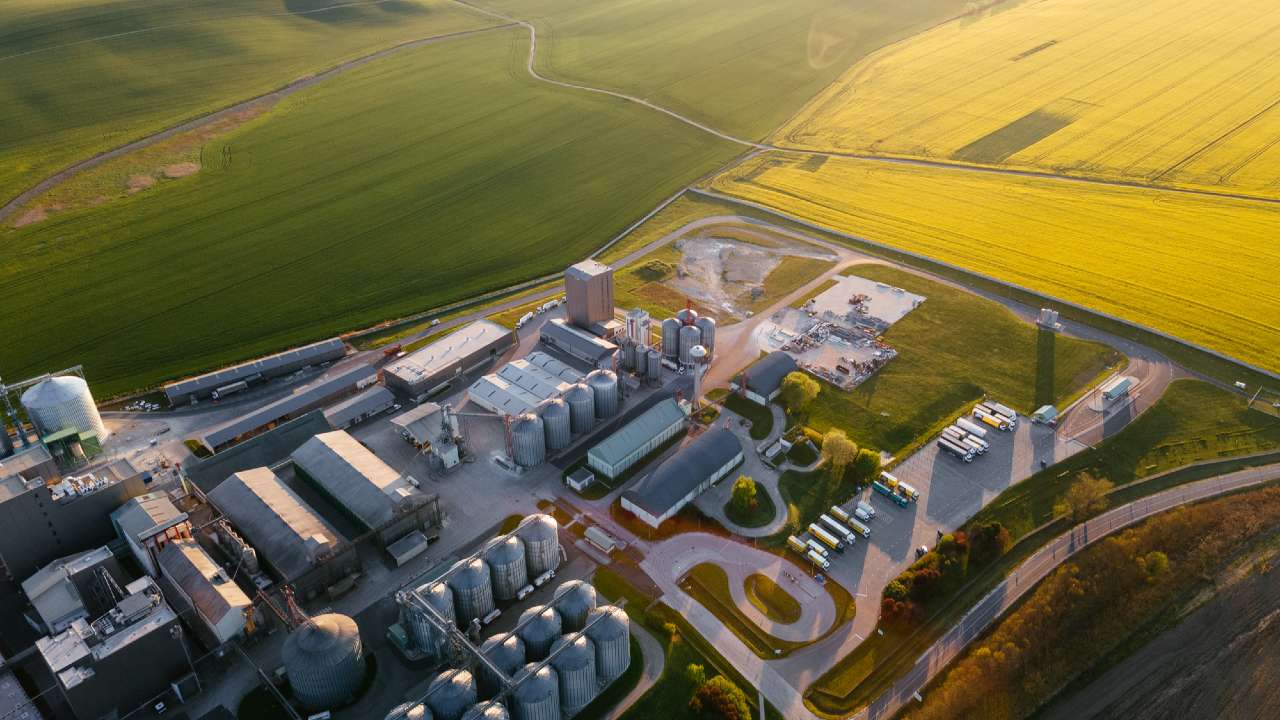
In Western Australia’s Great Southern region, Infrastructure Asset Group (IAG), operating as Australian Canola Oils, has unveiled plans for a high-capacity canola processing plant. Developed in partnership with Commodity Ag, a local farming enterprise managed by the Richardson family, the project represents a significant infrastructure investment. IAG has initiated a $10 million seed-raising round to fund feasibility studies and early-stage planning, explicitly prioritizing investment from local growers. The proposed facility is designed to crush one million tonnes of canola annually, producing oil and meal while simultaneously converting residual agricultural waste into biocharBiochar is a carbon-rich material created from biomass decomposition in low-oxygen conditions. It has important applications in environmental remediation, soil improvement, agriculture, carbon sequestration, energy storage, and sustainable materials, promoting efficiency and reducing waste in various contexts while addressing climate change challenges. More.
This development addresses a critical disparity between regional agricultural output and local processing capabilities. Western Australia is the nation’s leading canola producer, with the 2025 harvest forecast at 3.8 million tonnes. However, existing state processing capacity stands at approximately 60,000 tonnes, meaning the vast majority of the harvest is exported raw. This logistical bottleneck limits value-added opportunities for the Albany port region, which contributes significantly to the state’s total yield. Additionally, intensive farming practices create a continuous demand for sustainable inputs to maintain soil vitality.
To resolve these challenges, the Drome site facility will employ a circular production model. Scheduled for potential operation by 2031, the plant will process canola into oil and meal while utilizing regional agricultural waste streams for biochar production. This biochar will be returned to the local market, providing farmers with a renewable mechanism to enhance soil carbon and reduce reliance on synthetic fertilizers. Furthermore, IAG is exploring the technical feasibility of harnessing surplus heat from the pyrolysisPyrolysis is a thermochemical process that converts waste biomass into bio-char, bio-oil, and pyro-gas. It offers significant advantages in waste valorization, turning low-value materials into economically valuable resources. Its versatility allows for tailored products based on operational conditions, presenting itself as a cost-effective and efficient More process to generate steam and renewable electricity, thereby optimizing the facility’s energy efficiency.
The outcomes of this initiative extend beyond immediate processing capacity. At full output, the plant will convert each tonne of canola into approximately 40% oil and 60% meal, supporting both the export market and the livestock feed sector. The integration of biochar provides a tangible ecological benefit, linking industrial processing directly to soil health. Longer-term projections include potential expansion into Sustainable Aviation Fuel (SAF) and Renewable Diesel (RD).
SOURCE: A Growers Offered First Opportunity to Invest in Large-Scale Canola Processing Plant





Leave a Reply