
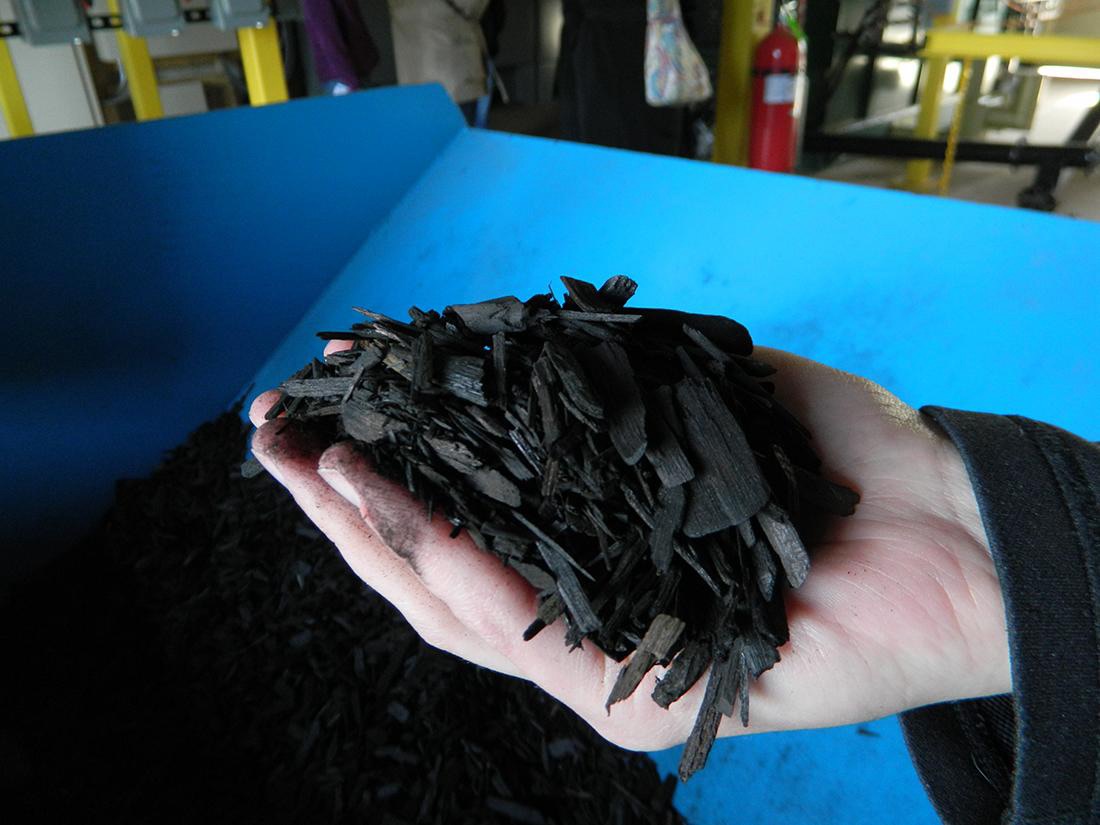
An international team led by Penn State researchers is studying ways to improve the safety and sustainability of biocharBiochar is a carbon-rich material created from biomass decomposition in low-oxygen conditions. It has important applications in environmental remediation, soil improvement, agriculture, carbon sequestration, energy storage, and sustainable materials, promoting efficiency and reducing waste in various contexts while addressing climate change challenges. More production. Biochar, a carbon-rich material created by heating organic waste in low-oxygen environments (a process called pyrolysisPyrolysis is a thermochemical process that converts waste biomass into bio-char, bio-oil, and pyro-gas. It offers significant advantages in waste valorization, turning low-value materials into economically valuable resources. Its versatility allows for tailored products based on operational conditions, presenting itself as a cost-effective and efficient More), has the potential to offset carbon emissions, improve soil health, and mitigate pollution. However, its production can also generate harmful organic compounds, limiting its effectiveness and safety.
With funding from a $799,883 USDA National Institute of Food and Agriculture grant, the team seeks to address these challenges. Their project, titled The Dark Side of Biochar: Addressing the Threat of Organic Contaminant Residues in Biorefinery Char Products, focuses on understanding and mitigating toxic compounds such as benzene, hexane, and toluene that can form during biochar production.
Led by Daniel Ciolkosz, associate research professor at Penn State, the team will investigate how contaminants are created and deposited in biochar and explore treatment methods to remove them. Using diverse biomassBiomass is a complex biological organic or non-organic solid product derived from living or recently living organism and available naturally. Various types of wastes such as animal manure, waste paper, sludge and many industrial wastes are also treated as biomass because like natural biomass these More feedstocks—including agricultural residues, algae, and municipal waste—they aim to assess emissions, contaminant levels, and biorefinery performance.
The ultimate goal is to develop optimized production strategies for biorefineries to ensure biochar remains a safe and effective bio-based product. Collaborators include researchers from Poland’s Wrocław University, Commonwealth University of Pennsylvania, and Advanced Torrefaction Systems.
By improving biochar manufacturing, the team hopes to maximize its environmental benefits while minimizing health and contamination risks.
LEARN MORE: Researchers to study how to make carbon-storing product safer, more sustainable




Leave a Reply