
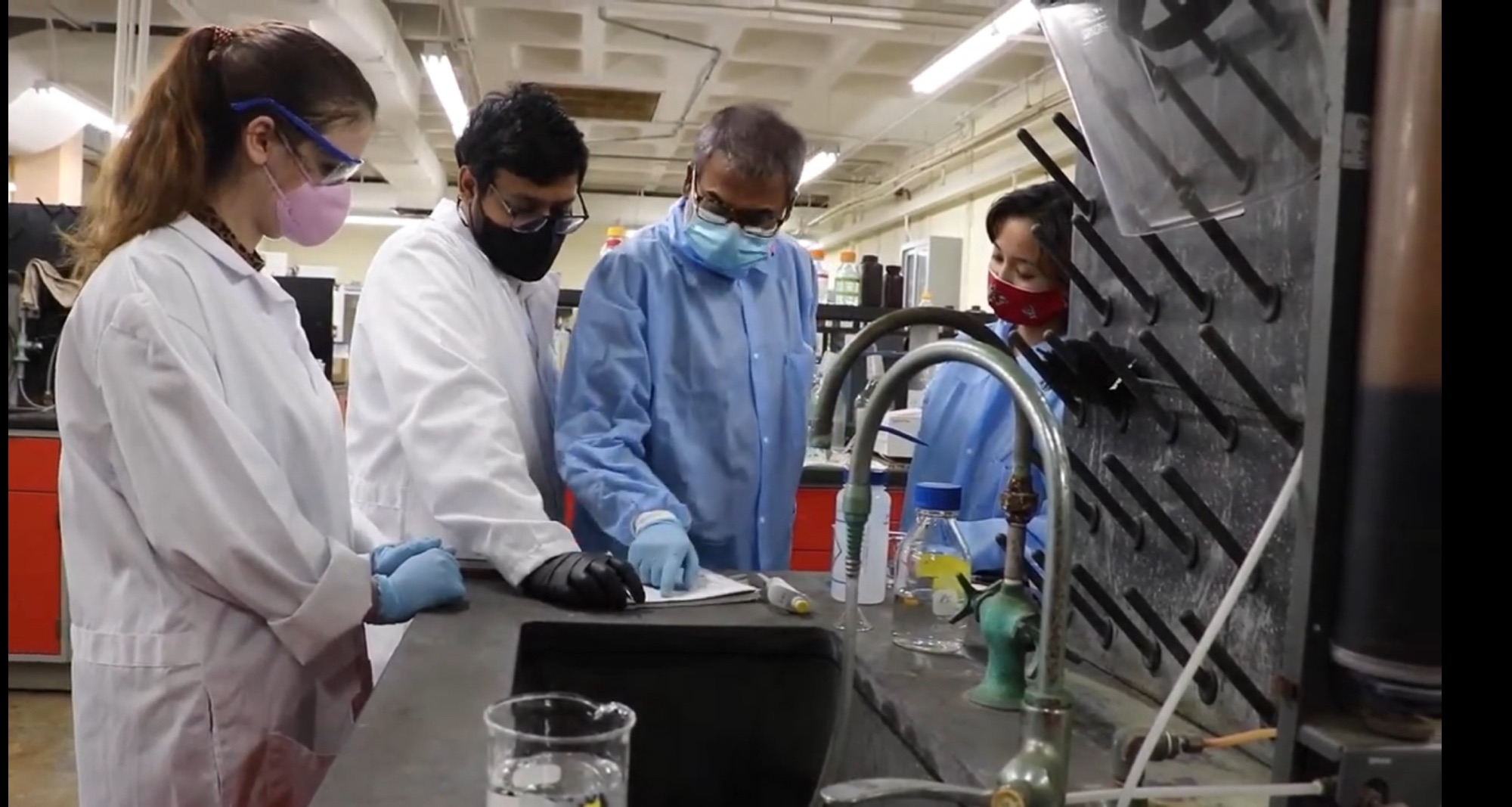
Praveen Kolar, a professor in Biological and Agricultural Engineering at NC State University, is set to explore innovative uses for rice husks as a Fulbright Scholar at the University of Bologna in Italy. His research aims to transform rice husk waste into biocharBiochar is a carbon-rich material created from biomass decomposition in low-oxygen conditions. It has important applications in environmental remediation, soil improvement, agriculture, carbon sequestration, energy storage, and sustainable materials, promoting efficiency and reducing waste in various contexts while addressing climate change challenges. More for use in energy storage devices.
Kolar’s career began in India, managing water quality and waste in a seafood processing facility. His journey then took him to Louisiana State University, where he studied conditions for optimal oyster cultivation, and later to the University of Georgia, focusing on odor management in poultry facilities. Now at NC State, he specializes in waste treatment and recycling, particularly from plant materials.
Biochar, a carbon-rich material formed by heating biomassBiomass is a complex biological organic or non-organic solid product derived from living or recently living organism and available naturally. Various types of wastes such as animal manure, waste paper, sludge and many industrial wastes are also treated as biomass because like natural biomass these More without oxygen, has various applications including land amendment, fuel, and catalysts. Kolar’s project will develop biochar as an electrode for capacitors, which store energy differently from batteries. Unlike batteries, capacitors deliver large amounts of energy quickly. Kolar aims to create biochar with high surface area and suitable chemistry to enhance its charge-holding capacity.
Currently, capacitors use metals and activated carbonActivated carbon is a form of carbon that has been processed to create a vast network of tiny pores, increasing its surface area significantly. This extensive surface area makes activated carbon exceptionally effective at trapping and holding impurities, like a molecular sponge. It is commonly More from coconut shells. Using rice husks, which are abundant and contain nitrogen, could provide a more sustainable and locally-sourced material. Kolar will source rice husks from farms near Bologna and test his biochar-based capacitors. After returning to Raleigh, he’ll complete surface analysis at NC State’s Analytical Instrumentation Facility.
Kolar’s goal is to create a rice husk biochar capacitor that can power small devices like fans or light bulbs, demonstrating the value of agricultural waste. He envisions this innovation empowering farmers and changing perceptions about waste, proving its potential as a valuable resource.
READ MORE: Kolar Awarded Fulbright to Transform Biochar Into Batteries





Leave a Reply