
Mills & Reeve and Aston University have teamed up to explore innovative uses of biocharBiochar is a carbon-rich material created from biomass decomposition in low-oxygen conditions. It has important applications in environmental remediation, soil improvement, agriculture, carbon sequestration, energy storage, and sustainable materials, promoting efficiency and reducing waste in various contexts while addressing climate change challenges. More, a carbon-rich material derived from organic waste, to combat climate change. Biochar has the potential to capture and store carbon dioxide, improve soil quality, and enhance plant growth. This project is led by the Energy & Bioproducts Research Institute (EBRI) at Aston University, which has developed technology to convert organic waste into biochar, gas, and liquids through pyrolysisPyrolysis is a thermochemical process that converts waste biomass into bio-char, bio-oil, and pyro-gas. It offers significant advantages in waste valorization, turning low-value materials into economically valuable resources. Its versatility allows for tailored products based on operational conditions, presenting itself as a cost-effective and efficient More.
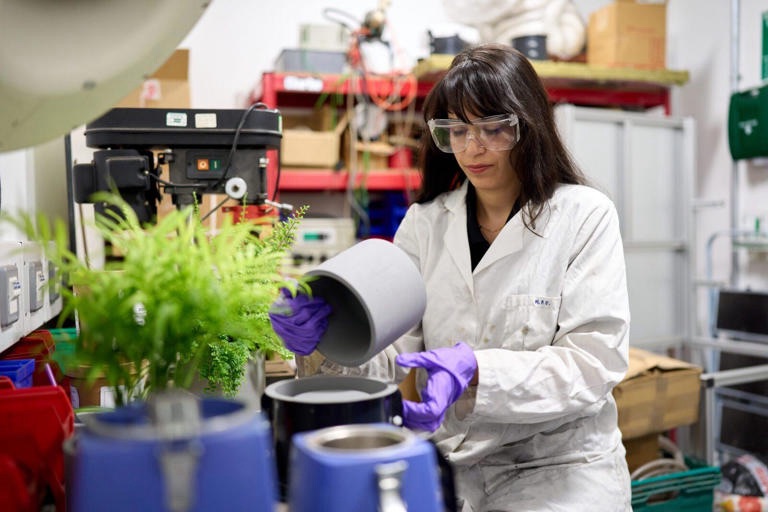
As Mills & Reeve moves to a new office at One Centenary Way, they aim to make their office environmentally friendly and involve the local community. The EBRI team has created bespoke plant and pen pots for the new office using biochar produced at their pyrolysis demonstrator in Birmingham. The process involves mixing biochar with mineral powder and water-based acrylic resin to create durable, carbon-storing pots.
READ MORE: Mills & Reeve partners with Aston University to produce sustainable furniture accessories



Leave a Reply