
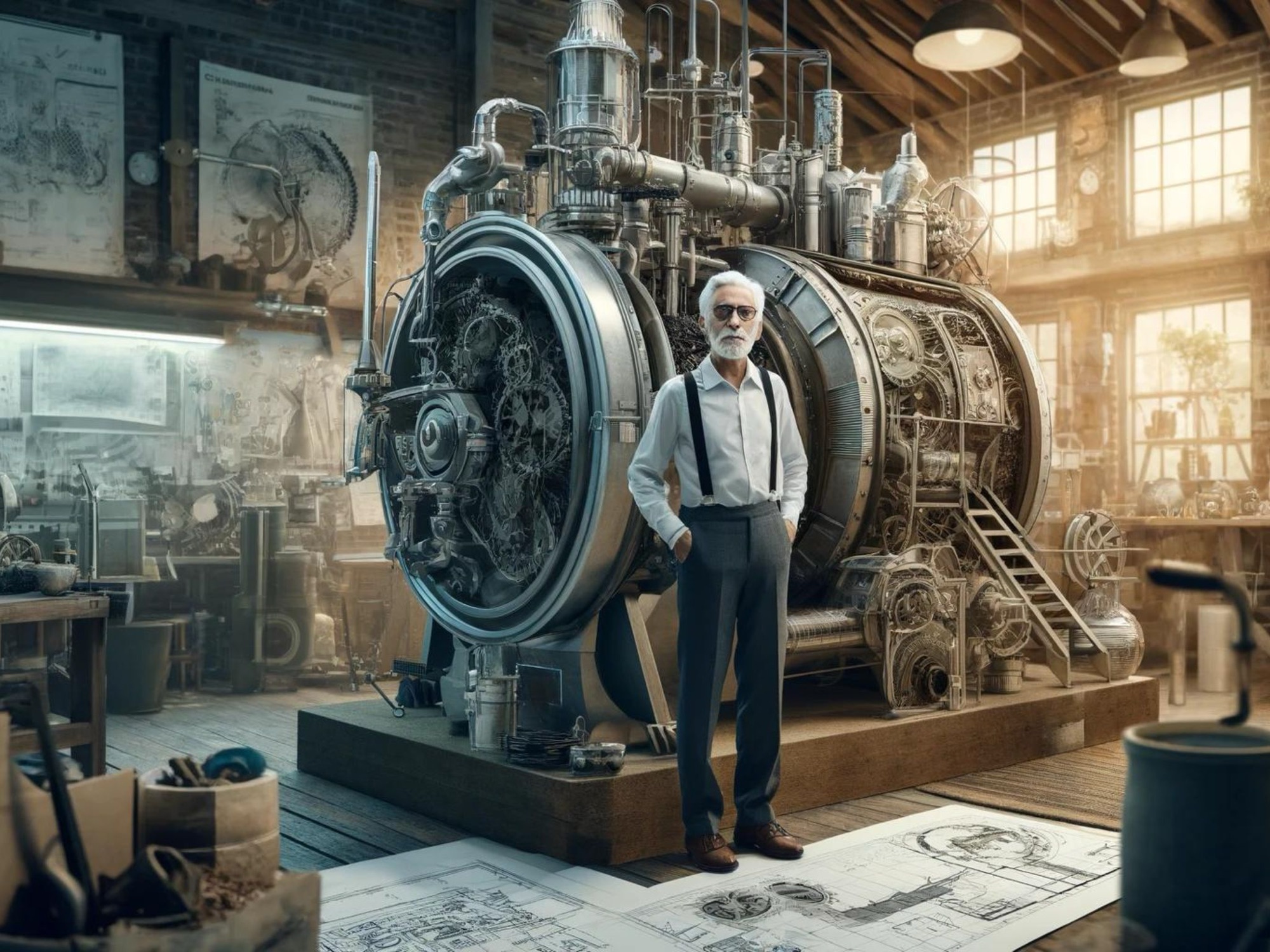
Michael Garjian, a 77-year-old inventor from Easthampton, is actively combating global warming by transforming his innovative ideas into practical solutions. Among his inventions is the CarbonStar Catalytic PyrolysisPyrolysis is a thermochemical process that converts waste biomass into bio-char, bio-oil, and pyro-gas. It offers significant advantages in waste valorization, turning low-value materials into economically valuable resources. Its versatility allows for tailored products based on operational conditions, presenting itself as a cost-effective and efficient More System, which has recently garnered attention as a part of the $100 million XPrize for Carbon Removal funded by Elon Musk. Garjian’s creation stands out among over 1,400 entries, making it to the top 100 honorees.
Garjian’s system is a sophisticated mobile apparatus that converts biomass—such as wood chips, seaweed, and canola meal—into biocharBiochar is a carbon-rich material created from biomass decomposition in low-oxygen conditions. It has important applications in environmental remediation, soil improvement, agriculture, carbon sequestration, energy storage, and sustainable materials, promoting efficiency and reducing waste in various contexts while addressing climate change challenges. More. This process not only produces energy, heat, and light but significantly reduces the release of CO2 by dead and decaying biomassBiomass is a complex biological organic or non-organic solid product derived from living or recently living organism and available naturally. Various types of wastes such as animal manure, waste paper, sludge and many industrial wastes are also treated as biomass because like natural biomass these More, which Garjian notes can emit more CO2 than all human activities combined. His CarbonStar system utilizes a computer-controlled vacuum tube to heat the biomass, extracting moisture and leaving behind a charcoal-like substance, without combustion. This biochar is 70-90% pure carbon, effectively capturing and storing carbon dioxide.
Additionally, the system’s by-products include bio-oils and wood vinegar, which can be used for heating or refined into fuels, and as plant food and pest control, respectively. Garjian emphasizes the multiple environmental benefits of biochar, including its ability to rejuvenate depleted soils, filter wastewater, and serve as an additive in concrete to cut CO2 emissions.
Despite the complexity of his invention and the tough competition in the XPrize, Garjian is optimistic about the future production of his machine, aimed at large-scale carbon management. The recognition from XPrize is a significant validation of his efforts, yet he plans to advance with or without the grand prize. His ultimate goal is not just the successful deployment of his technology but also influencing global carbon management practices to mitigate the adverse effects of climate change.
READ MORE: Locking up carbon for good: Easthampton inventor’s CO2 removal system turns biomass into biochar






Leave a Reply